Short answer
Nearly everything that turns up in dry pet food is a stored-product insect, and none of them bite or sting, and extension factsheets record no disease associated with them. So this is a contamination question, not a poisoning one. What you found decides whether the bag stays.
- If you can see it crawling, it’s a beetle, a weevil, or a moth larva, and it rarely stops at one bag. Check the rest of the kitchen.
- If the pale film on the shelf shifts while you watch, that isn’t dust. It’s storage mites, the ones with a veterinary paper trail.
- Warehouse beetle larvae come with a flat instruction attached: discard the food.
What people actually find in the bag
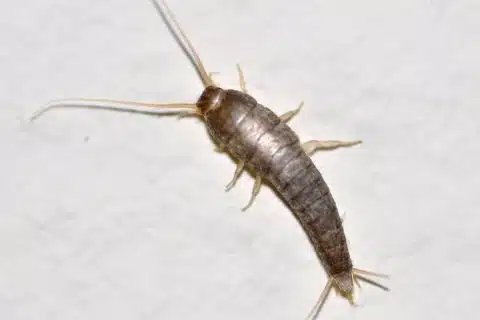
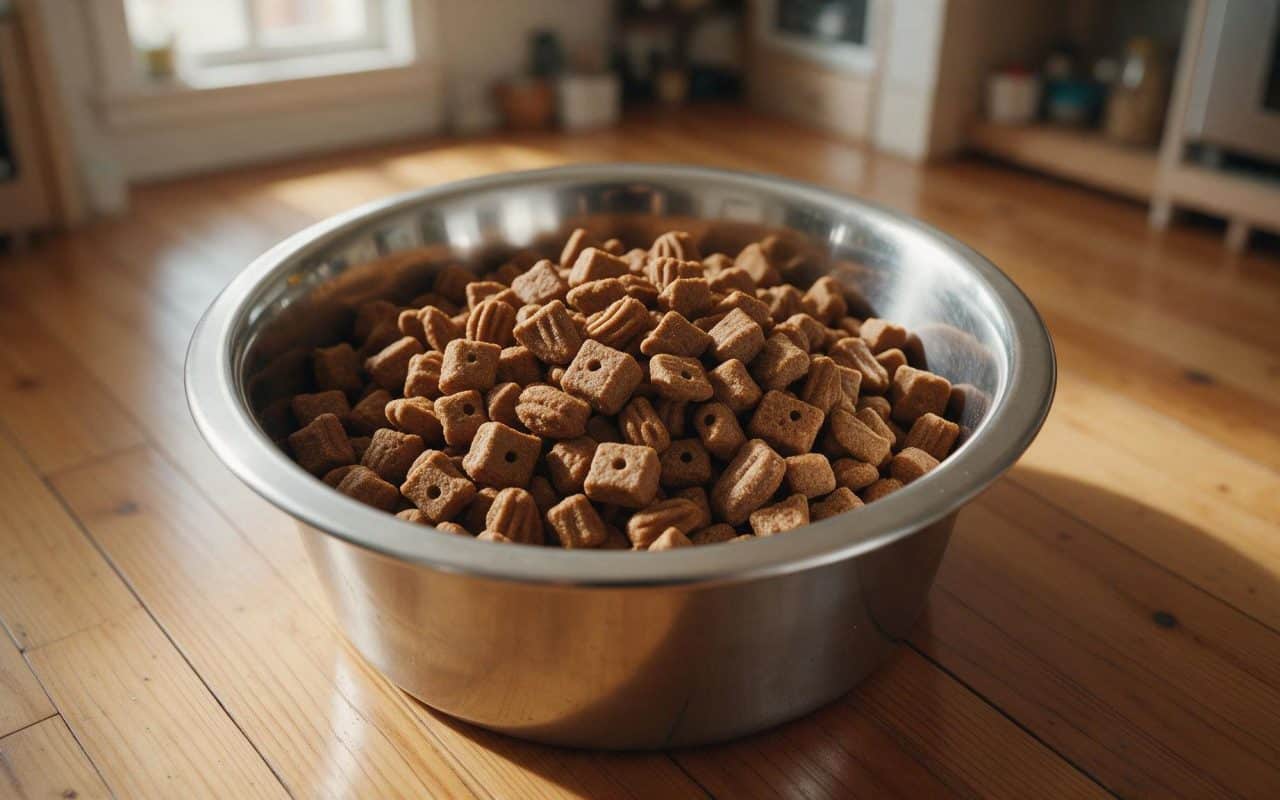
The candidates are the same six on the pantry bug rundown, and dry pet food is close to ideal for a pantry pest: milled grain, rendered fat, animal protein, in quantities that last a household two months. UC IPM lists it under nearly every beetle in its pantry pest guidance. Five findings, five answers.
| What you see | Most likely | What it changes |
|---|---|---|
| Oval beetle, 1/8 inch, mottled brown and yellow | Warehouse beetle | The one with a warning attached |
| Rounded reddish-brown beetle, head hidden | Drugstore or cigarette beetle | Larvae chew through packaging |
| A long snout ahead of the head | A weevil | Came in with a grain ingredient |
| Cream caterpillars and fine webbing | Pantry moth larvae | Not the whole infestation |
| Pale film that seems to move | Storage mites | Not an insect |
Two have pages of their own: the drugstore beetle and the cigarette beetle, both listed by UC IPM as frequent pet food pests. A visible snout means a weevil, which came in with a cereal ingredient.
The warehouse beetle, and the one instruction that isn’t hedged
The warehouse beetle (Trogoderma variabile) shows up constantly in searches about pet food and almost nowhere in the writing. It’s a dermestid, close kin to the carpet beetles that live in wool and pet hair. Adults are oval, about 1/8 inch, mottled brown and yellowish; a female lays up to 90 eggs into the food.
The larva is the problem. Its rear segments carry dense stiff hairs that shed into the food as it grows. UC IPM states that ingested warehouse beetle setae can irritate the mouth, esophagus, and digestive tract, and that any food infested with this beetle should be discarded. That was written for human food, and we won’t re-badge it as veterinary advice. It’s still the only beetle here where the published answer is throw it out.
Storage mites, the ones nobody looks for
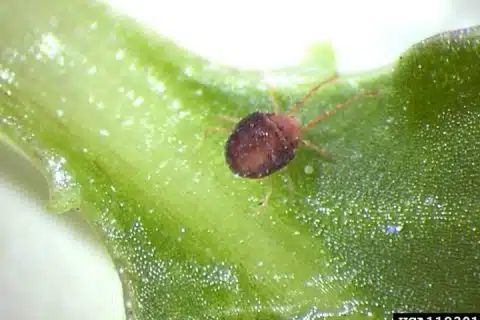
Storage mites aren’t insects. They’re tyroglyphid mites: flour mite, grain mite, cheese mite, hard to tell apart even at species level. The one that dominates the veterinary literature on pet food is Tyrophagus putrescentiae. You will not see an individual mite, and few people reach for a hand lens because nothing says where to point it.
What you can see is a crowd. A female grain mite lays up to 800 eggs on the surface of the food, and at room temperature egg to adult takes about two weeks. When a package gets crowded they spill off it, and University of Kentucky describes the result: a fine dust-like layer on a shelf, bag, or counter. That “mite dust” is usually the first sign.
They have one hard requirement, and it’s the useful part. Mold mites only develop where there is moisture. They feed on molds, and Iowa State Extension names high humidity as the thread common to every recorded infestation. A 2019 review by veterinary dermatologists at North Carolina State University found that storage mites multiply on protein-rich, fat-rich dog food, faster when kibble is crushed and faster still once mold takes hold. They don’t bore into packaging; they slip through defective seals. Indoors at ordinary temperatures the review found little growth in new bags; kept hot and humid, mites get into sealed packages and breed there. The garage bin in August is not a neutral choice.
Look at the bottom of the bag. Crushed kibble and fines are where mite numbers climb fastest, and nobody looks there until the bag is nearly empty. Never pour a fresh bag onto old dust.
What’s documented in dogs, and what isn’t
Two respectable sources look like they disagree. Iowa State’s household fact sheet calls mold mites harmless to people and pets; veterinary dermatology says something narrower. Both hold, because they answer different questions: whether a cupboard mite threatens a household, versus what happens in dogs already primed to react.
What’s documented is this. Dogs with year-round atopic dermatitis are frequently sensitized to Dermatophagoides house dust mites, and storage mite allergens cross-react closely enough that an immune system tuned to one recognizes the other. In dogs already sensitized that way, eating food contaminated with storage mites has been linked to a flare of allergic signs. Documented in some dogs, in a specific population. Not a cause of allergy in a dog that wasn’t already reacting to something.
The consequence they flag is diagnostic, not toxicological. A dog that flares after a meal looks like a dog with a food allergy, so if the trigger rode in on the kibble, an elimination trial convicts the wrong food. Their advice is about storage: keep dry food indoors and sealed, and start elimination trials with freshly bought bags. No published figure says how many household bags carry enough mites to matter. Anyone quoting one made it up.
This page covers the pest, not your dog. We can tell you what a storage mite is and what the evidence says. We can’t examine an animal, and we won’t suggest a treatment, a dose, or a product for one. If your dog is scratching, chewing at its skin, or unwell in any way you’d normally act on, that’s a vet’s question, and worth mentioning the food and how it’s stored. Here’s why we draw the line there.
So is the food still usable?
We won’t call your bag safe or unsafe from here. The two things that settle it are the ones only you can see: what got in, and how it’s been kept.
- Warehouse beetle larvae, or their shed hairs. UC IPM says discard infested food. Not a judgment call.
- A mold smell, damp clumping, or a musty odor. Mites and mold travel together, and UC IPM notes that pantry pests can introduce microbes capable of producing mycotoxins in food stored warm and humid.
- Mite dust on the shelf or the bag. Sealing the container now traps the population instead of excluding it.
- A stray beetle in a dry, recently opened bag. Ambiguous, and yours to call. Check every other package first.
- An animal with symptoms. That stops being a storage question. Ask a vet, and mention the food.
The bag was sealed, so how did they get in?
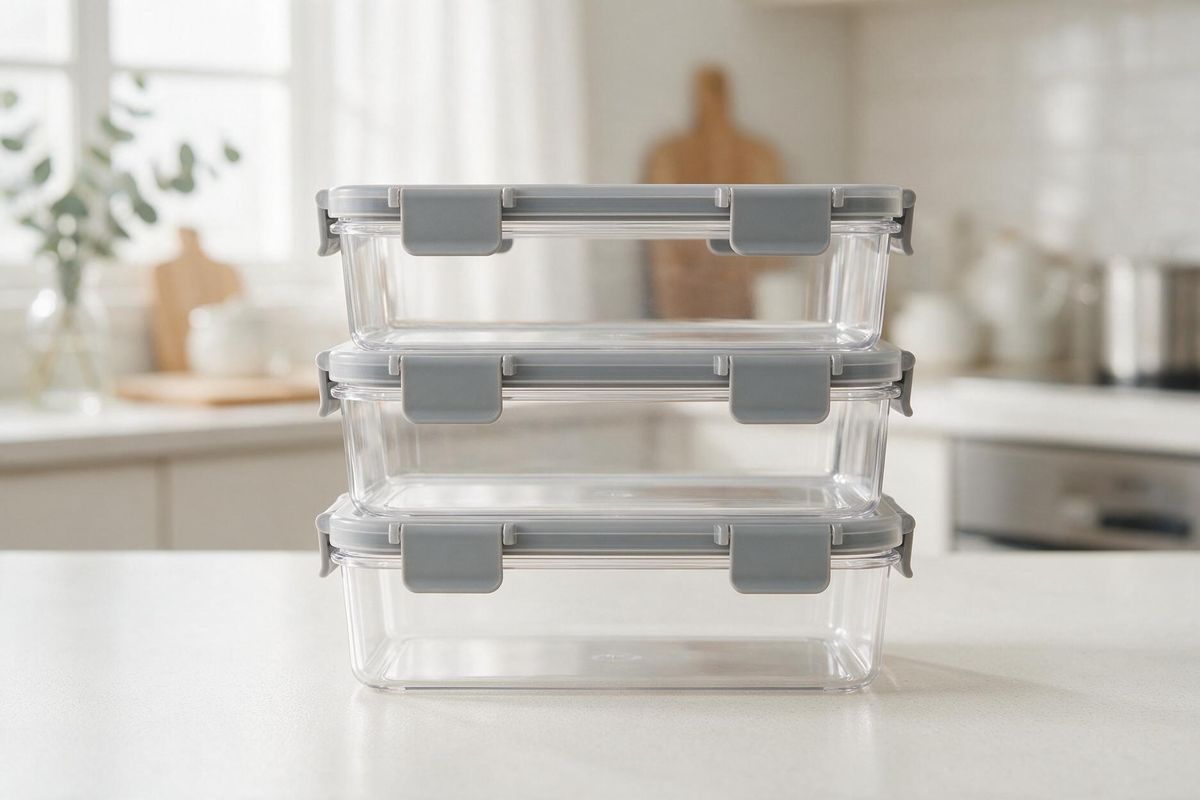
People often ask this with a brand name attached. That’s usually the wrong end of it. Storage mites don’t chew into packaging; they enter through defective seals and only build up when it’s warm and damp. Beetles and moths work the other way: UC IPM’s position is that pantry pests are normally carried home inside an already-infested package, and that opened ones are infested far more often than sealed.
The missed route is the kitchen itself. Pantry moths are the usual culprit, and their larvae crawl a long way from the food they grew up in before they pupate, so the kibble is often the second package involved.
Cat food, and clearing the rest of the room
None of this changes for cat food. Same milled grain, same rendered fat, same room, same species. Found something in one animal’s food? Open the other’s next.
Mite cleanup is housekeeping, not pest control: University of Kentucky is blunt that there’s no chemical answer. Throw the infested packages out. Wipe every remaining item and the shelf with hot soapy water, then vacuum the cracks where fines collect. One pass won’t do it: immature mites drop into a resting stage and sit out weeks of it. Move what’s left into containers that actually seal, and keep the room ventilated and dry.
For beetles and moths, freezing rescues anything worth keeping: 0°F (-18°C) for at least four days, a week to be safe. If moths were the find, the removal protocol and the prevention guide take it from there.
FAQ
Can dogs eat food that had bugs in it?
It depends on which bug and how the food was stored, and no web page settles that. Pantry beetles, weevils, and moth larvae don’t bite, sting, or carry disease, so the objection is contamination, not toxicity. Warehouse beetle larvae are the exception: guidance is to discard food infested with them. If your dog seems unwell, ask a vet.
What are the tiny white specks moving in my dog food?
Most likely storage mites. Individually they’re too small to see, so what registers is a pale film on the food or shelf that seems to shift. University of Kentucky calls it mite dust.
Are storage mites the same thing as dust mites?
Different mites, but the allergens cross-react. Dogs with year-round atopic dermatitis are often sensitized to house dust mites, and in those already-sensitized dogs, eating contaminated food has been linked to a flare. Documented in some dogs, not a rule for every dog, and a question for a vet.
Does this mean the food was contaminated at the factory?
Usually not. Mites slip in through defective seals and only multiply if the food is kept warm and damp, which points at storage. Beetles and moths mostly arrive inside an already-infested package.
Will freezing the bag fix it?
Partly. Four days at 0°F (-18°C) kills insect stages; a week is safer. What it won’t remove is what’s already shed into the food: beetle hairs, mite bodies, or mold.
Sources
- University of California Statewide Integrated Pest Management Program, Pest Notes: Pantry Pests, UC ANR Publication 7452.
- University of Kentucky Entomology, Grain Mites, ENTFACT-629.
- Iowa State University Extension and Outreach, Mold Mites, Yard and Garden.
- Olivry T. and Mueller R. S. (North Carolina State University College of Veterinary Medicine), Critically Appraised Topic on Adverse Food Reactions of Companion Animals (8): Storage Mites in Commercial Pet Foods, BMC Veterinary Research, 2019.