 Pantry food contamination
 Short answer
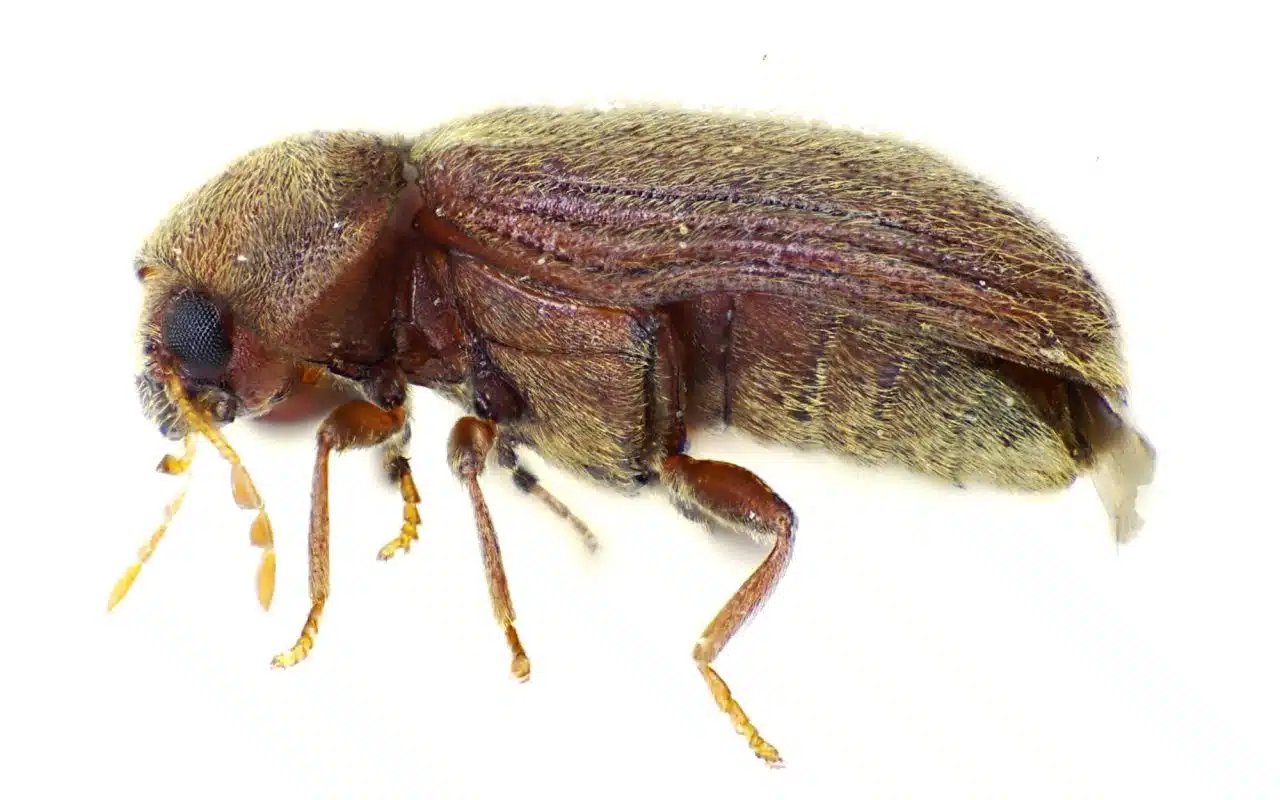
This small, fuzzy-looking beetle is oval, reddish-brown, and about the size of a matchhead, with grooved wing covers and a head tucked so far under its body that it looks headless from above. It shows up in pantry staples, spice jars, and sometimes old books or paper.
- Check for the fine fuzzy coating and the rows of tiny pits running down the wing covers, best seen with a loupe or a phone macro lens.
- Throw out any opened flour, spice, cereal, or pet food package where you spot one or notice pinhole damage in the packaging.
- Move vulnerable pantry items into airtight containers so new adults can’t get back in.
Identification

A drugstore beetle (Stegobium paniceum) measures about 2 to 3.5mm, or roughly 1/10 to 1/8 inch, about the size of a match head, with an oval body in a reddish-brown to light brown shade. What sets it apart at a glance is the fine coat of short hairs covering the whole body, giving it a slightly blurred, fuzzy look rather than the shiny finish you’d expect on most small beetles. Seen from above, the head disappears completely, folded down and tucked under the thorax, so the outline reads as one smooth, humped oval.
Look closer (a jeweler’s loupe or a phone macro lens works fine) and the wing covers show neat rows of tiny pits running lengthwise, almost like faint stitching. The antennae end in a three-segmented club, a useful detail once you’ve narrowed things down to a beetle this shape and size. It flies readily and gets drawn to light, so you might first notice one bumping against a window or a lamp at night rather than crawling across a shelf.
Indoors, it turns up in dried pantry goods: flour, cereal, spices, pasta, and dry pet food are all fair game, and the larvae do the real damage, chewing through packaging and boring into whatever is inside. It isn’t picky about food alone, either; old books, paper, and dried plant material can host it too, and the name comes from a habit of infesting dried medicines that used to sit on pharmacy shelves. It stays active indoors all year, though most households notice more activity from late spring through summer.
Look-alikes
The cigarette beetle is the one people mix it up with most, and for good reason: similar size, the same fuzzy coat, the same rounded hump. The difference sits in the details. A cigarette beetle’s wing covers are smooth, with no grooves or pitted rows, and its antennae are serrated, each segment forming a small saw-tooth, rather than ending in a club. Its back also tends to look a touch more rounded overall, which exaggerates that headless silhouette even further.
The pantry bug identification hub lines all six up. A rice weevil can also cause a double take, but it’s easier to rule out: it has a long, curved snout, longer than its own head, that neither this beetle nor the cigarette beetle has. If you can see a snout, you’re looking at a weevil, not either of the two fuzzy pantry beetles.
The shortcut: grooved wing covers plus a club-tipped antenna point to this species; smooth wing covers with saw-toothed antennae mean cigarette beetle instead.
FAQ
Does it bite or sting?
No. It doesn’t bite or sting. Clemson’s pantry pest factsheet records no disease associated with these beetles, but UC IPM adds a qualified caution: pantry pests can introduce microbes that go on to produce mycotoxins, particularly where food has sat in warm, humid storage. That is why extension guidance says to throw an infested package of flour or spices out rather than sift it.
What does it eat?
Mostly dried pantry staples: flour, cereal, pasta, spices, and dry pet food. It’s also known to chew through old books, paper, and dried plant material, which explains why an infestation sometimes starts in a stack of stored papers rather than the kitchen.
How do I keep it out of the pantry?
Move opened flour, grains, spices, and pet food into sealed, airtight containers so adults can’t lay eggs inside and larvae can’t chew their way out. For a fuller routine on sealing up dry storage, see our pantry moth prevention guide or the prevention hub for a broader checklist.
Sources
- University of California Statewide Integrated Pest Management Program, Pest Notes: Pantry Pests, UC ANR Publication 7452.
- Clemson Cooperative Extension, Home & Garden Information Center, Pantry Pests, Factsheet HGIC 2439.
- Penn State Extension, Drugstore Beetles.