Short answer: moth pheromone traps
Moth pheromone traps use a synthetic copy of a female moth’s mating scent to lure males onto a sticky surface, which cuts down breeding rather than killing anything already living in your food or fabric. Pantry moth traps and clothes moth traps run on two different pheromones, so the trap has to match the moth: a pantry lure hung in a closet will sit there catching nothing. On their own, these traps are a monitoring and reduction tool, not a fix for an active infestation.
- Identify which moth you have first (pantry moths fly near food storage, clothes moths near closets and drawers) and buy the matching pheromone.
- Hang traps a few feet from the problem area, not tucked away where moths never pass.
- Track the catch count over several weeks, then use it as a signal to go find the actual source, not as proof the problem is gone.
How a pheromone trap actually works
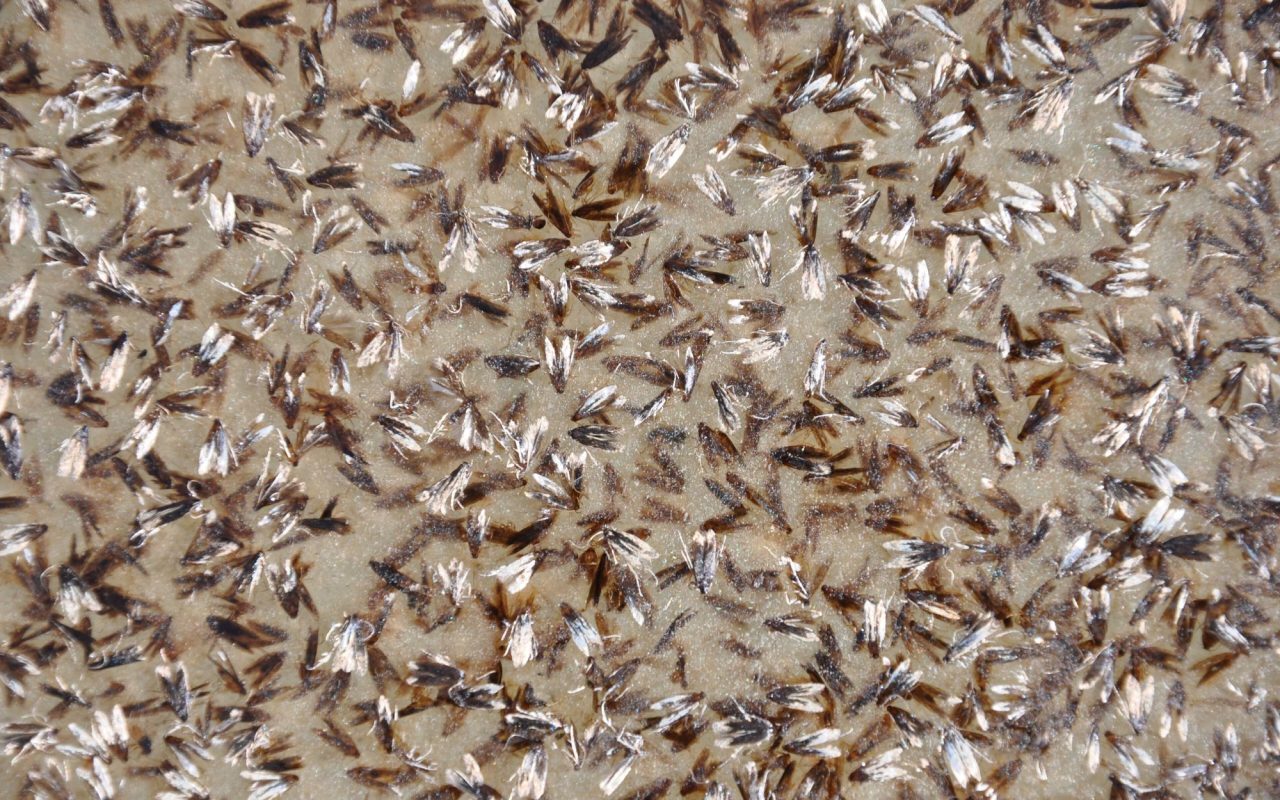
Every trap in this category works the same basic way. A small lure inside is treated with a lab-made version of the chemical scent female moths release to attract mates. Male moths follow that scent trail toward the source, land on or near it, and get stuck to an adhesive surface built into the trap. That’s the entire mechanism: there’s no spray, no residue drifting through the room, and nothing that touches the moths until they’ve already flown into the trap.
Because it only catches males, a pheromone trap interrupts breeding rather than clearing out what’s already there. Females that have already mated keep laying eggs, and any larvae already feeding in a food package or a wool sweater are completely unaffected; the trap has no way to reach them. Think of it as removing future fathers from the population, not as pest control in the sense of killing what’s currently causing damage. That’s why it works best paired with finding and discarding the infested item, not used by itself as the whole plan.
Pantry moths and clothes moths need different traps
This is the detail that trips people up most often. Pantry moths and clothes moths are different species with different mating pheromones, so a lure made for one does absolutely nothing for the other. Put a pantry moth trap in a bedroom closet and you can leave it there for months without a single catch, even with a full-blown clothes moth problem going on a few feet away, because the scent simply isn’t the one that species responds to.
Before buying anything, confirm which moth you’re dealing with. If you’re seeing small tan or gray moths flitting around the kitchen, cereal boxes, or dried goods, that’s a pantry moth issue. Our guide to getting rid of pantry moths walks through identification and cleanup. If the moths are showing up near closets, drawers, or wool storage, and you’re noticing irregular holes in fabric, see our guide to getting rid of clothes moths instead. Packaging is usually labeled clearly for one or the other, but it’s worth double-checking before you hang anything.
Comparing trap mechanisms
Within either pheromone type, traps mostly differ in physical design. Here’s how the three common mechanisms stack up.
| Trap type | How it works | Where it fits best | Main limitation |
|---|---|---|---|
| Sticky delta/tent trap | A folded cardboard tent with a sticky insert and pheromone lure inside; moths land on the glue and stay put. | Small spaces like pantries, cabinets, or closets where you want a low-profile, disposable option. | Sticky surface loses effectiveness once it collects dust or a handful of moths, and needs regular swapping. |
| Hanging jar/funnel trap | A vented container with the lure suspended inside; moths fly in through a funnel opening and can’t easily find their way back out. | Larger rooms or areas with higher moth activity, since it holds more catches before needing attention. | Bulkier and more visible than a flat sticky trap, less practical for a shelf or drawer. |
| Plug-in electric trap | Combines the pheromone lure with a light or fan that draws moths toward an electrified grid or sticky pad inside a powered unit. | Rooms with an outlet nearby and ongoing, heavier moth activity where passive traps fill up too fast. | Needs a power source and physical space for the unit, and costs more than a simple sticky or jar trap. |
Placement tip: Hang pantry moth traps within a few feet of where dry goods are stored, and clothes moth traps close to the closet rod or drawer rather than across the room. Pheromone concentration drops off quickly with distance, and a trap too far from the activity will underreport what’s actually going on.
Where to put traps, and how often to replace the lure

One trap per small area is usually enough to tell you whether moths are present: a single pantry, a single closet. In a larger kitchen or a walk-in closet, two traps spaced across the space give a more honest read than one trap in a corner nobody flies past. More traps than that mostly just adds cost without adding useful information; this is a monitoring tool, not something you need blanketing every shelf.
The pheromone lure itself weakens over time as the compound evaporates, so a trap that caught moths steadily a month ago can go quiet simply because the lure is spent, not because the moths are gone. As general guidance, plan on swapping the lure roughly every four to six weeks, and replace the sticky insert whenever it’s visibly covered or coated in dust, whichever comes first. Manufacturers vary on exact timing, so treat that window as a starting point rather than a fixed rule.
Don’t misread the trend: a falling catch count means fewer males are flying, not that the eggs and larvae behind the problem are gone. Traps can’t touch what’s still developing inside a food package or a piece of fabric; that part only gets solved by finding and removing the source.
What a declining catch count really tells you
A count that drops from ten moths a week to two or three is a genuinely useful signal: it usually means the trap has been catching males consistently and the local population is shrinking as a result. That’s worth noting and it’s a reasonable sign that whatever cleanup you’ve already done is helping. But it isn’t confirmation that the infestation is finished. Eggs laid before the count dropped are still hatching on their own timeline, and larvae feeding inside a box of grain or a stored sweater are never going to show up on a sticky pad.
Use the trend as a prompt to keep looking rather than a reason to stop. If catches stall at zero for a couple of weeks and then start climbing again, that’s usually a sign there’s still an active source somewhere nearby that hasn’t been found, like a forgotten bag of pasta at the back of a cabinet, or a wool item in a box that never got checked. The trap tells you direction, not completion.
FAQ
Can I use one trap for both pantry moths and clothes moths?
No. The two use different pheromones, so a single trap only attracts one species. If you have both problems at once, you need one of each, placed in the areas where each type is actually active.
Will a pheromone trap get rid of a moth infestation by itself?
Not on its own. It reduces breeding by catching males and gives you a sense of activity level, but it doesn’t kill eggs or larvae. Clearing an infestation still means finding and removing the infested food or fabric.
Why isn’t my trap catching anything?
The most common reasons are a mismatched pheromone, a lure that’s past its effective window, or placement too far from where the moths are actually active. Check all three before assuming the moths are gone.
Are pheromone traps safe to use around food and clothing?
They’re designed to sit in kitchens and closets and work through scent and adhesive rather than any spray, so placement directly among food or fabric is the intended use. Follow the specific product’s instructions for exact positioning.