Short answer
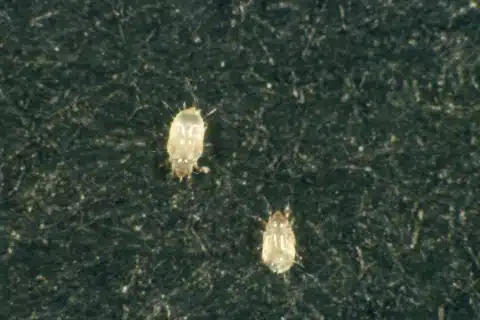
Clover mites are lawn mites, not house pests. They feed on grass and clover growing against your foundation, walk up the sunny wall in spring, and die indoors within days because nothing in your house feeds them. The fix is outside, at the base of that wall.
- Never crush or wipe them. Vacuum with a nylon stocking over the nozzle, or lift them with tape. A crushed clover mite leaves a rust-red stain on paint and fabric that does not come out.
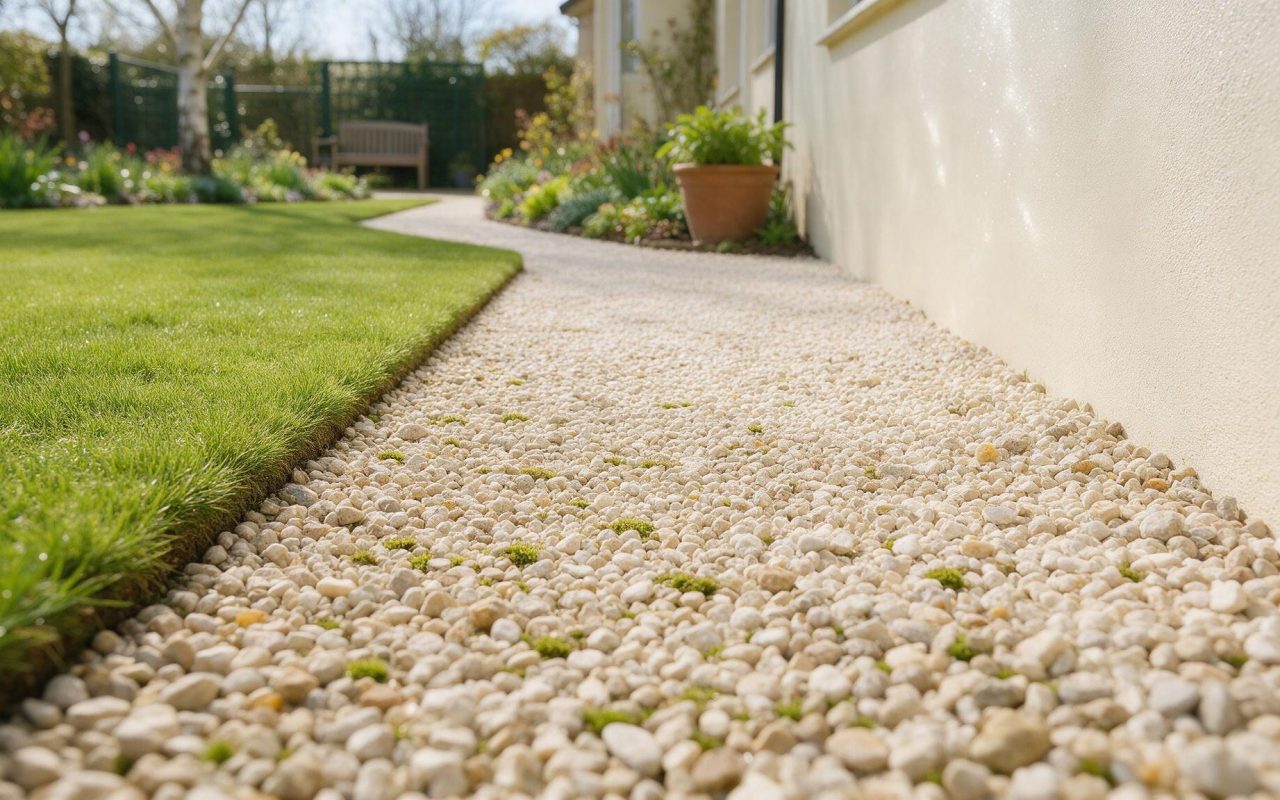
- Clear an 18-inch band of bare gravel around the foundation on the wall they are using. That is the step that holds year to year.
- Caulk the window frames, siding joints, and foundation cracks on that same wall, then recheck on the next warm spring morning.
A lawn problem that walked up a wall
Clover mites are plant feeders. They pierce grass, clover, and other turf plants and drink sap, and that is the whole of their diet. Nothing indoors qualifies: not wool, not paper, not wood, not food, not you. Put one on a windowsill and it dries out within a few days. If you are not certain that is what you have, the clover mite identification page covers the tells, and the other tiny reddish-brown bugs found indoors sorts it from the pantry beetles it gets confused with.
So the cluster on your sill is not a population. It is a list of arrivals. Killing what you can see changes nothing about the lawn that produced them, which is why this is a barrier protocol rather than a treatment protocol. The numbers are the reason it escalates so fast: clover mites reproduce without males, every one you find is female, and extension accounts put a single female at roughly 70 eggs.
That also means the moisture playbook does not apply. Springtails and silverfish are a humidity reading, and drying the room out ends them; the springtail protocol runs entirely on finding the wet spot. Clover mites are indifferent to your indoor humidity. They came for a sun-warmed wall and a food supply growing against it, and a dehumidifier touches neither.
The full protocol
Stop everyone in the house from wiping them
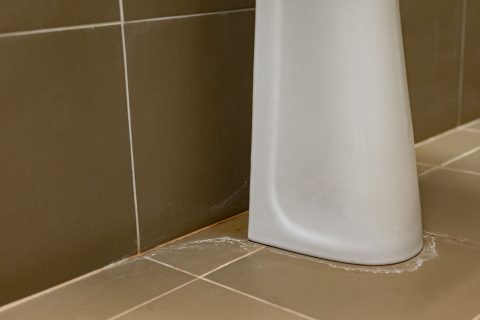
This is step one because every hour it waits costs you a stain. The red is body pigment, not blood, and it transfers the instant the mite is pressed: a sleeve on a sill, a paper towel across a frame, a blind pulled down. On flat paint and light fabric that mark is effectively permanent. Say it out loud to whoever else lives there, because one helpful pass with a damp cloth undoes the whole job.
Vacuum them off with a stocking over the nozzle
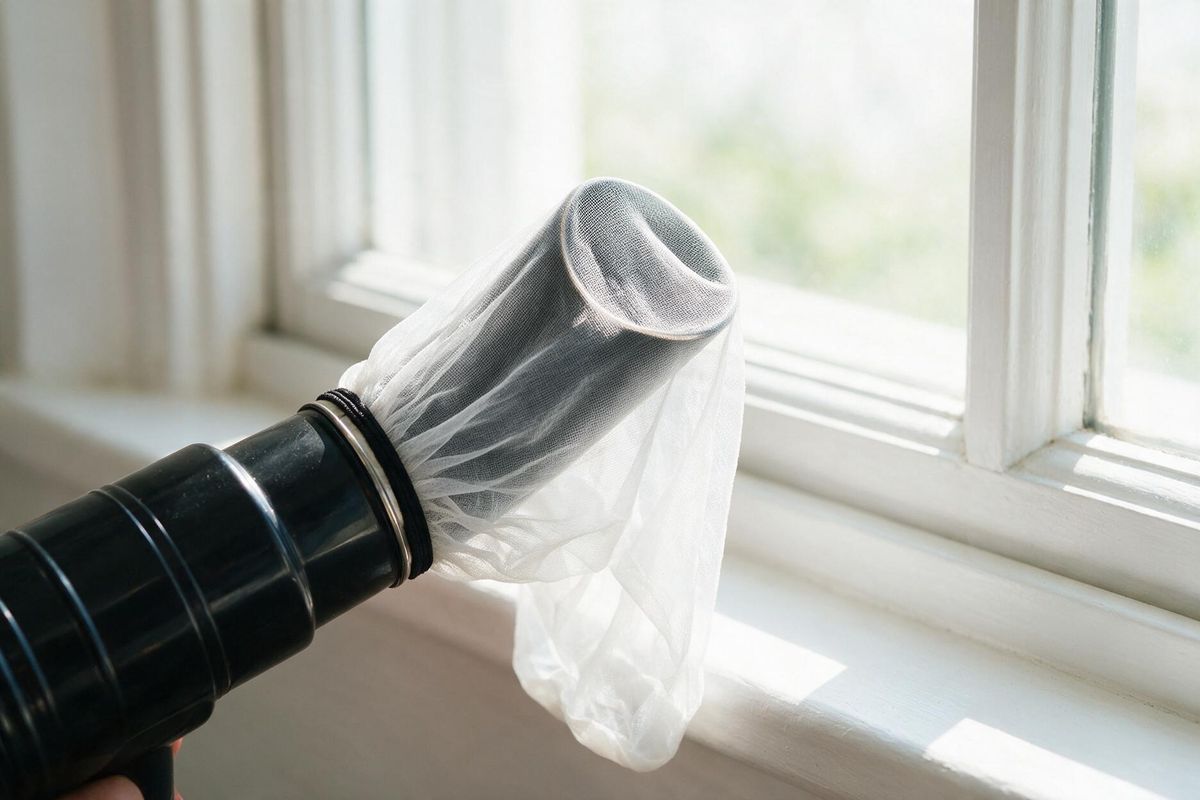
Stretch a nylon stocking over the crevice tool, push a couple of inches of it down inside the tube, and hold it with a rubber band. The mites collect in the toe instead of being dragged down the hose and mashed against the filter. Pull the stocking off, knot it, bin it outside. Work the sill, the window track, the frame joint, and a foot of wall either side. On a small cluster, packing tape or a lint roller does the same job: the mite lifts whole.
Go outside and find the wall
Almost every indoor sighting traces to one wall, and it is the warm one: south- or west-facing, the surface that holds heat into the evening. Stand at its corner and look at where the ground meets the building. You want turf growing flush to the foundation, a strip greener than the rest of the lawn, clover in it, or ivy on the masonry. Note which windows on that wall you have been finding mites at.
Cut a bare band, 18 inches wide, at the base of that wall
This is the step that actually ends it. Pull the turf, ground cover, and foundation plantings back 18 to 24 inches (roughly 45 to 60 cm) from the wall, and top the strip with pea gravel so it stays bare. The mechanism is simple: clover mites walk, and they walk through vegetation. A continuous band of dry, sunbaked gravel gives them no food and no cover, so the traffic reaching the siding drops away. Extend it along the whole wall, not just under the window where you saw them. Keep mulch and creeping ground cover out of it permanently, and ease off the nitrogen there: heavily fertilized turf carries the heaviest mite populations.
Caulk what the band does not stop
Some will still reach the wall, and a mite under a millimeter wide gets in through gaps you would not think of as gaps. Run a bead of exterior caulk into the joint where window and door frames meet the siding, into foundation cracks above grade, and around anything that penetrates the wall: hose bibs, dryer vents, cable entries. Replace failed weatherstripping under exterior doors and repair torn screens on that side. This also removes overwintering sites, since the eggs sit out the cold in exactly those cracks. The prevention hub covers the rest of the house room by room.
Recheck on the next warm morning, and again next spring
Clover mites are seasonal, so the honest test is a calendar test, not a week of watching. Check the same sill on the first warm, sunny mornings after the work is done, then again at the following spring peak. A handful where you had dozens means the band is working and a gap is still open. Dozens again means the band has a break in it.
Don’t do this: reach for the indoor bug spray. It kills mites that were going to die on their own in a couple of days, and does nothing to the ones walking up the outside of that wall. You end up with the same cluster back by the weekend and a residue in a room where the problem never lived.
The shortcut: a nylon stocking and a rubber band on the vacuum nozzle. Thirty seconds to rig, and it is the difference between clearing a windowsill and repainting one.
Where they actually cross
Work the sunny wall from the ground up. The first rows are what the gravel band fixes; the rest is what the caulk gun fixes.
| Where to look outside | What confirms it |
|---|---|
| Turf at the base of the sunny wall | Grass blades touching the siding or concrete |
| The lawn strip within a foot of the foundation | Clover in it, or growth noticeably greener than the rest |
| Ivy or climbing plants on the wall | Stems on the masonry above where you found mites |
| Mulch or bark pushed up to the siding | Bed material touching the wall |
| Window and door frame joints | A gap you can slip a business card into |
| Foundation above grade | Hairline cracks, or open mortar joints |
| Weep holes and vents at the brick line | Open holes with no screen behind them |
| Threshold under an exterior door | Daylight at the corners, or flattened weatherstrip |
Spring is the peak, and it sets your calendar
Eggs sit out the winter in foundation cracks and under siding, then hatch in early spring, which is why the first big wave lands while the lawn is still coming back. Activity runs through mild weather, roughly 45 to 85°F (7 to 29°C). Past the top of that range the mites go quiet, and eggs laid in the heat stay dormant until temperatures drop, which produces the smaller second wave in fall.
The practical consequence is timing. The band and the caulking work best in late winter or early fall, in the gap between waves, when you are cutting off a hatch that has not happened yet rather than fighting one in progress. If you are reading this mid-wave, do steps one and two today and get the outdoor work done as soon as the ground allows; the payoff lands the following spring. Folding the strip check into the seasonal whole-house pass keeps it from quietly filling back in.
What does not work, and why
Indoor insecticide fails twice over. First, it treats a surface the mites are only passing across, so a fresh batch walks in through the same joint an hour later. Second, mites are arachnids, not insects, and plenty of household insect products are weak against them. When a spray is worth using at all covers the general case; this is one of the clearest examples of when it is not.
An outdoor perimeter treatment on the band and the lower wall is the only chemical option that makes sense, and even then it supplements the bare strip rather than replacing it. A treated strip of lawn is still a strip of lawn full of food against your wall, and the treatment fades. The band is what still works next year.
Two smaller failures. Sealing only the inside of the window does nothing once mites are in the wall cavity, so the caulk belongs on the exterior joint. And waiting them out is technically correct and practically miserable: they do die indoors within days, but a week of specks on a sill is a week of sleeves crushing them. Vacuum first, then wait. If small bugs keep turning up and you are no longer sure they are all the same thing, the sub-2mm sorting guide separates the three that get mixed up most.
FAQ
Will bug spray get rid of clover mites?
Not in any lasting way indoors. The mites on your sill were going to die in a couple of days regardless, and the ones outside keep arriving through the same gap. Mites are not insects either, so many household insect products are weak against them to begin with. The barrier outdoors is what changes the count.
How wide does the gravel band have to be?
Eighteen to twenty-four inches, about 45 to 60 cm. Width matters less than two other things: it has to run the whole wall with no bridge of turf or mulch crossing it, and it has to stay bare. A band broken by one flower bed at the corner is a band with a door in it.
I already crushed a few. Can I get the stain out?
Blot, do not rub: rubbing drives the pigment further into the fiber. On washable fabric, cool water and a mild detergent as soon as possible give the best chance. On flat wall paint and untreated grout it often will not lift at all, which is why the stocking is step two rather than an afterthought.
Something is biting me and I keep seeing clover mites. Are they connected?
No. Clover mites feed on plant sap and do not bite people or pets. If something is genuinely biting you, the mite on the windowsill is not the culprit, and any skin reaction is a question for a doctor rather than a pest page.
They came back the next spring. Did the band fail?
Usually the band has a break that was not there in the fall: mulch pushed back against the wall, ground cover creeping in, a new bed at one corner. Walk the whole strip before assuming the method failed. Eggs already laid in foundation cracks also hatch in place, so the first spring after the work can still show a wave.
Sources
- University extension entomology departments, household and structural pest fact sheets on clover mites.
- Standard urban entomology references on clover mite biology and reproduction (parthenogenesis, seasonal activity range).