Short answer
A booklouse is not a louse, and it is not eating your books. It eats the microscopic film of mold that grows on damp paper, cardboard, plaster and drywall. That makes this a humidity problem wearing an insect costume. Insecticide does not dry anything, so it does not end anything.
- Watch one for two seconds. A booklouse walks. If it hops away when you disturb it, you have springtails, which need their own pass.
- Find the surface that is damp right now, wipe the film off it, and dry it.
- Hold the room under about 50% relative humidity. Most rooms clear within a few days to two weeks.
Booklice do not eat paper. They eat what grows on it.
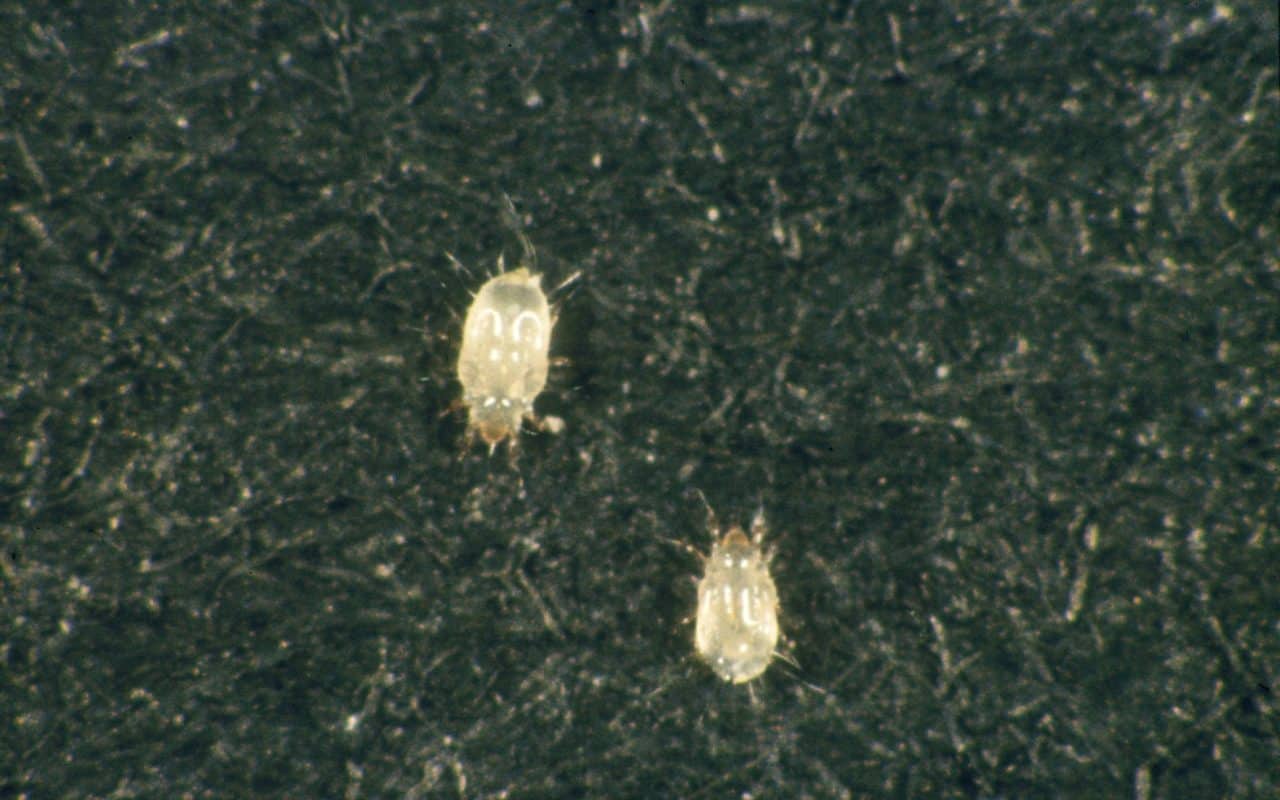
Adults run 1 to 2 mm, pale tan to almost translucent, soft-bodied, and wingless in the species that live indoors. What they graze is the surface film: mold, mildew and the starchy residue it grows on. Paper is not the meal. Paper is the sponge that holds water long enough to grow the meal, and so are cardboard, wallpaper paste, joint compound, plaster and the grain dust in a cereal box. The identification page covers what one looks like under a lens.
That one fact rewrites the whole job. The count is a reading, not an infestation: hundreds on a bookshelf means that shelf has been damp long enough to grow a film you cannot see yet. And the film needs a far wetter surface than the room average suggests. Mold gets going around 80% humidity at the surface, which a bookcase pushed flat against a cold exterior wall reaches while the hygrometer mid-room reads 60%. You are hunting a surface, not a room.
They do not bite, do not carry disease, and do not damage the structure of a house. If someone in the house is reacting to the air rather than to the insects, that is a mold question for a healthcare professional, not a pest question.
Where the damp surface usually is
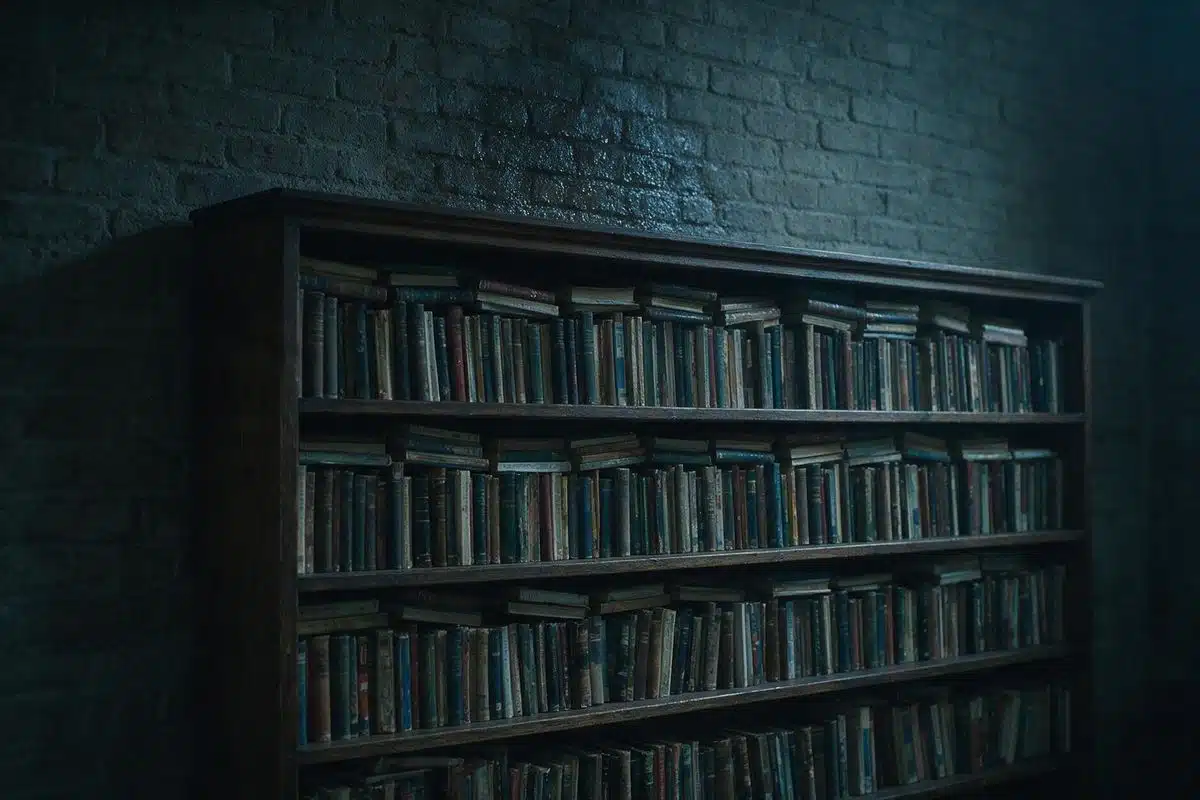
Work in order of probability, and do not stop at the first damp thing you find. Houses commonly have two.
- Books, boxes and paper stored against a cold exterior wall. Back cover cool and faintly limp to the touch.
- Window reveals and sills that fog up overnight. Wipe one at 7 a.m., not at 3 p.m.
- Cardboard in a basement or garage. Bottom edge soft, corners darkened where they meet the slab.
- The back corner of a sink cabinet. Particleboard darker than the panel next to it.
- Wallpaper on an outside wall, or any patch of old paste. Seams lifting, a musty smell up close.
- Opened flour, cereal, dried fruit and pet food in a cupboard that gets steam from the stove.
- Fresh plaster, new drywall, a new screed, or a room that was flooded and dried in a hurry.
The shortcut: a cheap hygrometer left in the room for three days tells you more than any amount of squinting at insects. Read it at the worst hour, not the convenient one: early morning in a bedroom, twenty minutes after a shower in a bathroom.
Why a brand-new house is the classic booklice house
This is the version nobody warns buyers about. Concrete, mortar, screed, plaster, joint compound and framing lumber all go in wet, and they give that water back to the indoor air for months. The first heating season after move-in is the worst of it, because the house is sealed tight and the ventilation habits are not set yet. So a spotless new build with no clutter, no leak and no pest history can throw a booklice bloom in month three: on window reveals, on the paper facing of drywall, on the backs of the boxes you never unpacked.
A remodel does it on a smaller scale: fresh plaster on one wall, a newly tiled bathroom, a papered room where the paste is still curing. It is not a build defect and not a hygiene failure. It is construction moisture leaving on its own schedule, over the first year or two.
You can shorten it. Ventilate hard through that first year: vents open, extractor fans running well past the end of a shower, interior doors open so the dry rooms pull from the damp ones. Do not dry laundry indoors in a new house.
The full protocol
Confirm it walks instead of jumping
Disturb one and watch. A booklouse walks, sometimes in short jerky bursts, feet on the surface the whole time. A springtail flicks itself several inches through the air and lands somewhere random. The two protocols split here: springtails chase standing water, booklice chase the film on a damp surface, so the spots you check are different.
Put a hygrometer in the room and read it at the worst hour
Leave a cheap hygrometer in the room where you are finding them, not in the hallway, and read it three days running at the hour that room is dampest. A room that never climbs past 45% is not the room feeding them. Go look at another one.
Find the damp surface and wipe the film off it
Work the list above until something is wet right now: soft cardboard, a cold wall behind a bookcase, a sill with condensation, a swollen cabinet floor. Then clean it. Any household cleaner removes the mold film, which is the actual food supply. Wiping is not the fix, but it takes the meal off the table while the surface dries.
Ventilate, fix the source, then dehumidify
In that order, because that is the order of leverage. Ventilation is free and works on the whole room. The source is what ends it: a slow drip, an unvented shower, laundry drying indoors, a bathroom fan discharging into the attic. A dehumidifier is the backup for where the first two cannot get you, set to a target humidity rather than a timer. All of it is written out in the room-by-room guide to bringing indoor humidity down.
Empty the damp storage
Cardboard is the perfect booklouse habitat: absorbent, glued, and usually sitting on a cold floor. Take the boxes out, move what you keep into sealed plastic bins, and lift stored paper off the slab and away from exterior walls. Damp books dry flat in a warm dry room over a few days. Basement storage habits once the air is under control covers how to put it all back.
Recheck at three days, then at two weeks
Look at the same surface at the same bad hour. Numbers should be visibly down by day three and gone by two weeks. A sticky trap at the baseboard gives you a count on paper, but it is only a gauge: it will never catch enough of them to matter.
Don’t do this: do not set off a fogger and call it done. A fogger puts mist into open air, and booklice are inside the cardboard, behind the bookcase and under the baseboard. Worse, it lets you skip the drying, which is the only step that ends this. A room that gets sprayed and stays damp refills in a week.
Booklice in flour, cereal and pet food
The kitchen version arrives a different way. Booklice come home inside packaging, or move into an opened bag once the cupboard gets humid enough to grow a film on the grain dust. They are not chewing the pasta. They are grazing what started growing on it, which is why they turn up in the flour open since spring and not the sealed bag beside it.
Throw out anything visibly moldy or clumped. For a package worth keeping, three to four days in the freezer at 0 °F (-18 °C) kills what is inside. Then wipe the shelf, let it dry fully, and put the dry goods back in containers that actually seal. If the cupboard sits above a dishwasher or beside a kettle, that steam is why the film grew, and it will grow again.
What does not work, and why
Contact sprays kill what they land on, then the surface refills from the film you never dried. Residual products break down quickly in damp conditions, which is exactly the condition you have. When a spray is worth using at all is the longer argument; booklice are not one of those times.
Dry powders have a mechanical problem rather than a chemical one. Diatomaceous earth abrades the waxy outer layer so the insect dries out, which needs a dry surface to work on. Booklice live on the wet one, and damp powder cakes and stops abrading. It sits there inert.
Scent-based fixes are the wrong category altogether. Cedar blocks, essential oils and air fresheners do nothing, because nothing drew these insects to the room in the first place. They are not attracted. They are held there by water. A vacuum clears the group in front of you and changes nothing about why it formed.
How long it takes, and what a rebound means
Once the surface is genuinely dry, the film stops growing and the population goes with it, usually inside a few days and almost always inside two weeks. The clock that matters is the substrate’s, not the insect’s. A cabinet floor dries in an afternoon. A plaster wall that has taken water for a season gives it back for weeks, and feeds them the whole time.
A rebound is almost never a treatment failure, because there was no treatment. It means one of three things: a second damp surface you never found, the first one re-wetting on a cycle, or a room that reads fine on average while one cold corner stays wet. Go back at the worst hour and put your hand on things. Silverfish run on the same lever, which is why the silverfish protocol reads like this one with a bigger animal in it.
FAQ
What humidity kills booklice?
Extension sources put it at roughly 45 to 50% relative humidity: below that, booklice do not survive, and the mold they graze stops growing. Their optimum sits far higher, around 75 to 95%. Under 50% indoors is the target public-health guidance gives anyway, so aim there, and hold it rather than touching it once. The reading that decides it is the one at the damp surface, not the one mid-room.
Do booklice bite, or damage books?
Neither. They have no interest in people or pets, do not bite or sting, and are not known to transmit disease. They do not chew paper either: they graze the mold on its surface, so a grazed page looks faintly dusty from droppings but stays intact. The damage worth worrying about is the damp that grew the mold.
Why are there booklice in a brand-new house?
Because the house is still drying. Concrete, plaster, joint compound and framing lumber release moisture for months after construction, and the first sealed-up heating season concentrates it. That is construction moisture, not a build defect or a hygiene problem, and it resolves as the building dries. Ventilate hard through the first year to shorten it.
They came back after two weeks. What did I miss?
Usually a second damp surface, or the first one re-wetting on a schedule. Look for what gets wet on a cycle: condensation forming overnight on the coldest wall, a shower used once a day, a cupboard that catches steam from the stove. Check at the wettest point of that cycle, with your hand rather than your eyes.
Sources
- Penn State Extension, Department of Entomology, Booklice.
- University of Minnesota Extension, Psocids (booklice).
- Texas A&M AgriLife Extension, Insects in the City, Booklice and psocids.
- University of Kentucky Entomology, Psocids.