Short answer: how to keep moths out of closet
You don’t fix this with one airtight bin. Wool, silk, and other natural fibers left soiled and undisturbed in a dark closet are the real target, so cleaning first and a regular check matter as much as the container. Clean items before storing them, open the space up now and then, and inspect a few times a year.
- Launder or dry-clean wool, silk, and other natural-fiber items before long-term storage, even if they look clean.
- Shake out and check folded or hung items a few times a year, especially seams, cuffs, and folds.
- Keep the closet lit and let air move through it instead of leaving it shut and dark for months.
- Use a breathable garment bag for pieces you still want easy access to.
- Treat cedar or scent products as a mild add-on, not the actual solution.
Why sealing alone doesn’t solve this
Most people default to the pantry-pest instinct: seal it up and the problem’s contained. That’s only half right here. A sealed tote or cedar chest is a fine place for wool once it’s clean, the same call our removal guide makes for off-season storage. Sealing something already soiled, or already carrying eggs or larvae, just keeps the problem contained with the fabric. What matters happens before the lid goes on: laundering first, then checking on a schedule instead of forgetting the container exists.
What’s actually feeding the larvae
Larvae feed on the keratin in wool, silk, and other animal fiber, but soiled fabric draws the heaviest feeding. Skin oils, sweat, and spilled food worked into the weave make fiber more attractive and easier to digest. A sweater put away after one wear carries more of that residue than one that’s been washed, which is why laundering or dry-cleaning before storage matters more than most people assume. It isn’t about looking presentable. It’s cutting down what makes the fiber worth eating.
Before storage: clean a wool or silk item before it goes into a drawer or the back of the closet for the season. A worn-but-unwashed piece is a more attractive target than one that’s been laundered.
Rotate through the closet a few times a year
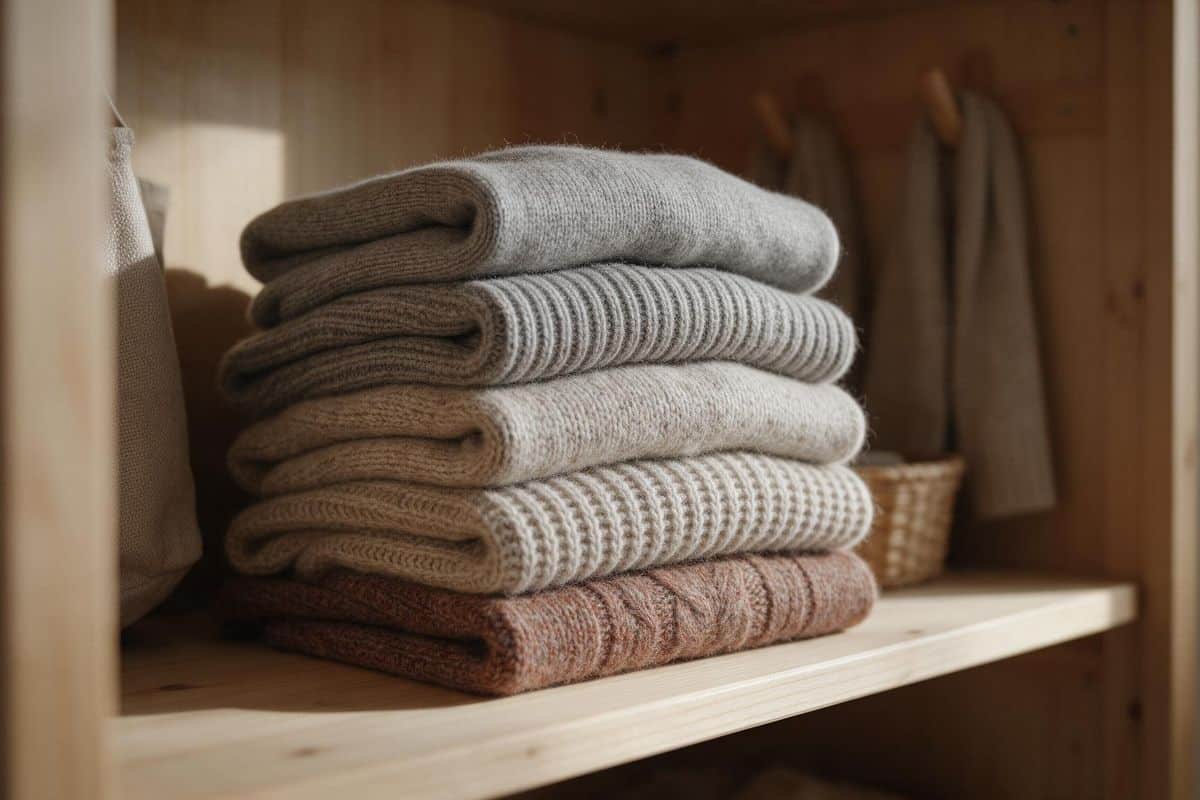
A closet that goes untouched for a year is close to the ideal setup for this pest. Set a rhythm instead: pull items out at each season change, shake them, and check folds, cuffs, and seams, the spots larvae tend to settle into. It doesn’t need to be a deep clean, just enough handling to interrupt a space that would otherwise sit dark and undisturbed for months. Clothes you wear regularly are rarely the issue. It’s the coat in the back corner or the sweater at the bottom of a drawer that goes unchecked.
Airflow and inspection do the ongoing work
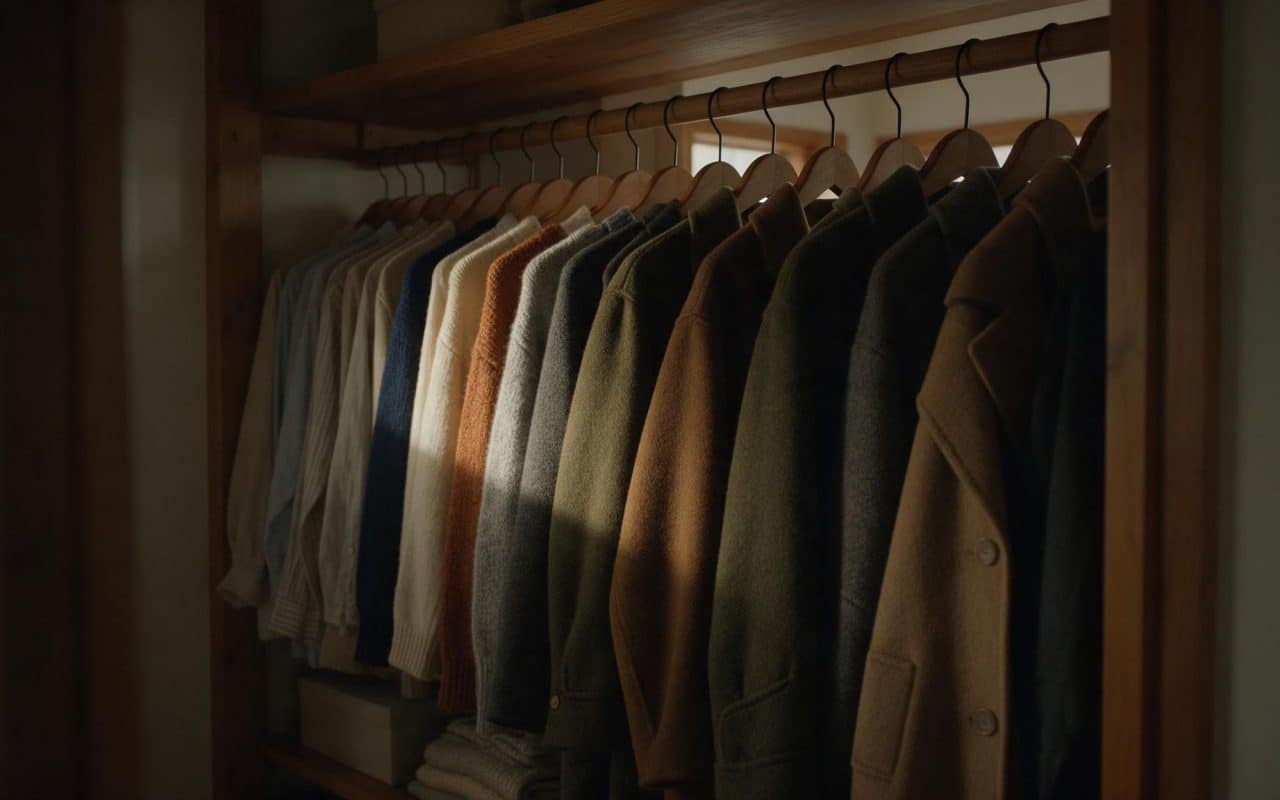
This pest prefers still, dark, undisturbed fabric. For wool and silk you’re not ready to pack away, the everyday closet does more work than any container: a door that opens, some light, and clothes that get handled instead of hanging untouched for a year. Save the sealed tote or cedar chest for once something is clean and headed into off-season storage; before that, handling and airflow do more.
About cedar: cedar blocks and sachets can make a drawer less inviting, but they don’t kill anything and don’t touch the residue already in the fibers. Treat them as a minor extra, not the plan itself.
Garment bags for pieces you check often
For coats, suits, or wool pieces worth extra care, a garment bag is a reasonable middle ground. It isn’t airtight, so it doesn’t fight the airflow point above, but it adds a physical barrier while still letting you unzip it for a seasonal look-over. Barrier plus easy access is the goal. A bag you never open again defeats the purpose about as thoroughly as a sealed bin would. If moths have already turned up in fabric rather than just being a risk you’re managing, the clothes moth removal guide covers what to do once they’re active.
FAQ
Do I need airtight bins for wool storage?
Not necessarily. A sealed tote or cedar chest works fine for clean, off-season wool. For anything you’re still deciding whether to store, a breathable garment bag or a drawer you actually check beats a sealed box you forget about.
How often should I check stored clothing?
A few times a year is enough, roughly at each season change. Clothes you wear often need less attention, since handling them regularly already disrupts the conditions this pest prefers.
Does cedar actually stop this pest?
It can make a drawer less appealing, but it doesn’t kill anything and doesn’t remove residue already in the fabric. Use it alongside laundering and inspection, not instead of them.
Why does washing matter before storage if an item looks clean?
Visible dirt isn’t the issue. Body oils and sweat residue can sit in a lightly worn item even when it looks fine, and that residue is what makes the fiber worth feeding on.