Short answer: how to prevent silverfish in bathroom
Silverfish need damp, humid conditions to stick around, and bathrooms provide exactly that unless you manage moisture on purpose. Run the fan, dry things out, and fix small damp spots before they turn into permanent habitat.
- Run the exhaust fan during and after every shower, or crack a window.
- Hang the bath mat to dry instead of leaving it balled up on the floor.
- Check the caulk around the tub and sink for cracks or gaps.
- Clean the drain regularly so standing water and buildup don’t accumulate.
- Add a small dehumidifier if the room stays humid no matter what you do.
A bathroom is a moisture problem before it’s a bug problem
Every prevention guide on this site comes back to the same starting point: it’s a moisture problem before anything else. Standing water in drains, a wet bath mat left in a heap, and poor airflow after a shower all add up to the kind of humid air that lets small pests move in and stay. Silverfish are no exception. They favor damp, dark spots and tend to settle in wherever relative humidity sits above roughly 50%, which describes a lot of bathrooms for hours after every shower or bath.
Run the fan, or open a window
The fastest fix costs nothing. Turn the exhaust fan on before you start the shower and leave it running for fifteen to twenty minutes after you’re done, long enough for the mirror to clear and the walls to stop sweating. No fan, or a weak one? Crack a window instead. The goal is simple: humid air needs somewhere to go, and if it just sits in a closed room, it soaks into grout, wood trim, and anything else that can hold moisture.
Don’t leave the bath mat wet on the floor
A damp mat wadded up on tile is basically a moisture reservoir with a rubber backing that traps water underneath where it can’t evaporate. Hang it over the tub edge or a bar after each use so both sides dry fully. It takes seconds and removes one of the easiest hiding spots in the room.
Tip: A mat with a quick-dry or open weave backing dries faster than a solid rubber-backed one.
Check the caulk around the tub and sink
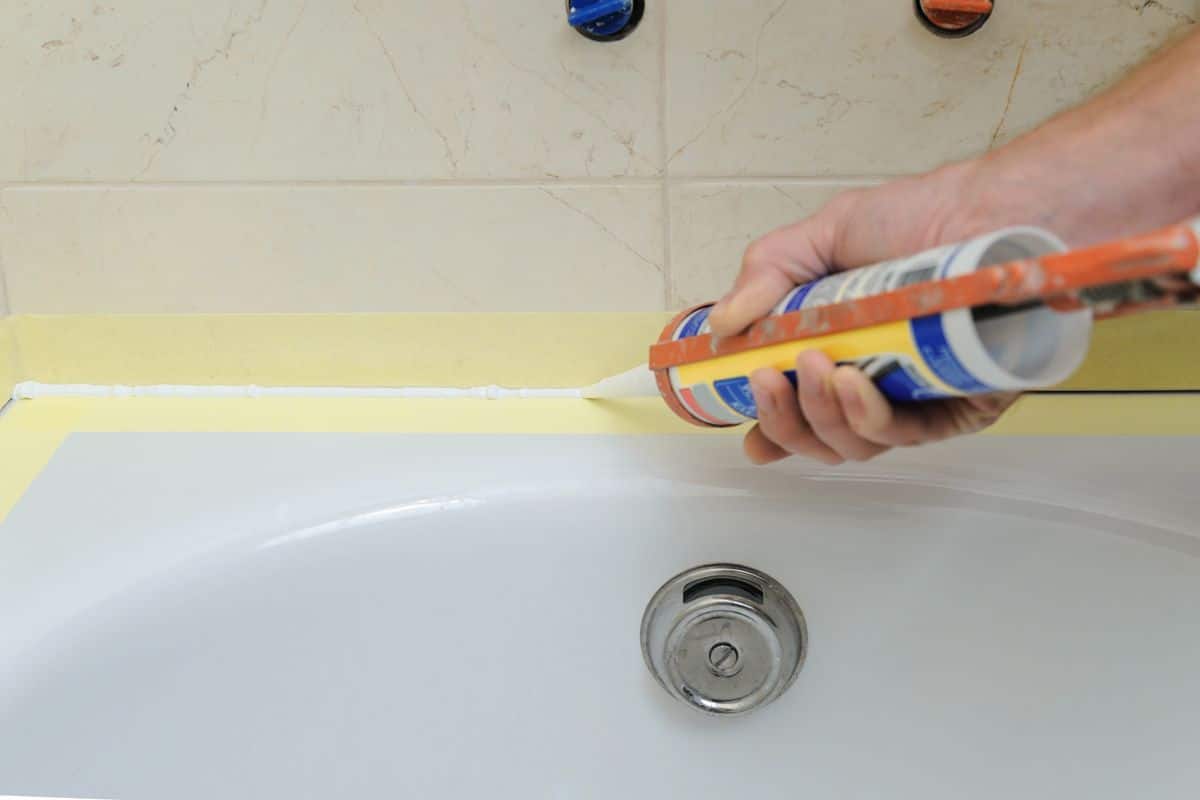
Cracked or missing caulk doesn’t just look bad. It creates a gap where water gets in but can’t easily get back out, so the area behind the tile or under the sink lip stays wet long after the visible surface has dried. That hidden, slow-drying pocket is exactly the kind of spot silverfish prefer over open, well-ventilated surfaces. Check the seams every few months and recaulk anywhere it’s cracked or gapped.
Watch for: dark or soft grout near the tub, a musty smell that doesn’t clear with cleaning, or caulk that’s pulled away from the wall. That usually means trapped moisture.
Clean the drain too, not just for silverfish
Standing water and the organic film that builds up in a slow drain is also exactly what drain gnats need to breed, so keeping drains clear helps with both problems at once. If you’re seeing small flies hovering near the sink or tub, the drain is almost always where they’re coming from. Our guide to how to get rid of gnats covers the cleaning routine in more detail, and it’s worth doing on a schedule rather than only when you notice a smell. If silverfish are already established elsewhere in the house, see our guide on how to get rid of silverfish for what to do beyond prevention.
When a small dehumidifier is worth it
Some bathrooms stay humid no matter how good the ventilation habits are, especially windowless ones or those with an underpowered fan. In that case, a compact dehumidifier built for small rooms can keep humidity down between showers instead of letting it linger for hours. We compare options built for tight spaces, not just basements, in our dehumidifier guide.
FAQ
Do silverfish actually live in bathrooms?
Yes, bathrooms are one of the more common spots for them because of the consistent humidity from showers and baths, especially in rooms with little airflow.
Will fixing moisture alone get rid of silverfish?
Reducing humidity removes the conditions they need to stay, which is the core of prevention, but if you already have an active population, pair these habits with the steps in our silverfish removal guide. For scent-based options like cedar oil, and which ones actually hold up, see how to repel silverfish.
Does this help with drain flies too?
Yes. Drain flies and gnats need the same standing water and organic buildup in a drain, so the drain-cleaning habit here does double duty.