Short answer: best dehumidifier for basement
Basement temperature matters more than any spec sheet. Compressor units cost less to run but struggle below about 65°F, while desiccant units keep pulling moisture in cold rooms at a higher electricity cost. Either way, the unit is only doing its job if it gets the room under roughly 50% relative humidity.
- Check your basement’s typical winter temperature before choosing a technology.
- Size the unit to square footage and how damp the room actually feels, not the biggest number on the shelf.
- Run a continuous drain hose so the unit never shuts off from a full tank.
Why basements hold onto humidity when other rooms don’t
A basement is built into the ground, and that changes how moisture behaves inside it. Damp soil sits against porous concrete and block, walls wick in groundwater, and with little or no window, stale air has nowhere to exchange with drier air outside. Cool surfaces meeting humid air also mean condensation — the faint dampness on pipes, floors, and the bottoms of cardboard boxes.
None of that matters to a spider or a housefly, but it matters enormously to species that need moisture more than food. Silverfish are the clearest example — as our guide to getting rid of silverfish explains, they can go a long time between meals but not without humidity. Damp basements suit them, and plenty of basements sit above 50% relative humidity year-round without anyone noticing. For the bigger picture on why moisture control matters more than spraying, see our moisture control guide.
Compressor vs. desiccant: how the two technologies actually differ
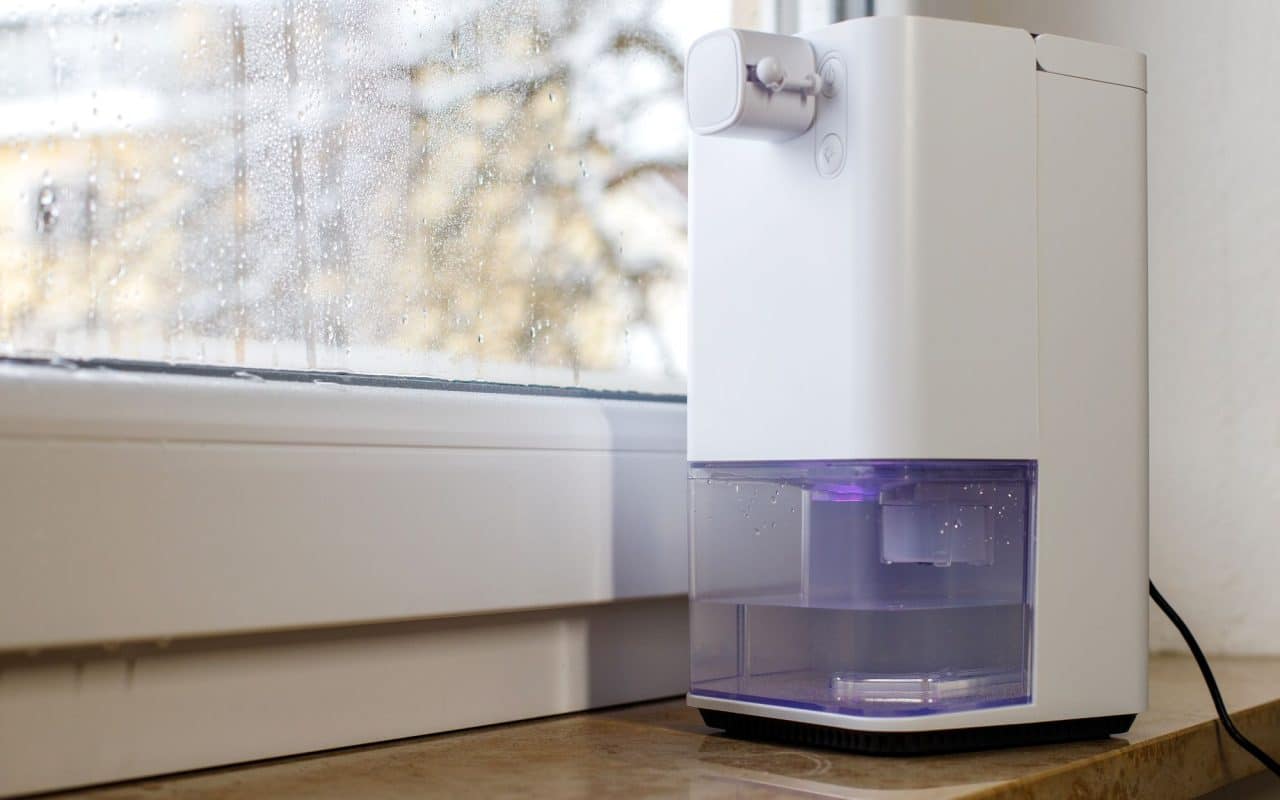
Every consumer dehumidifier uses one of two methods to pull water from the air. Compressor (refrigerant) units cool air over cold coils so moisture condenses out, the same principle as an air conditioner. Desiccant units pass air over a moisture-absorbing material, then release the collected water into a tank or drain. The difference decides which one actually works in a cold basement.
| Factor | Compressor (refrigerant) | Desiccant |
|---|---|---|
| Effectiveness by temperature | Strong above about 65°F; efficiency drops and coils can frost over in colder basements | Stays consistent in cold rooms, including unheated basements in winter |
| Noise | Compressor hum and fan noise, generally louder | Fan-only operation, usually quieter |
| Energy use | Lower running cost per pint removed in warm conditions | Higher running cost, since it uses a heating element to release moisture |
| Typical capacity | Wide range, including high-capacity models for large damp spaces | Generally lower capacity, better suited to smaller or cooler rooms |
Temperature is the deciding factor: a basement that regularly sits below about 65°F in winter will leave a compressor unit underperforming no matter its reviews. That’s where a desiccant model earns its higher running cost.
Sizing: match the unit to the room, not the biggest number on the box
Dehumidifiers are rated by pints removed per 24 hours, and it’s tempting to buy the biggest number available. That’s usually overkill and wasted money. What matters is square footage combined with how damp the space feels: a closet needs only a compact unit, a basement with occasional dampness needs a moderate-capacity model, and a basement that floods or smells musty year-round needs a unit rated toward the higher end. When unsure, slightly oversizing beats undersizing, since short cycles wear a unit out less than running constantly to keep up.
Drainage: manual tank vs. continuous drain
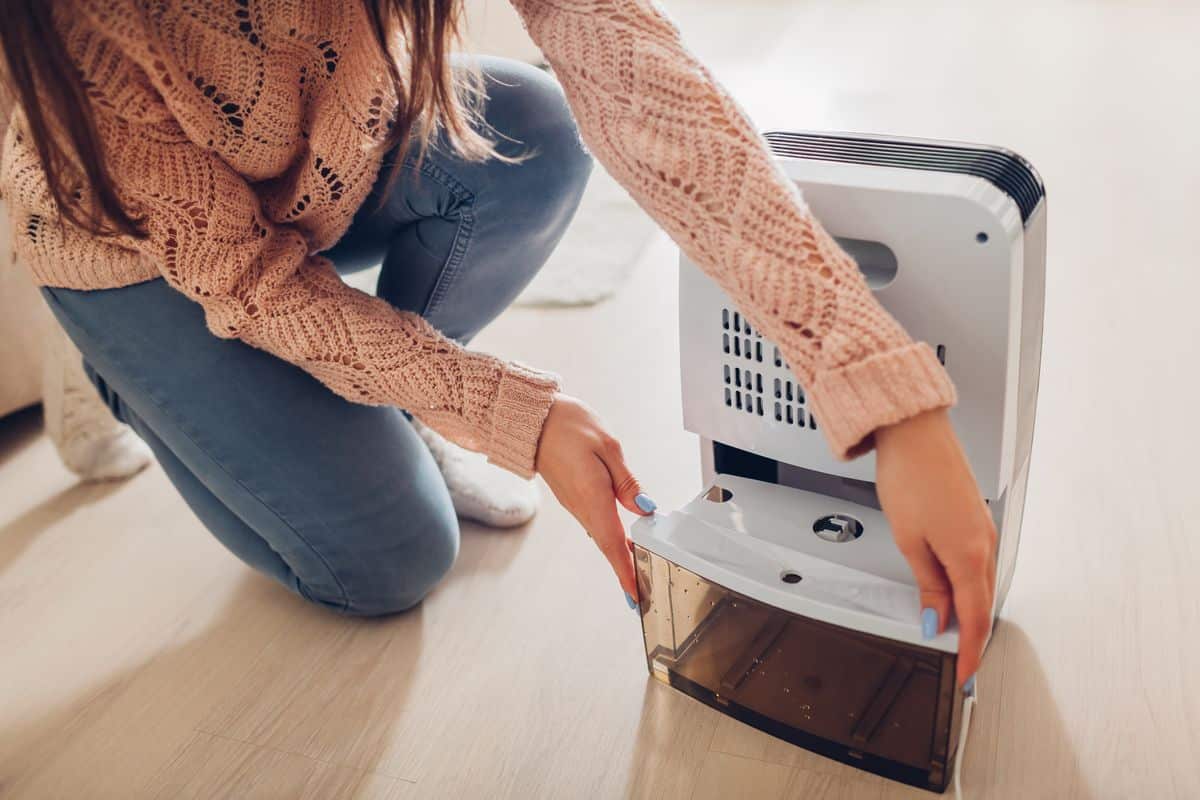
Every dehumidifier collects water somewhere, and getting rid of it matters more in a basement than anywhere else in the house. A manual tank suits a room you pass daily, but most units shut off once full, and a basement removing several pints a day can fill a tank faster than most people remember to check. A continuous drain hose routed to a floor drain or sump avoids that entirely, letting the unit run unattended for weeks — the practical choice for a basement nobody checks daily.
A stopped unit does nothing: a full tank doesn’t just pause moisture removal, it lets humidity climb back to where pests were comfortable. If you can’t check the tank daily, plan for a drain hose from the start.
What to actually aim for: under 50%, not bone-dry
There’s no benefit to chasing the lowest possible humidity, and running a basement extremely dry can crack wood and dry out finishes. The realistic target is keeping the room under roughly 50% relative humidity, which is the range public-health guidance recommends indoors anyway. It is a comfort target, not a biological cutoff: no extension source publishes a humidity at which moisture-loving pests stop breeding. The only way to know where you stand, rather than guess, is a small humidity gauge called a hygrometer — inexpensive, and useful for seeing whether the dehumidifier is keeping pace.
What a dehumidifier won’t fix
It’s worth being honest about the limits here. A dehumidifier does nothing for a moth already established in a closet or a beetle working through a stored wool sweater — those infestations need their own fixes, not a humidity adjustment. What it does address is the environment that lets moisture-dependent species keep breeding, which includes silverfish along with booklice and springtails, both needing the same kind of humidity correction covered elsewhere on this site. Think of it as removing the condition, not treating an active infestation.
FAQ
Will a dehumidifier get rid of silverfish on its own?
It removes the moisture that lets them keep reproducing, but pair it with sealing entry points and reducing clutter for faster results.
What humidity level should I aim for in the basement?
Roughly under 50% relative humidity is the general target — check it with a hygrometer rather than guessing.
Can I use a small dehumidifier in a bathroom or closet instead of a basement-sized unit?
Yes — small rooms need far less capacity than a basement, so a compact unit with a manual tank is usually enough.
Does a dehumidifier help with pantry moths or carpet beetles?
Not directly; those pests are drawn to food and fabric, not humidity.