Short answer
A spray labeled for carpet beetles works on the perimeter of a room, not on the fabric. Use it along carpet edges, in closets and in crevices, then let heat handle everything you can wash.
- The products that do the job contain synthetic pyrethroids, or a dust such as silica aerogel or boric acid for voids and crevices.
- Do not spray clothing, bedding or upholstery you sit on. UC IPM says so plainly, and no household product is registered for it.
- Insecticide is the last step, not the first. Find the food source and remove it, using the removal protocol, before you buy anything.
A spray can only reach one stage out of four
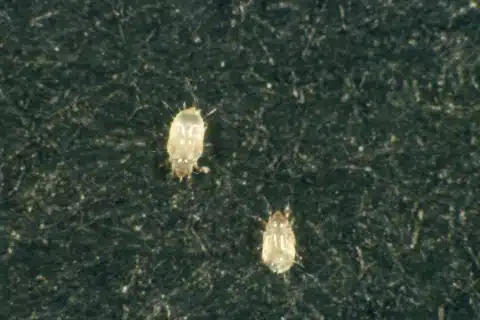
This is the thing to understand before spending money. A carpet beetle passes through egg, larva, pupa and adult, and two of those four stages sit somewhere a chemical cannot follow. Eggs are laid inside floorboard cracks, in air ducts and in lint under a radiator. Pupae are sealed inside the larva’s own last shed skin. Neither one is breathing, feeding or walking across a treated surface, which is exactly how a residual insecticide is supposed to work.
The adult is reachable but pointless to target. It eats pollen outdoors and damages nothing indoors, and by the time you see it on a windowsill it is leaving. That leaves the larva, and the larva is the one stage worth spending a chemical on. The life cycle page has the timings, and they are long: seven months to twenty months of larval feeding, depending on temperature and food.
So a treatment is never one event. Whatever you apply, the eggs you could not reach will hatch in a week or two into larvae you can reach, which is why a second pass a few weeks later does more than doubling the dose on the first.
What is actually in the products that work
| Type | Active ingredient | Where it belongs | What it will not do |
|---|---|---|---|
| Water-based crevice spray | Deltamethrin, cyfluthrin, lambda-cyhalothrin, cypermethrin, sumithrin, tralomethrin | Carpet edges, under rugs and furniture, closet floors and walls, shelf edges | Penetrate fabric, or go on anything you wear or sleep on |
| Desiccant dust | Silica aerogel, diatomaceous earth | Cracks, crevices, dry wall voids | Work at all once it gets damp, or act quickly |
| Borate dust | Boric acid | Wall voids, spaces around plumbing, harborage you cannot open | Do anything useful on an open surface |
| Vapor product | Paradichlorobenzene, as balls, flakes or crystals | Sealed containers, with the garments inside | Work in an open closet, and it melts some plastics |
| Heat or cold | None | Anything launderable, or freezable in a bag | Leave residue, or stop anything coming back |
The pyrethroids in the first row are what you will find in most household sprays sold for fabric pests. They are contact and residual poisons, and UC IPM notes they last longer when they go into a dark crevice than on an exposed surface, because sunlight breaks them down. That is a useful hint about where they are meant to go.
The dusts are a different tool with different physics. Silica aerogel and diatomaceous earth are not poisons at all. They scratch and absorb the waxy layer on the insect’s cuticle so it dries out, which means they only work while they stay dry, and they take days rather than minutes. Boric acid needs to be eaten. All three are for places you can dust and then close up, not for sprinkling across a carpet where you and the cat will breathe it.
Whatever you pick, the label decides what is legal and what is sensible. Find a product that lists carpet beetles by name, and follow the directions on it. Our product notes cover the same ground for the other insects on this site.
Where it goes, and the one place it must not
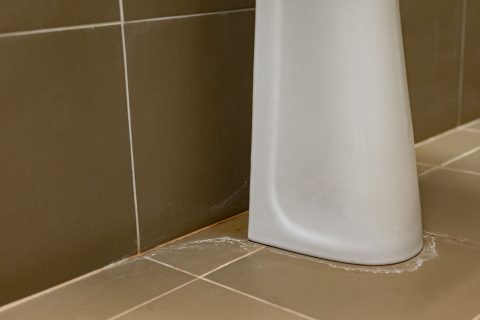
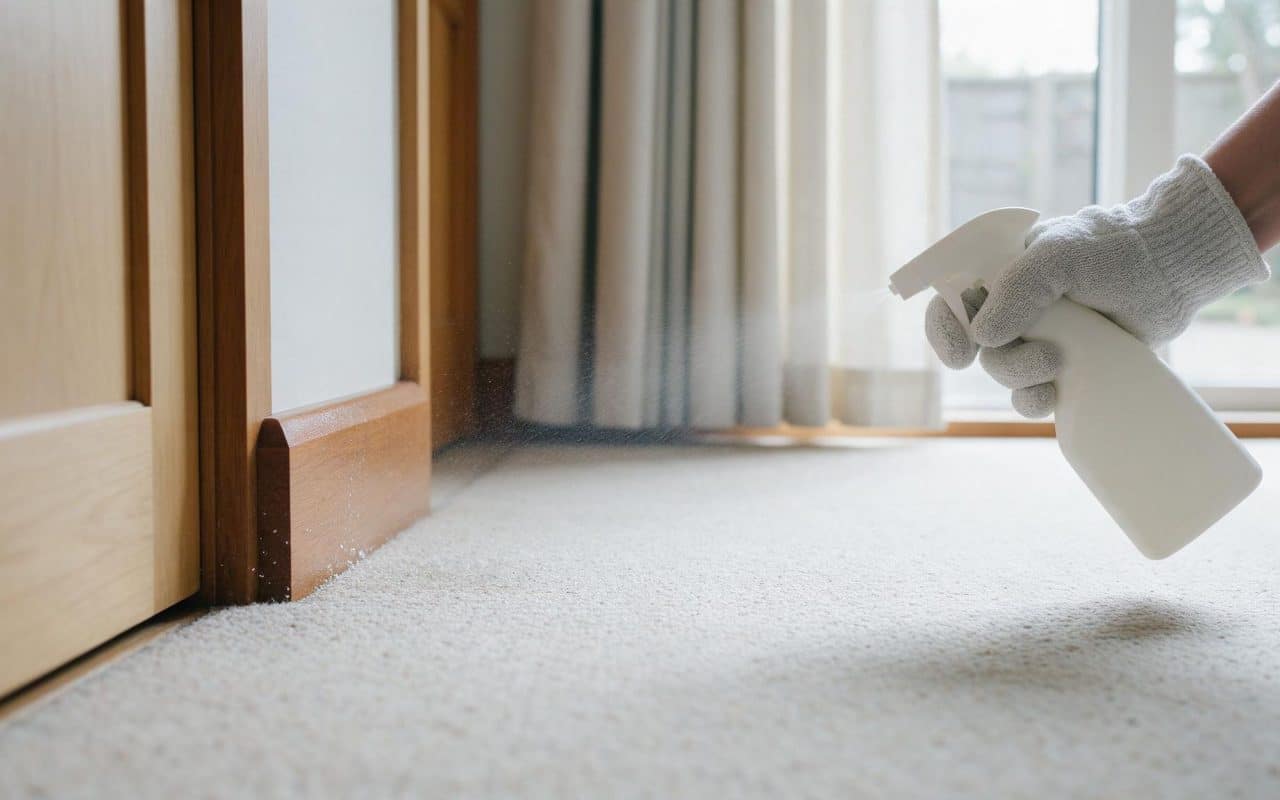
Spot treatment is the whole method. UC IPM and the Purdue extension bulletin give nearly the same list of places, and it is short enough to memorize: the edges of floor coverings, underneath rugs and furniture, the floors and walls of closets, the shelving where wool and silk are stored, cracks and crevices, and anywhere lint gathers. Notice what those have in common. They are all lint traps, and lint is what a larva eats when there is no sweater available.
Now the instruction people skip. Do not spray clothing or bedding. Missouri’s extension guide states it in four words and does not qualify it. This is worth dwelling on because it is the exact opposite of what somebody who has just found holes in a jumper wants to hear, and the reason is not squeamishness. Household residual sprays are registered for surfaces, not for textiles held against skin for hours, and they do not soak into fibers well enough to reach a larva burrowed in the pile anyway. You would take the risk and not get the result.
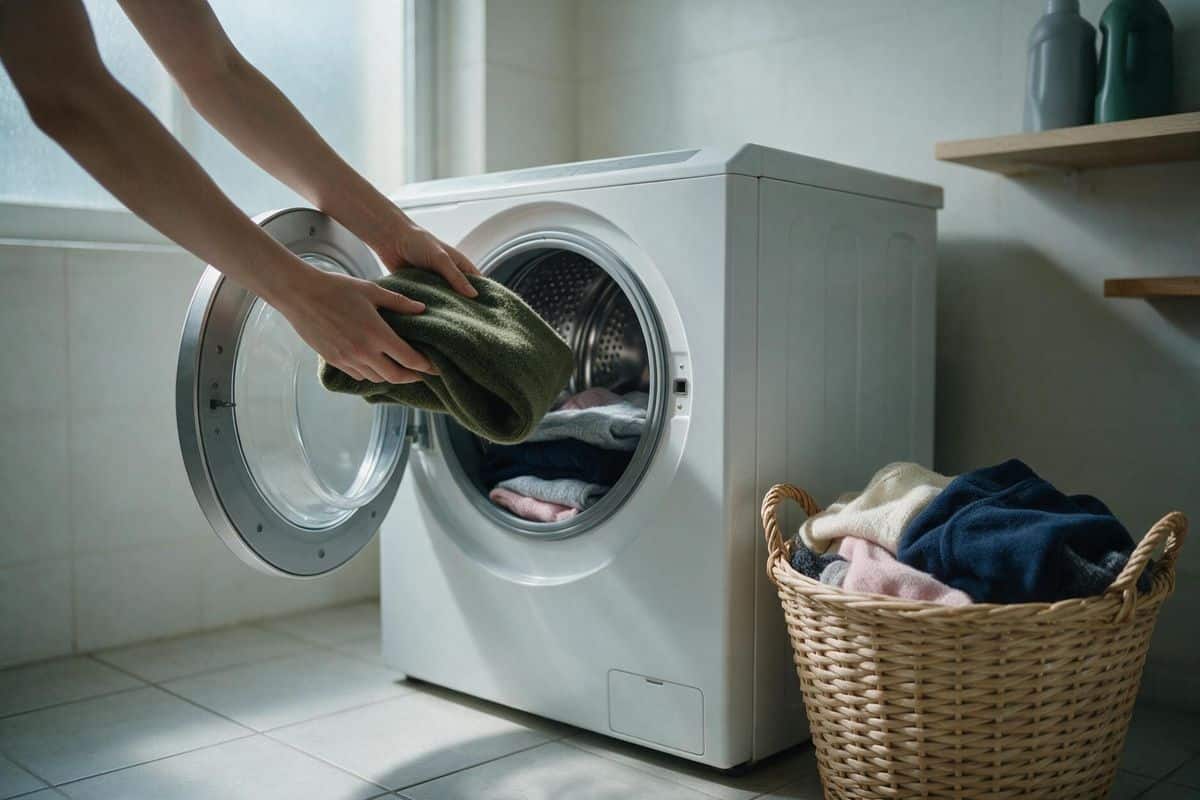
Heat is the fabric treatment. A hot wash followed by twenty minutes in the dryer kills eggs, larvae and pupae together. For things that cannot be washed, a sealed bag at 0°F for two weeks does the same, and a press with an iron at 134°F works on flat pieces. Dry cleaning also kills every stage. That is the entire toolkit for textiles, and none of it is a spray.
Three things people buy that do not earn their place
Foggers first, because they are the most expensive mistake. UC IPM’s position is that aerosol foggers do not work well unless the infested material has already been found and dealt with, which tells you they are not a substitute for looking. A fogger releases a fine mist that settles on horizontal surfaces. Carpet beetle larvae live under and inside things. The mist does not go under the rug pad, into the vent, or through the wool. There is also a safety record worth knowing: the CDC counted 3,222 illnesses linked to total release foggers across ten states between 2007 and 2015, with no downward trend over that period.
Mothballs next. Paradichlorobenzene does kill fabric pests, and it is a real insecticide rather than a folk remedy, but it works as a vapor and vapor needs a sealed space. Hanging a bag of them in an open closet accomplishes nothing except the smell. They also soften plastic buttons, hangers and garment bags on contact, which can melt the plastic into the fabric you were protecting.
Diatomaceous earth is the third, and it is more misused than useless. Scattered over a carpet it will do very little, because a carpet is not a crevice and household humidity is enough to blunt it. In a dry wall void or under a floor it is a reasonable choice. The product is fine. The instructions people follow are not.
The parts worth handing to somebody else
Some carpet beetle reservoirs are behind construction rather than in a room. Attics, wall voids, spaces under floorboards and the cavity around a soffit where a bird nest sits are all documented sources, and the professional approach is to drill small holes and inject a labeled dust into the void. That is not a job to improvise. If you have beetles emerging year after year from a room you have already cleaned twice, the food source is probably in one of those places and the answer is a technician with a duster, not a bigger bottle.
Before you get there, though, confirm what you actually have. The identification page separates the varied carpet beetle from the black carpet beetle, and the black one turns up in flour and pet food as often as in wool, which changes where you treat entirely. Carpet beetle larvae covers what the damaging stage looks like when you find it.
The honest verdict on spraying
UC IPM ends its own carpet beetle guidance with a sentence that a page about insecticides ought to quote rather than bury: insecticides may not be necessary if food sources are removed and areas are kept clean. That is the position of the people who wrote the treatment recommendations, and it is not a hedge.
It matches what the biology says. The larva needs keratin, so it needs wool, hair, feathers, dead insects in a light fixture or pet hair in a floor vent. Take that away and the population starves whether you spray or not. Leave it in place and a treated baseboard buys a few weeks. The spray is genuinely useful for the crevices you cannot vacuum properly, and I would use one in a closet that has already had an infestation. It is just the smallest part of the job, and the removal protocol puts it last for that reason.
FAQ
What insecticide kills carpet beetles?
Household sprays based on synthetic pyrethroids, including deltamethrin, cyfluthrin, lambda-cyhalothrin, cypermethrin, sumithrin and tralomethrin. For voids and crevices, dusts based on silica aerogel or boric acid. Whichever you choose, the product has to list carpet beetles on its label, and the label directions are the ones that apply.
Can I spray my clothes, mattress or sofa?
No. UC IPM says not to spray clothing or bedding, and household residual products are not registered for textiles you wear or sleep on. Wash what can be washed in hot water and dry it hot, dry clean what cannot, and freeze the rest in a sealed bag. Spray the closet, not the contents.
Does diatomaceous earth work on carpet beetles?
In the right place, yes. It dries the insect out rather than poisoning it, so it needs to stay dry and it needs the larva to walk through it repeatedly. That describes a crevice or a dry wall void, not an open carpet. Sprinkled across a rug in a normally humid house it will do very little.
Do bug bombs or foggers work on carpet beetles?
Not on their own. UC IPM notes that foggers do not work well unless the infested material has already been located and treated, and a fogger cannot reach under a rug pad, inside a vent or through wool. The CDC also recorded 3,222 fogger-related illnesses across ten states between 2007 and 2015.
How often should I re-treat?
Plan on at least a second application a few weeks after the first, because the eggs a treatment cannot reach will have hatched by then. After that, judge the result by whether adult beetles appear at your windows the following spring rather than by what you see next week.
Sources
- University of California Statewide IPM Program, Pest Notes: Carpet Beetles.
- University of Missouri Extension, Carpet Beetles and Clothes Moths, G7372.
- Purdue University Extension, Clothes Moths and Carpet Beetles, E-18.
- Penn State Extension, Black Carpet Beetle fact sheet.
- Centers for Disease Control and Prevention, Acute Illnesses and Injuries Related to Total Release Foggers, 10 States, 2007–2015, MMWR.