Short answer
Carpet beetle larvae are the stage that does the damage. They are small, bristly, and they eat keratin: wool, silk, fur, feathers, hair, and dead insects. The adult beetle on your windowsill eats pollen and harms nothing indoors.
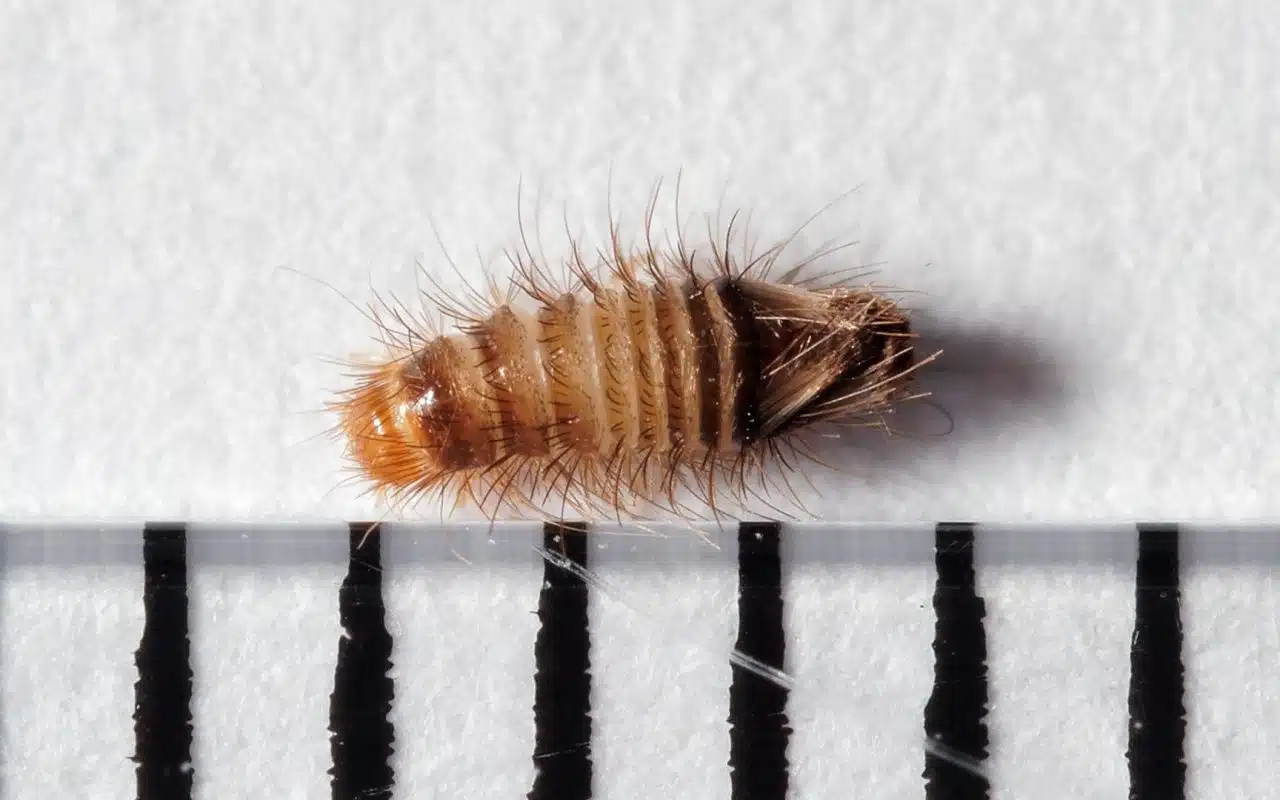
- A varied carpet beetle larva runs 4 to 5 millimeters, banded light and dark brown, and hairy. A black carpet beetle larva is longer, smoother, and drags a tail of long golden hairs.
- They run from light, so they live under things: carpet edges, the underside of a rug, the back of a closet shelf.
- The hollow skins they shed usually outnumber the live larvae, and they are what you find first. Then start on the removal protocol.
What a carpet beetle larva looks like
Two species account for nearly everything found in US homes, and they look different enough that it is worth knowing which one you have.
The varied carpet beetle larva (Anthrenus verbasci) grows to roughly 4 to 5 millimeters, a shade under a quarter inch. It is banded in light and dark brown, densely covered in bristles, and, oddly, wider at the back end than at the head. At the tail it carries a tuft of longer bristles that it can fan out when something disturbs it. It moves in a slow trundle and curls up if you touch it. Most people describe it as a tiny hairy caterpillar, or as a piece of lint that moved.
The black carpet beetle larva (Attagenus unicolor) gets considerably bigger, up to half an inch. It is smooth and shiny rather than fuzzy, golden to dark brown, shaped like a carrot narrowing toward the rear, and it ends in a long trailing tuft of hairs that looks like a tail. Next to an Anthrenus larva it reads as sleek.
Both leave behind something more useful than themselves. A larva molts somewhere between five and eleven times on its way to adulthood, and every molt leaves a hollow, bristle-covered husk that keeps its shape. Spread across a larval stage that runs for months rather than weeks, they accumulate. In a settled population those husks are far more numerous than the insects, and they sit where the larvae fed. If you are trying to work out how bad this is, count skins, not larvae.
Why you see the beetles and never the larvae
Adults fly toward light. Larvae run from it. That one difference explains most of what is confusing about a carpet beetle problem.
It is why you find little mottled beetles collecting on a windowsill in spring while the closet looks fine, and why the damage turns up months later under a sofa nobody moves. It is also why vacuuming the open middle of a room does nothing at all. The larvae are along the baseboard, in the carpet edge where the pile meets the tack strip, under the rug, at the back of the shelf where the wool blankets sit.
If the beetles at the window are what brought you here and you want to be sure the two stages belong to the same insect, the identification page has adult and larva side by side, with the look-alikes.
What carpet beetle larvae eat
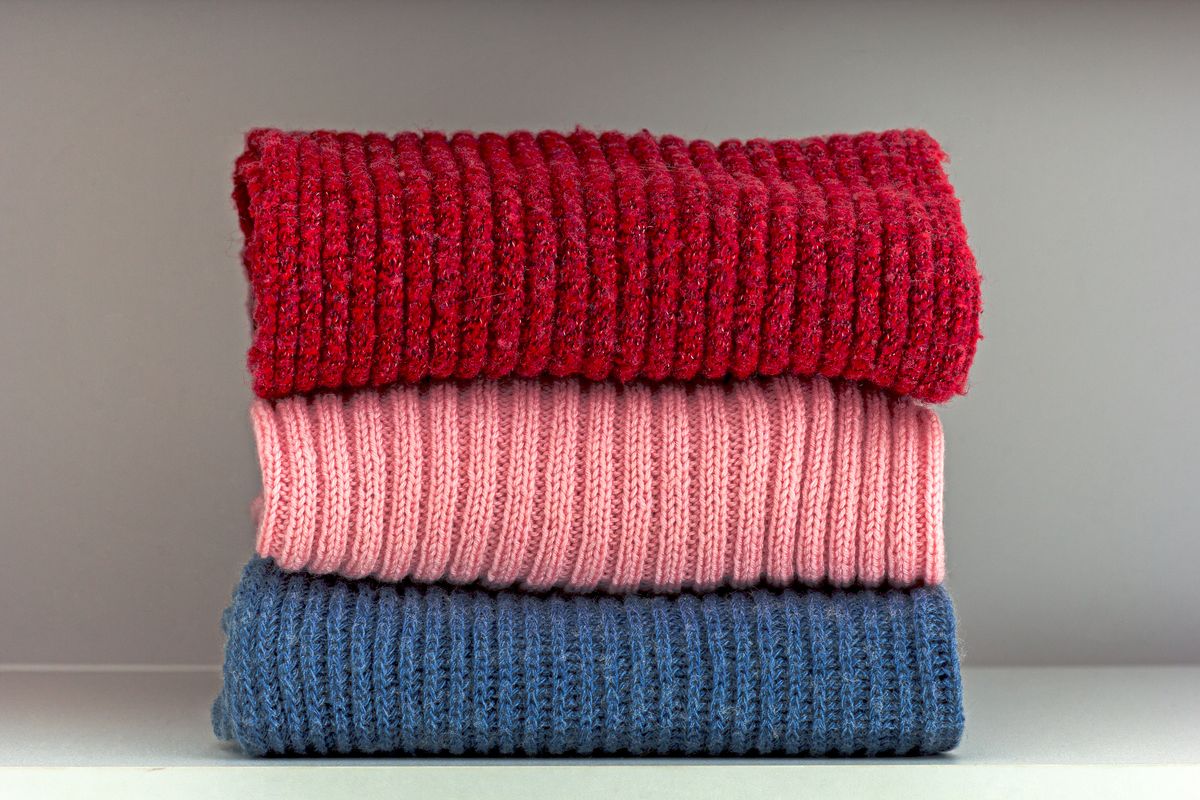
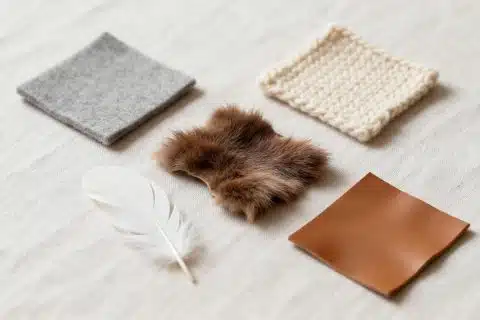
Keratin. It is the protein in hair, wool, silk, fur, feathers, horn and skin, and almost nothing else in an insect’s world can digest it. In a house, that comes down to a shortlist:
- Wool rugs and wool carpet, especially the underside and the edge tucked under a baseboard
- Sweaters, coats, felt, and anything with wool in the blend
- Silk, cashmere, alpaca, mohair
- Fur, down comforters, feather pillows, leather bindings, taxidermy, the wool felt inside a piano
- The mat of pet hair and lint that builds up under a radiator or along a baseboard
- Dead insects: in light fixtures, in window channels, in attic corners, in old spider webs
That last one deserves more attention than it gets. A ceiling fixture with a season of dead flies in it is a food supply, and nobody ever looks. The same goes for a bird or rodent nest in a soffit or vent, where feathers and fur sit undisturbed for years. Houses that keep producing larvae after two rounds of laundering usually have a reservoir like that somewhere above the ceiling.
What they will not eat is clean cotton, linen, polyester, nylon or rayon. There is no keratin in any of it. But there is a catch that costs people a lot of sweaters: a synthetic or a blend that has been soiled with sweat, body oil, food or urine will get grazed anyway. That is why the holes in a cotton-wool blend so often show up at the collar and under the arms, and why the rule for storage is that everything goes away clean.
One clue from the menu. Black carpet beetle larvae also feed on stored plant material, so they turn up in cereal, grain, pet food, birdseed and spices. Larvae in the pantry rather than the closet point to Attagenus, the black carpet beetle, rather than Anthrenus.
Carpet beetle or clothes moth? Read the evidence
Clothes moth larvae eat the same keratin and ruin the same sweater, and the two get mixed up constantly. You rarely have to catch the culprit to know which one it is, because they leave different things behind.
| What you find | Carpet beetle larvae | Clothes moth larvae |
|---|---|---|
| Silk webbing | None, ever | Webbing, tubes or mats spun onto the fabric |
| Shed skins | Many, hollow and bristly, often the first thing spotted | Present, but not what you notice |
| Droppings | Gritty specks the color of whatever was eaten | Similar specks, tangled in the webbing |
| Damage | Thinned, grazed patches and irregular holes, often clustered | Holes, usually under or beside a silk tube |
| Where | Carpet edges, under furniture, lint, dead insects | Dark closets, folds, stored clothing |
| The adult | A beetle, at the window | A small buff moth that scuttles into a corner rather than flying at a lamp |
Webbing settles it. If the fabric has silk on it, you are looking at a moth problem, and the clothes moth page covers it properly.
The signs, roughly in the order you find them
- Shed skins. Hollow, tan, bristly, the shape of the larva. Along a carpet edge or in the bottom of a storage box.
- Damage without webbing. A worn-looking patch on a rug where nobody walks, a few holes clustered in one spot on a sweater.
- Adults at the window. Spring, usually. They are on their way out to find flowers, which means they grew up in here.
- The larvae themselves. Last, and only if you go looking. Lift the edge of the carpet and take a flashlight to it.
Larvae do not bite, at any point. If someone in the house has an itchy rash and you have just found larvae in the bedroom, the two are probably connected, but not the way it looks. That is a separate question, answered here.
What to do once you have found them
Heat is the reliable part. A hot wash followed by a hot dryer kills every stage, eggs included, on anything you can launder. A labeled spray or dust handles the crevices that heat and a vacuum cannot reach, and nothing else. Vacuuming handles the rest, provided you go slowly along carpet edges, baseboards and upholstery seams instead of the open floor, and empty the canister outside afterward.
The step people skip is finding what the larvae are eating. Clean everything you can reach and the population comes back from whatever you did not reach: the vent, the nest, the fixture full of dead flies, the rug pad nobody has lifted since it went down. The full removal protocol takes inspection, laundering, freezing and trap monitoring in order, which is the part that decides whether this comes back.
FAQ
How big do carpet beetle larvae get?
A varied carpet beetle larva tops out at roughly 4 to 5 millimeters, a shade under a quarter inch. A black carpet beetle larva gets close to half an inch, around 12 millimeters. Both start out far smaller than that, which is why the early stage of an infestation goes unnoticed.
How long do they stay larvae?
Longer than most people expect. The larval stage runs from a few months to well over a year depending on temperature and how good the food supply is, and it is the only stage that eats fabric. A slow, cool, poorly fed larva simply takes its time, which is part of why a carpet beetle problem smolders instead of arriving all at once.
Do carpet beetle larvae bite?
No. Their jaws are built to shred fiber and there is no piercing structure at any stage. What gets reported as a bite is a contact reaction to their shed bristles and skins, which behaves quite differently and is covered on its own page.
Can they live in a mattress?
Rarely, because most mattresses contain no keratin. Look at what surrounds the bed instead: a wool rug, a sheepskin, stored blankets in an under-bed box, a feather pillow, a wool topper. If it’s something living on the mattress itself that worries you, carpet beetle vs bed bug separates the two.
Will they eat cotton or polyester?
Not when it is clean. They will graze either one where it has been stained with sweat, body oil or food, which is enough to put holes in a garment that contains no wool at all. Wash before storing, not after.
Sources
- University of Kentucky Entomology, Carpet Beetles, ENTFACT-601.
- Penn State Extension, Varied Carpet Beetle fact sheet.
- University of California Statewide IPM Program, Pest Notes: Carpet Beetles.
- University of Minnesota Extension, Carpet beetles.