Short answer
No. Carpet beetles don’t bite, at any stage of their life. Neither the adult nor the larva has mouthparts that can pierce skin, and neither one feeds on blood.
- What gets called a “carpet beetle bite” is a contact reaction to the larvae’s barbed bristles and shed skins, not a puncture.
- It appears where skin touched infested fabric, which is what separates it from bed bug bites on exposed skin.
- The fix is the fabric, not the beetle. Start with the removal protocol.
Carpet beetles aren’t built to bite
Adult carpet beetles eat pollen and nectar. That’s what they do outdoors all summer, on flowers, and it’s a large part of why they turn up on windowsills in spring: they’re heading toward light, on their way out to find some. Their mouthparts suit a flower.
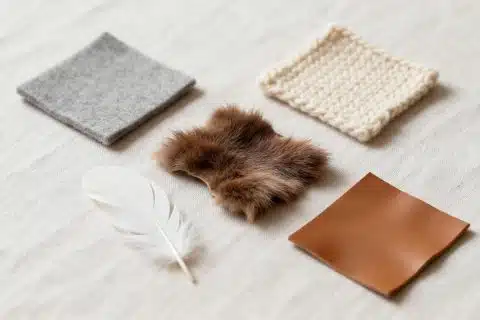
The larvae are the destructive stage, but what they destroy is keratin. Wool, silk, fur, feathers, leather, dried animal material, and the drift of pet hair and lint that collects under a radiator. Their jaws are made for shredding fiber. Skin isn’t food to them and they have no way of getting at it even if it were. That’s real damage, and none of it is to you. Are carpet beetles harmful? lays out the fuller picture of what’s actually at risk.
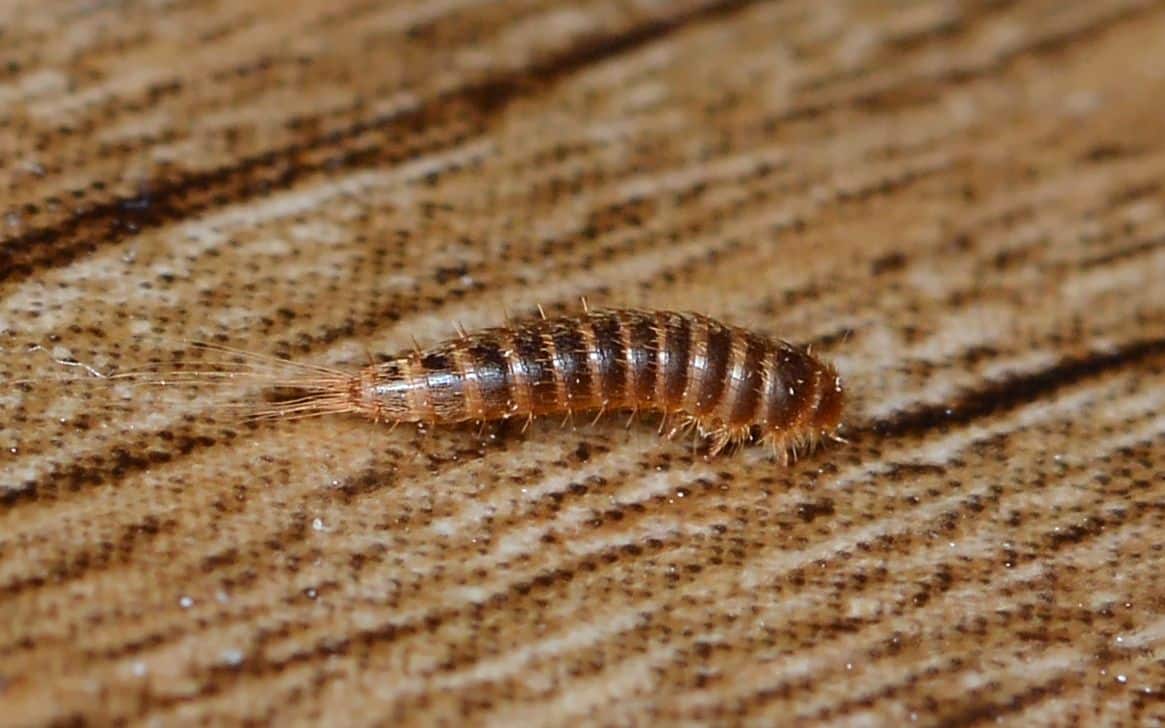
Insects that do feed on blood look completely different up close. Bed bugs, fleas and mosquitoes all carry a visible piercing structure. A carpet beetle larva under a hand lens is a small bristly thing with chewing jaws, and it is unmistakably built to eat your sweater. Tens of thousands of people a month search for “carpet beetle bites” in the US, so the thing being described is real and common. The word for it is just wrong, and that matters more than it sounds, because it sends people looking for the wrong culprit in the wrong part of the house.
What people are actually reacting to

Varied carpet beetle larvae (Anthrenus species) carry hastisetae: short, stiff bristles tipped with a barbed, spear-shaped head, attached loosely enough that they come away from the body easily. Black carpet beetle larvae (Attagenus) have a different arrangement, a long tuft of bristles trailing off the rear end. Either way, bristles shed.
Then there are the molts. A larva sheds its skin somewhere between five and eleven times before it becomes a beetle, and each molt leaves behind a hollow, bristle-covered husk. In an established population those husks vastly outnumber the live insects, which is why they’re the thing pest professionals look for first. They dry out, break up, and the fragments work their way into carpet pile, mattress seams, and the weave of an upholstered chair.
That’s the exposure. Skin makes repeated contact with the fragments, and in people who become sensitized to them, an itchy bumpy rash follows. The mechanism is contact hypersensitivity, much closer to a reaction to nickel or poison ivy than to anything that bit you. Carpet beetle rash goes deeper into that reaction and what actually makes it fade.
Two things follow from that, and they’re exactly what makes the whole business so confusing:
It isn’t shared. One person in a household can react while their partner, sleeping in the same bed under the same duvet, notices nothing at all. Sensitization is individual. That asymmetry is often what convinces someone it must be bites, because something appears to have singled them out.
It’s slow. A contact allergy needs repeated exposure before it produces anything visible. So the reaction can start weeks or months after the beetles moved in, with no event to pin it to. Nothing changed. You didn’t travel, buy a mattress, or bring anything home. That’s normal for this, and it’s another reason bed bugs get blamed instead.
This page describes the insect, not your skin. We can tell you what’s on a carpet beetle larva and where it ends up in a house. We can’t tell you what a rash on your arm is, or what to do about it, and we don’t try. If you have an unexplained skin reaction, that’s a question for a doctor. Here’s why we draw the line there.
Bed bugs or carpet beetles? What you can actually check
This is the comparison worth making, because the two problems need completely different responses and one of them costs a great deal more to fix. None of this is about the marks themselves. It’s about where they turn up, when, on whom, and what else is in the room.
| What you can check | Carpet beetle reaction | Bed bugs |
|---|---|---|
| Cause | Contact with shed bristles and larval skins | An insect feeding on you |
| Where on the body | Wherever skin pressed against the fabric. Back and shoulders from bedding, forearms from a wool chair | Skin left uncovered overnight: face, neck, hands, arms |
| Timing | Builds gradually over weeks of repeated contact | New marks most mornings, often several at once |
| Who in the household | Frequently just one person | Usually everyone sleeping in that bed |
| What you find in the room | Bristly larvae, hollow shed skins, damage to wool, dark specks along carpet edges | Live insects in mattress seams and the bed frame, rusty spotting on sheets |
| Where it lives | Wool, fur, feathers, lint. Rarely the mattress itself | The bed frame and mattress, almost always |
If the right-hand column keeps matching, stop treating this as a carpet beetle problem. Bed bugs don’t respond to cleaning and they’re worth getting a licensed pest control company to confirm before you spend money on anything. If you want to identify the insect itself rather than the marks it leaves, carpet beetle vs bed bug goes through the five differences you can see on the body.
Where the bristles are coming from
The mattress is usually innocent. Most modern mattresses contain no keratin whatsoever, so there’s nothing in one for a larva to eat. What sits around it usually does: a wool rug, an under-bed storage box with a folded blanket inside, a sheepskin, a down pillow that’s been in service for a decade.
Then there’s the source almost everyone misses. A bird or rodent nest in a soffit, attic, chimney or dryer vent is close to perfect carpet beetle habitat, because feathers, fur and dead nestlings are all keratin and nothing ever disturbs them. Larvae that develop there migrate inward through wall voids. If you’ve stripped the closet twice and larvae keep reappearing, the answer is more often above the ceiling than behind the wardrobe.
The quiet sources: an old taxidermy mount, the felt inside a piano, dried flower arrangements, natural-bristle brushes, a wool-blend rug pad nobody has lifted in years, and the mat of pet hair along a baseboard or under a radiator.
If you’re not certain the insect you found is a carpet beetle at all, the identification page has the larva and adult side by side, along with the look-alikes that get confused with them most often.
What to do about it
The exposure is the whole problem, so everything useful here is about fabric.
- Strip the bed completely, including any mattress protector, and run it through a hot wash and a hot dryer. Heat is what kills every stage, including eggs.
- Vacuum slowly along carpet edges, baseboards, under the bed, and into upholstery seams. That’s where the debris sits, not in the open middle of a room. Empty the canister or bag into an outdoor trash can straight afterwards.
- Find the keratin source and deal with it directly, which is the step people skip and the reason the problem returns. The full removal protocol walks through inspection, laundering, freezing and trap monitoring in order.
- Give it time before judging whether it worked. Contact reactions fade on their own schedule once exposure stops, and that schedule isn’t something a pest guide can predict for you.
What’s deliberately absent from that list is anything about treating the skin itself. That’s not an oversight.
FAQ
Can carpet beetle larvae bite?
No. Larvae have chewing jaws built for shredding wool, silk, fur and feathers. There’s no piercing structure and no blood feeding at any point in the life cycle.
Do the adult beetles cause the reaction?
Mostly not. The bristles responsible come from larvae and from the skins they shed as they grow. Adults on a windowsill are a sign worth following up, since they mean larvae developed somewhere nearby, but they aren’t the source of the exposure themselves.
Why is it only affecting one person in the house?
Because it’s a sensitization reaction rather than a bite. Some people develop a response to the bristle fragments and others sharing the same bed never do. It’s the single most useful clue that you’re not dealing with an insect that feeds on people.
Could it be coming from my mattress?
Rarely. Carpet beetle larvae need keratin and most mattresses contain none. Look at what’s underneath and around the bed instead: a wool rug, stored blankets, a feather pillow, or a wool mattress topper if you have one.
How do I know it isn’t bed bugs?
Check the bed frame and mattress seams with a flashlight. Bed bugs live on the bed and leave live insects and rusty spotting on the sheets, and their bites appear overnight on skin that was uncovered. Carpet beetle debris is found in carpet edges and stored wool, and the reaction follows fabric contact rather than exposed skin. The table above sets the two reactions side by side, and carpet beetle vs bed bug does the same for the insects themselves.
Sources
- University of Kentucky Entomology, Carpet Beetles, ENTFACT-601.
- Penn State Extension, Varied Carpet Beetle fact sheet.
- University of California Statewide IPM Program, Pest Notes: Carpet Beetles.