Short answer
Silverfish need three conditions at once: air that stays damp, starch or cellulose they can reach, and a dark crack nobody disturbs. Your house already supplies the second and the third. The first decides whether you have silverfish.
- Think house, not room. They walk through wall voids and pipe chases, so a bathroom sighting can be fed by a crawlspace across the house.
- Find where paper, cardboard or starched fabric sits against a surface that stays damp. That overlap is the population. The sighting is not.
- Work on the water. It is the only one of the three you can move. Bring indoor humidity down, room by room.
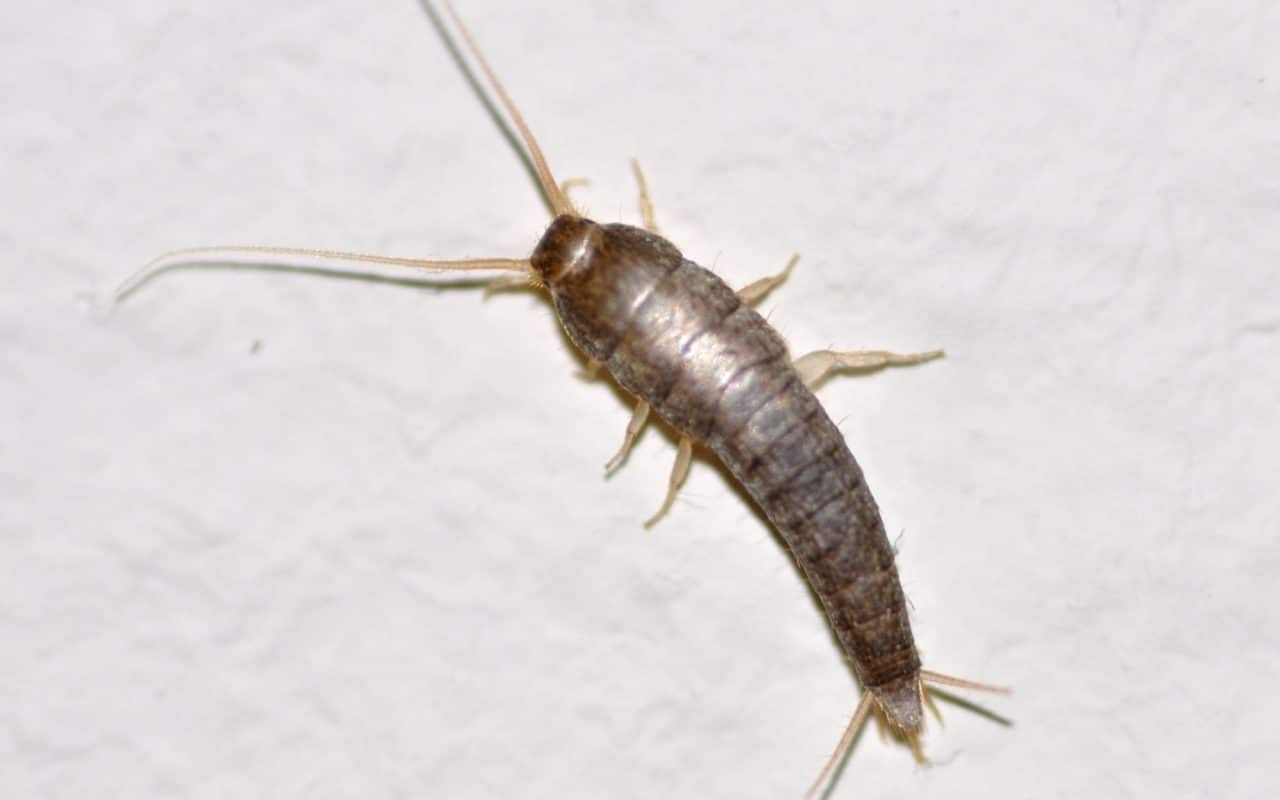
This page is about causes: what has to be true of a building before silverfish live in it. Not sure it is even a silverfish? Start with what one looks like and what gets mistaken for it.
Three conditions, and they have to overlap
The three are an AND, not an OR. A damp basement with bare block walls holds almost nothing. A closet packed with cardboard in genuinely dry air holds nothing either. Silverfish live where damp, food and darkness meet in the same few inches, and that intersection is far smaller than the room.
Which is why the useful unit is the building, not the room. Silverfish are wingless, but they travel on foot through the parts of a house you never see: wall voids, the gap between subfloor and joist, the chase a supply pipe runs in. A crawlspace population can surface in a second-floor closet. Treating only the room you found one in is why they seem to keep coming back.
Condition one: air that stays damp
Silverfish take most of their water from the air and from what they eat, which makes them unusually dependent on relative humidity. Extension write-ups put the favorable band at roughly 75 to 95 percent, around 70 to 80°F (21 to 27°C). Read that as a preference range, not a cutoff. Nobody has published a switch that flips.
Compare that with the indoor target public-health guidance gives for people anyway, under 50 percent. The gap between the two numbers is where the confusion lives. A hygrometer in your hallway can read a comfortable 45 percent while the air inside a sink cabinet, behind a toilet tank, or inside a box on a basement slab runs far wetter. Humidity is local, and a whole-house average says nothing about the two square feet that matter.
One wrinkle undercuts the “but my house is dry” objection: the long-tailed or gray silverfish, a related species increasingly reported in modern homes, tolerates noticeably drier conditions than the classic one. Measure where the insect is, not where the outlet is.
Condition two: starch and cellulose they can reach
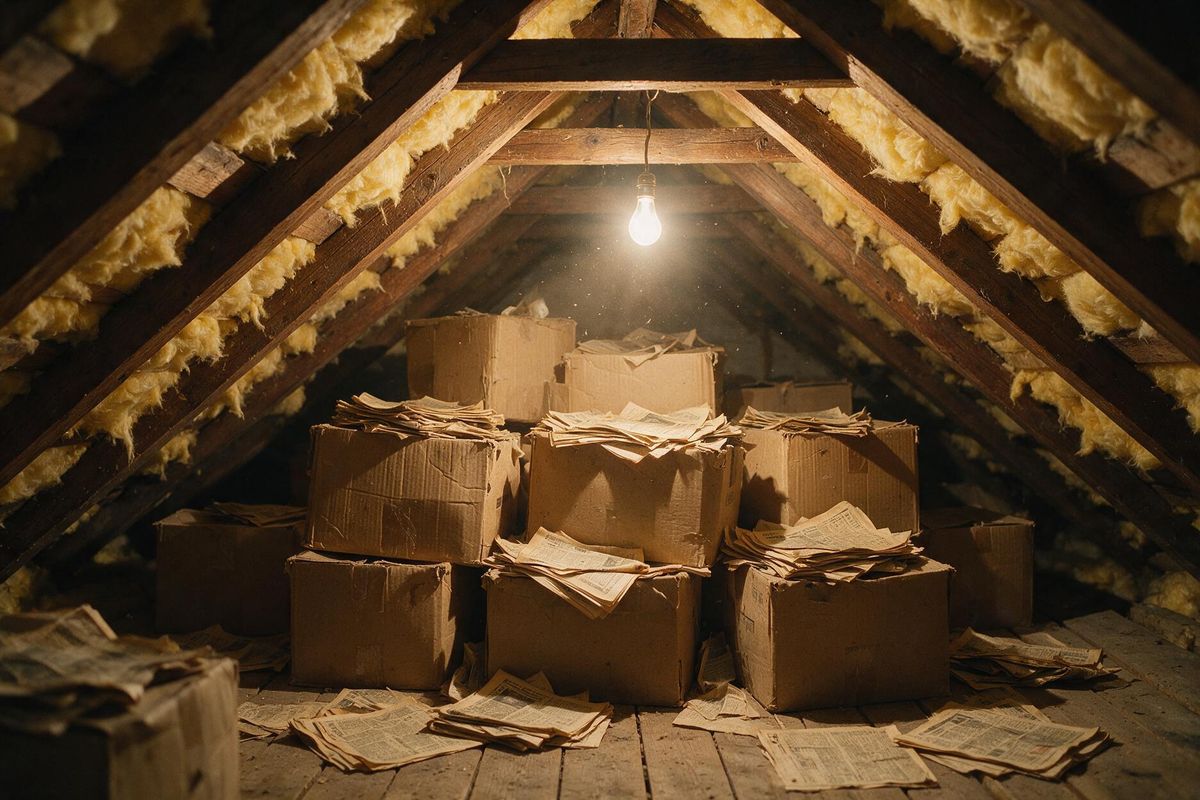
Silverfish eat polysaccharides: starch, dextrin, cellulose. In a house, that means:
- Paper sizing and book-binding glue, which is why old books are a classic find
- Wallpaper paste, and the paper backing it holds up
- Cardboard: the fiber, plus the corrugating adhesive between the layers
- Starched or sized fabric, and anything stored stiff from ironing
- Starch-based dry food: flour, cereal, rolled oats, pet kibble
- Dead insects and their own shed skins, which is how they hold on in an empty room
Nothing on that list is a mistake you made, and that is the point. Every house has paper, glue and cardboard, so “what are they eating” rarely gets you anywhere. Food is not the limiting factor in a normal home. Water is. They also go a long stretch without eating, so starving them out is not an option.
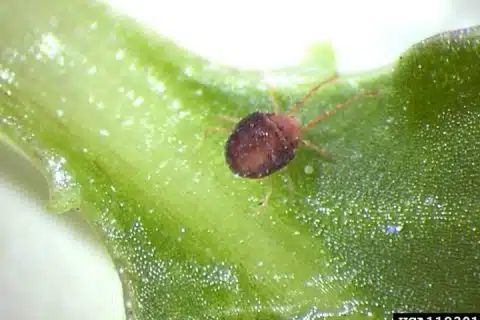
The damage does tell you something. Silverfish graze rather than bore: surface scrapes, notched page edges, thinned patches where the print has been shaved off, yellow staining. Not the clean round holes a borer leaves. If the same damp paper is feeding something pale and slow instead, you may have booklice, which walk and have no tail bristles.
Condition three: a dark, tight space nobody disturbs
Silverfish are flattened for a reason. They rest with the body touching a surface above and below at once, which pushes them into gaps of a couple of millimeters rather than open cavities. So the harborage list is structural, not a housekeeping report: the gap behind a baseboard, a subfloor seam, a lifted wallpaper edge, book spines packed tight, the underside of cartons on a slab.
The word doing the work here is undisturbed. Eggs go into a crack a few at a time and sit for weeks before anything hatches. A box you move twice a year is habitat. A box you open every week is not. That is the real mechanism behind sealed bins: they remove the stillness, not just the food.
The shortcut: a cardboard box on a basement or garage floor is all three conditions in one object. Damp wicking up from the slab, cellulose and glue in the walls of the box, a dark still gap between the flaps. If you fix one thing, fix that.
How they get in: carried, walked, or already there
Carried in. Silverfish are slow travelers, so over any real distance the transport is you: cartons off a garage floor, boxes out of a storage unit, secondhand books, files from an office basement. People miss this route because nothing changed about the house, and there are suddenly silverfish in the spare room where the boxes went.
Walked in. From ground that stays wet against the building: a crawlspace with no vapor barrier, an unsealed slab edge, a foundation crack, mulch banked against the siding. Once they are inside a wall they are no longer outdoors, and they surface wherever that wall opens. Basement and storage habits covers the same perimeter from the inside.
Already there. In an older house with plaster, original wallpaper and no vapor barrier, the population may simply predate you. Nothing came in. Something recent, a new bathroom, a failed gutter, a finished basement, pushed the humidity high enough to make the numbers visible.
Why a house can hold silverfish for years without showing you one
Development is slow. In warm damp conditions a silverfish takes months to reach adult size; in a cool or dry space it can take well over two years. Adults are then unusually long-lived for an insect, measured in years rather than weeks, and they keep molting after maturity, which is why you find shed skins in a crack with no insect in it. Egg-laying is a trickle, not a batch, so the population curve is a slow line rather than a spike. Add the behavior and the invisibility is complete: nocturnal, fast, flat enough to vanish into a two-millimeter gap.
So why is the first one you ever meet stranded in a bathtub at six in the morning? Not because they live there. A silverfish climbs rough plaster, grout and wood without trouble, and cannot climb glazed porcelain at all. It falls in and cannot get out. The tub is not a habitat. It is an accidental trap reporting a population that lives behind the wall.
What is not causing them
A dirty house is not the cause, and that is worth being blunt about, because it sends people scrubbing instead of measuring. A spotless bathroom with a fan venting into the attic gives silverfish everything they need. A cluttered dry closet gives them nothing. Cleaning removes crumbs. Crumbs were never the constraint.
One sighting is not an infestation either. A resident population shows up as repetition in the same spot over weeks, grazing damage, or individuals at clearly different sizes. And silverfish are not the cause of a bite. If something is affecting your skin, that is a question for a health professional, not a pest page.
The wrong lever: cedar, lavender, mothballs and contact sprays all act on the animal. All three conditions are properties of the building. Nothing you spray, hang or scatter changes the humidity inside a wall cavity, which is why repellents keep disappointing people. What repellents actually do, and where the evidence stops.
Which of the three you can actually move
The food is not going anywhere: you are not giving up books, paper, or wallpaper glue. The harborage is partly movable. The humidity is the one you can genuinely change, and it decides whether the other two add up to a population. So the honest answer to “what causes silverfish” is a building condition, not an event.
Which is why the removal steps here run in the order they do. The humidity-first removal protocol takes it from here, including how to confirm the numbers are dropping. If the problem sits in one wet room, the bathroom moisture and drain habits handle condition one at room level.
FAQ
What humidity level causes silverfish?
There is no single threshold, and a page printing an exact cutoff invented it. What extension sources publish is a preference range, not a switch. And the number that matters is not your hallway average: it is the microclimate inside the cabinet, the wall void or the box.
Does a clean house prevent silverfish?
No. Cleaning removes loose crumbs, but silverfish eat the paper, glue, cardboard and sizing a clean house is still full of. Dry air keeps them out, not tidiness.
Do silverfish come up through the drain?
No. They are not aquatic and cannot pass a water-filled trap. One in a basin arrived from above or behind, through a gap at the tub surround or a pipe penetration under the vanity, then could not climb back out of the porcelain.
Sources
- University extension entomology departments, household pest fact sheets on silverfish humidity and habitat requirements.
- Public health indoor air quality guidance on recommended indoor relative humidity.