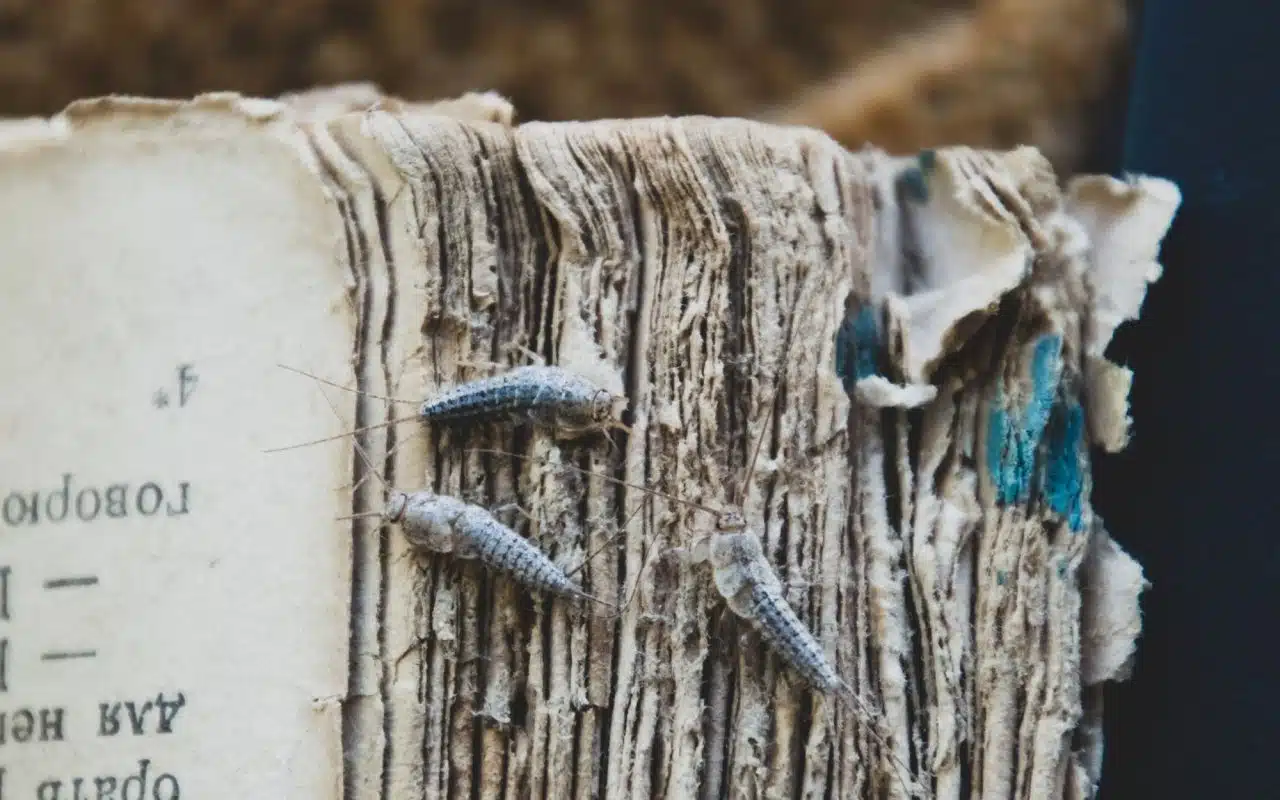
 Paper & fabric damage
 Short answer
Getting silverfish out of a bathroom or basement is mostly about drying the space out, not spraying it.
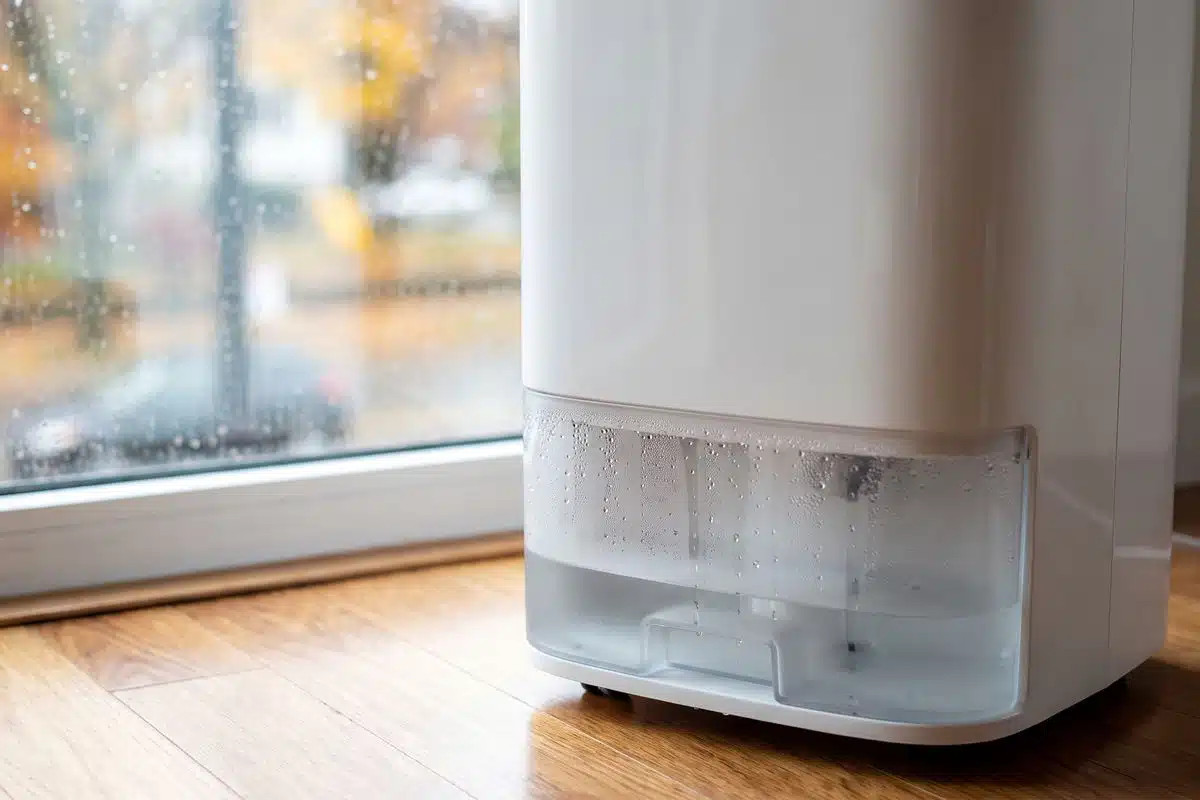
- Run a dehumidifier or exhaust fan to pull humidity below 50% in the affected room
- Vacuum up silverfish, eggs, and debris, then caulk cracks and gaps where they hide
- Store paper goods, dry food, and starched fabrics in airtight containers away from damp areas
Identification
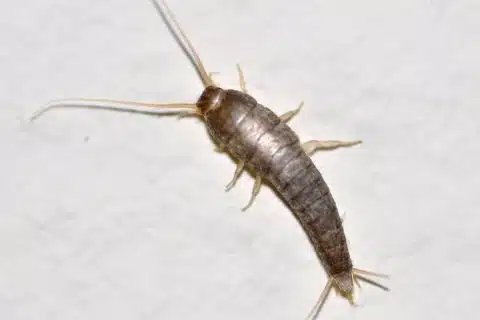
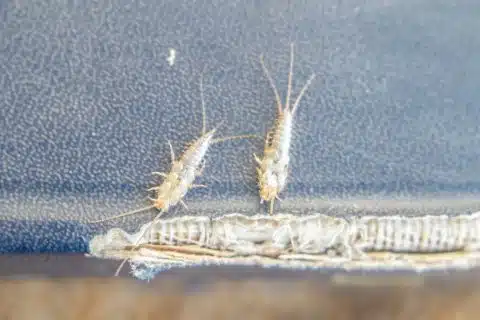
Adult silverfish are easy to spot once you know the shape: a flattened, teardrop or carrot-shaped body that tapers from a wide head end to a narrow tail, covered in fine silvery-gray scales that give it a faint metallic shine under a flashlight. Most adults you’ll actually run into are just over 12mm long, though some stretch closer to 19mm; either way, they have no wings and trail three long bristle-like tails (plus a pair of long antennae up front) about as long as the body itself. You’ll typically find them in bathrooms, basements, laundry rooms, and other damp, dark spots: behind toilets, under sinks, inside cardboard boxes, since they’re nocturnal and bolt for cover the instant a light comes on. Juveniles look like miniature versions of the adult, much smaller, paler, and almost translucent, which throws people off when they spot a tiny pale insect and assume it’s something else entirely. The species most often confused with silverfish is the firebrat, a close relative with mottled brown-gray coloring that prefers hotter, drier spots like near furnaces, water heaters, or attic insulation rather than damp bathrooms.
Look-alikes
Firebrats are the closest look-alike: same shape and tail bristles, but they’re mottled brown instead of silvery-gray and gravitate toward warm, dry mechanical spaces rather than the humid bathroom or basement corners silverfish favor. Booklice (also called psocids) get mixed up with young silverfish because both show up around stored paper and books, but booklice are soft, pale, wingless insects without tail bristles or the fast scurrying gait; under a magnifying glass they look nothing alike. If what you’re looking at has three long tail filaments and moves in a quick, side-to-side dash, you’re looking at a silverfish, not either of these.
The shortcut: A cheap way to confirm silverfish before you do anything else: leave a slightly dampened section of newspaper loosely rolled up in the room overnight. Silverfish will cluster inside it by morning, which gives you an easy read on how many you’re dealing with and a batch to dispose of at once.
FAQ
Do silverfish bite or sting?
No. Silverfish have no stinger and don’t bite people or pets. They’re a nuisance and paper-goods pest, not a health hazard. Here’s the full explanation, including where the fear about them actually comes from.
Why do I keep finding silverfish in my bathroom?
Bathrooms hold humidity longer than almost any other room in the house, and silverfish need that moisture to survive. A leaky pipe, poor ventilation, or an exhaust fan that never gets used are the usual culprits.
How do I get rid of silverfish for good?
Lower the humidity with a dehumidifier or exhaust fan, vacuum regularly, caulk entry points, and store paper and starched items in airtight containers. If the problem is heavy or keeps coming back, a licensed pest control professional can help track down the moisture source and any hidden pockets. Here’s when that’s actually worth the cost.
Sources
- University Extension entomology departments (household and structural pest fact sheets)
- Standard structural pest management references used in pest management training
- General entomology reference works on urban and household insects