Short answer
A silverfish in the bedroom almost never comes from the bed itself: a mattress that gets slept in and aired every day is one of the driest surfaces in the room. UC IPM’s three conditions for an infestation (damp air, starch or cellulose to eat, and a dark gap nobody disturbs) are usually stacked together in one spot instead, and in a bedroom that spot is almost always the closet.
- Confirm the insect: silverfish run fast and steady on six legs and never jump, so a carpet beetle larva in the same closet is a different problem.
- Check the closet before the bed. Stored paper, cardboard, and an exterior wall behind the rail create all three conditions in the same few feet.
- The same three conditions drive silverfish anywhere in the house; a bedroom closet with its door kept shut just supplies all three at once.
Why a bedroom is a harder case than a bathroom
Most silverfish sightings on this site trace back to a room that gets wet on a schedule: a bathroom after a shower, a kitchen cabinet around a cold supply line. The University of California Statewide Integrated Pest Management Program puts the species’ preferred range at roughly 75 to 95 percent relative humidity, between about 71°F and 90°F (22 to 32°C). A bathroom clears that bar for an hour or more after every use. A bedroom almost never does on its own.
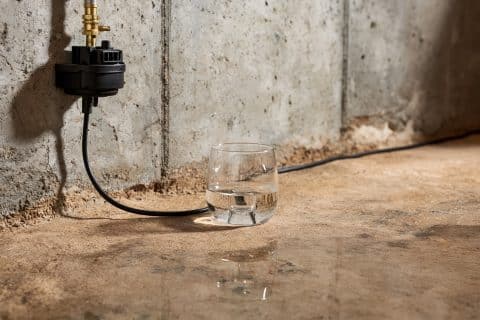
That is what makes a bedroom sighting worth taking seriously instead of brushing off. The air in the room is not naturally damp enough, so a resident population needs a pocket where humidity, food, and an undisturbed hiding place all happen to line up. A closet is usually the only part of a bedroom built to do that: a door that stays shut traps whatever moisture collects behind it, shelves hold the starchy paper and cardboard UC IPM lists as food, and stacked boxes go untouched for months at a time. A basement with an uncovered sump pit can build the same three conditions just as easily, as this look at silverfish in the basement shows.
Where to check, and why
Work down this list in order. The first two live inside the closet and explain most bedroom sightings on their own; the rest matter when the closet checks out clean.
| Where to check | What makes it attractive |
|---|---|
| Closet floor and back corner, behind stored boxes | Cardboard and paper are starch-bound food, stacked undisturbed for months, often against the coldest wall in the room |
| Closet wall shared with a bathroom or laundry area | Humidity from the wet side migrates through the shared cavity and collects on the closet’s drywall |
| Cardboard boxes stored under the bed | Dark, flat against the floor, rarely moved, and bound with the same starch-based glue as any other box |
| Window sill or track behind heavy curtains | Overnight condensation sits there long after the rest of the room has aired out |
| Base of an exterior wall behind a dresser or headboard pushed flush to it | Furniture blocks airflow to the wall, so humid air trapped behind it never mixes back into the room |
Check the closet with the door shut for a few hours first: a closet aired out all day reads the same as the rest of the room. Keep the door closed overnight, then open it first thing and note whether the air inside feels noticeably damper or smells musty before it mixes with the house.
Why the closet usually wins over everywhere else

A dresser drawer or a nightstand rarely builds up enough humidity to matter, and neither one stores much a silverfish can eat. A closet is different on both counts. The door keeps air from mixing with the rest of the room, so any humidity that does collect, whether from a shared wall, a cold exterior surface, or just a house running generally damp, stays put instead of dissipating. At the same time, a closet is where cardboard, stored books, photo albums, and off-season clothing in tissue paper actually live, and all of that is the starch and cellulose diet UC IPM names specifically.
The third condition, an undisturbed dark gap, is almost a closet’s job description. A box pushed to the back of a shelf in January can sit untouched until the next time someone needs what is in it, which is exactly the kind of quiet a silverfish population needs to establish itself without being found.
A two-night test that confirms the closet
This settles the question without moving every box in the room. Loosely roll two sheets of newspaper and dampen each one slightly. Set one inside the closet, tucked behind the lowest stack of boxes, and the other out in the open bedroom, away from any furniture. Leave both overnight with the closet door shut, then check them before the room airs out in the morning.
- Mostly the closet roll: the closet is the source, and anything you have seen elsewhere in the room is a wanderer from it.
- Mostly the open-room roll: look at the exterior wall and window instead; a closet that tests clean usually means the condensation is happening somewhere else in the room.
- Both, or neither: repeat the test after a run of humid days, since silverfish wander more when the air is damp and a dry stretch can make an active spot look quiet.
- Leave the closet door open for a few hours a day. Letting air actually mix with the rest of the room is the single biggest change for a closet that only ever traps humidity.
- Run a small dehumidifier inside a closet that still reads damp. The National Pesticide Information Center, run by Oregon State University under a cooperative agreement with the EPA, lists a dehumidifier as a direct control step for silverfish in an enclosed space, not just a comfort measure.
- Move paper and cardboard into sealed plastic totes. A cardboard box is both the food and part of the hiding place; a tote with a gasketed lid removes both at once.
- Break down and recycle empty boxes instead of flattening them into a pile. A flattened stack left on a closet floor is still starch-bound paper sitting undisturbed.
- Pull furniture a few inches off an exterior wall. The same airflow fix that helps a condensation-prone wall anywhere else in the house applies behind a dresser or headboard pushed flush to one.
- University of California Statewide Integrated Pest Management Program, Pest Notes: Silverfish and Firebrats, Publication 7475.
- National Pesticide Information Center, Oregon State University (cooperative agreement with the U.S. EPA), Silverfish and Firebrats.
Fix the three conditions, not just one
Once a spot tests positive, the work is building maintenance and storage habits, not pest control.
Don’t do this: spray inside a closet that holds clothing, bedding, or anything you will later wear. UC IPM treats moisture, food, and hiding-place removal as the actual control, and a residual insecticide on stored fabric is a bigger problem than the insect. A dry treatment like diatomaceous earth is a closer fit for a closet floor, and only once the space is actually dry; it does nothing on a damp surface.
Make sure it’s actually a silverfish
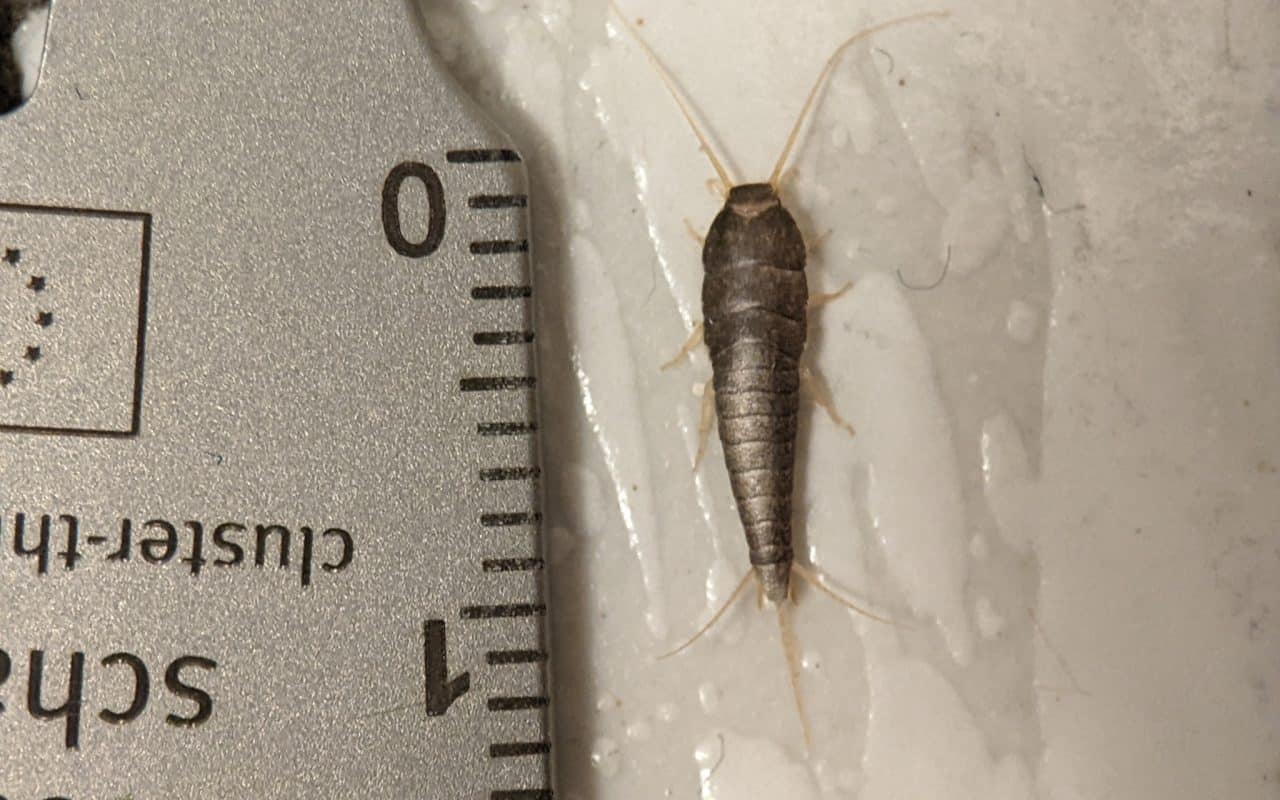
A bedroom closet produces more look-alikes than a bathroom, because it is also where wool sweaters, fur trim, and old photo albums live. A silverfish runs in a fast, steady line, silvery and carrot-shaped, tapering to three long tail bristles; it never flies and never jumps. A carpet beetle larva, by contrast, barely moves at all: it is bristly, banded brown and tan, and it stays put inside the wool or fur it is eating rather than running across the closet floor. The two problems share a room but call for completely different fixes.
A booklouse is the closer size match to a young silverfish, pale and soft-bodied, but it walks at an unhurried pace instead of darting, and it shows up in the same stored paper for the same humidity reasons. If what is sharing the closet with you is gray to blue-gray and jumps several inches when disturbed rather than running, that is a springtail, not a silverfish, and the moisture source it is pointing to can sit somewhere else in the room entirely.
FAQ
Can silverfish actually live in my mattress or bedding?
No. A mattress that is slept in and aired daily does not hold the humidity a silverfish needs, and it offers nothing to eat. If bedding genuinely feels damp in the morning, that is worth investigating on its own, but it is a different question from a silverfish population in the room.
Why do I only see them in the bedroom and nowhere else in the house?
Because the three conditions they need are concentrated in one spot in that room, most often the closet. Silverfish do not wander far from a source that supplies humidity, food, and an undisturbed hiding place all at once, so a sighting confined to one room points to that room’s closet or exterior wall first.
Could this be a carpet beetle larva instead of a silverfish?
Possibly, especially if it is slow-moving and you store wool or fur in the same closet. A carpet beetle larva is bristly and banded, and it stays on the fabric it is feeding on rather than running across the floor. What actually draws carpet beetles into a closet covers that problem separately.
Will a dehumidifier in the bedroom fix this on its own?
A whole-room dehumidifier helps, but a closet with its door shut can stay damp even while the rest of the bedroom reads dry, because the door blocks the air exchange that would otherwise clear it. A small unit placed inside the closet itself, or just leaving the door open for part of the day, usually does more than one running in the open room.
Do silverfish bite or get into bedding at night?
No. Silverfish have no mouthparts built to bite skin, and a slept-in bed is too dry for them to want to be there. Marks that appear overnight have other causes, bed bugs and allergic reactions among them, and those belong with a different diagnosis entirely, not this one.