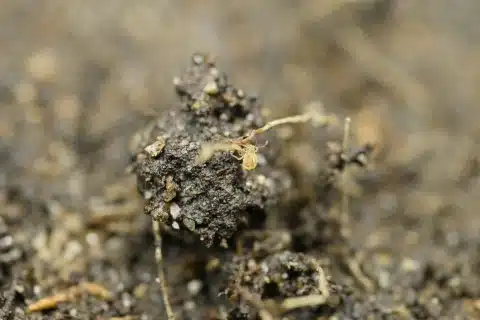
Short answer
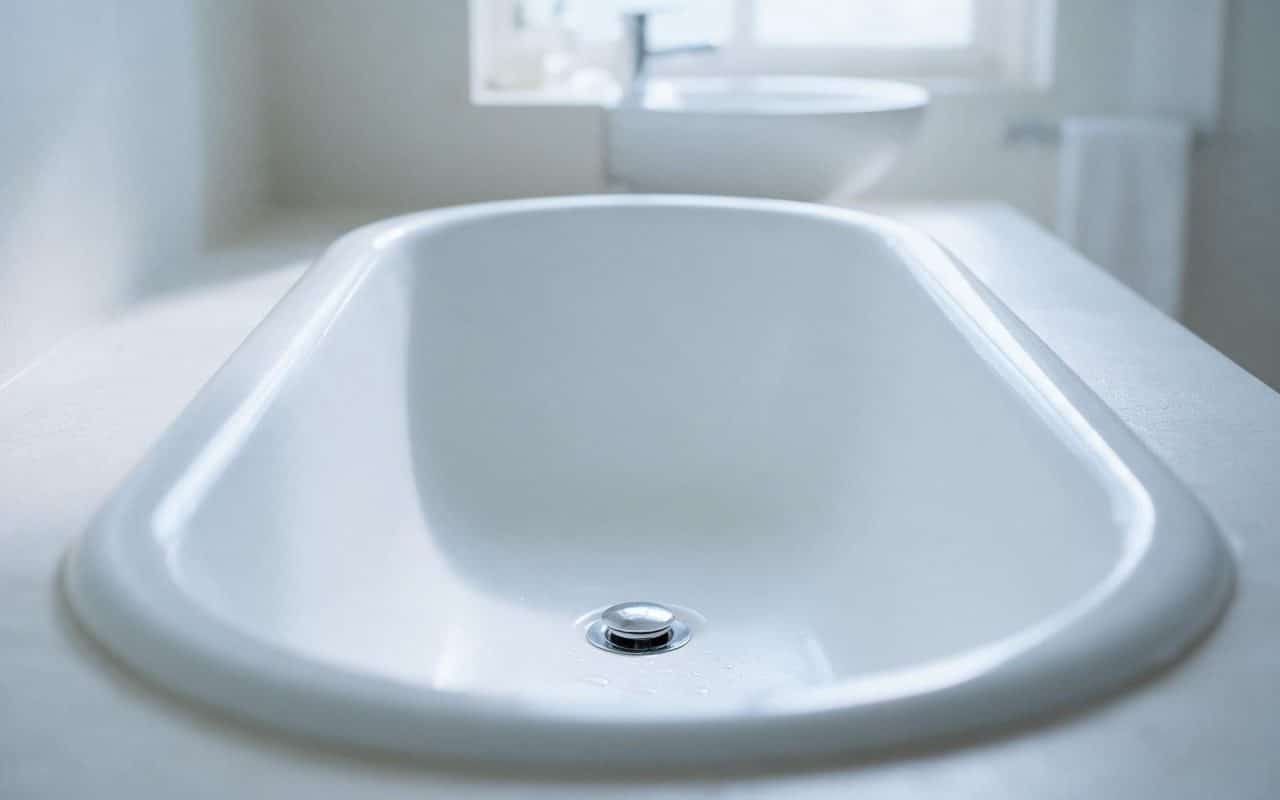
Springtails in a bathtub or a sink fell in from something damp above the basin and then could not get back out: glazed porcelain gives them nothing to hold, and their escape is a jump in a random direction rather than a route to the rim. Your tub is a pitfall trap you did not mean to set, which is why the basin looks alarming while the tile two feet away looks clean.
- Wipe the basin bone dry, plug the drain, tape over the overflow, leave it overnight.
- Specks back in a sealed dry basin means they came from above. Start at the caulk line and the lowest course of grout.
- Dry that joint and the basin stops filling. The moisture-first springtail protocol runs the search in order.
Why the basin holds them and the floor does not
First, the question everyone opens with: they did not climb up out of the plumbing. That answer applies to the whole room rather than to one fixture, and it is worked through in full, along with the drain fly it keeps getting confused with, in springtails in a bathroom. What follows here is the part that belongs to the basin alone, and it is the part that explains the pile: why a tub or a sink ends up holding thirty of them while the tile two feet away looks clean.
A basin is a container, and its walls are the wrong shape and the wrong material for this animal. A standard alcove tub puts 12 to 16 inches of glazed wall between its floor and its rim. A bathroom basin is much shallower, 5 to 7 inches, but its sides curve inward as they rise, so the last stretch leans back over whatever is at the bottom. Both are vertical or worse, and neither offers a fibre, a seam or a speck of grit of the kind a springtail crosses without thinking on a tiled floor.
Grip is what fails first. A springtail holds to a surface much the way it drinks from one, by contact: the ventral tube under its abdomen presses against damp material and wets the point where the two meet. Glazed porcelain twenty minutes after a rinse is dry and closed, with no pore to take up and nothing to key into, so an animal that reaches the wall slides straight back down it. That is the whole difference from the floor. On tile it walks off in any direction it likes and you never see it again; in the basin every direction is up a dry slope.
Then there is the jump, which is a launch and not a steering system. Disturbed, a springtail releases the forked appendage folded under its abdomen, the furcula, which snaps against the surface and throws it several inches by UC IPM’s account, in whatever direction it happened to be pointing. Out in a room that is enough, because any direction puts distance between the animal and whatever startled it. Inside a bowl it buys nothing. A hop from the middle of a tub floor ends against the side, one that does clear the wall of a sink meets the underside of the rim, and the animal drops back to the bottom to try again.
Which is why the count misleads. A basin is cumulative: what you read at seven in the morning is everything that has dropped in since the tap last ran, gathered on one white floor where nothing goes unnoticed. Spread those same thirty animals across the bathroom tile and you would not have registered one of them. The number in the tub measures how long it has been since the last rinse, not the size of the colony.
Where they actually fell from
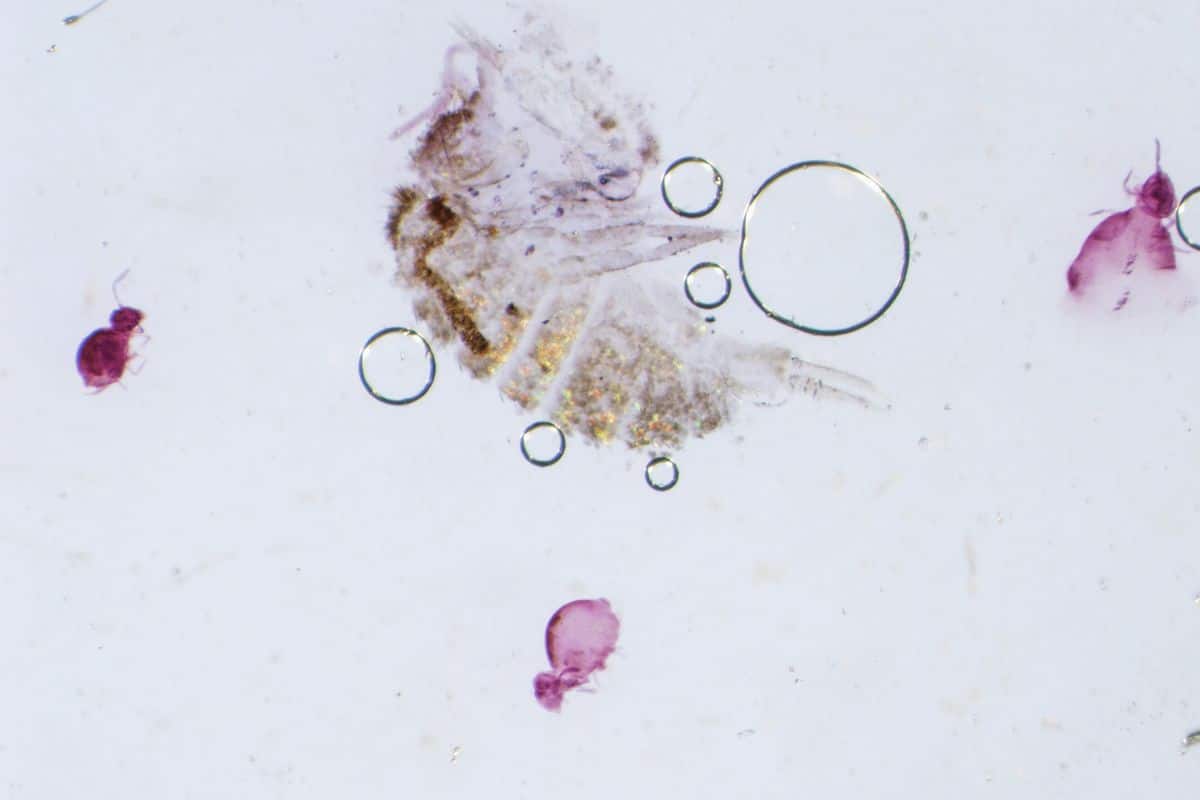
Look directly above the basin and slightly behind it. Springtails live in the seam itself, so what you are hunting is a line still dark hours after the last shower.
| Above a bathtub | Above a sink |
|---|---|
| The silicone bead where the tub meets the tile | The sealant line where a drop-in basin meets the counter |
| The bottom two courses of grout, especially the corner | The underside of the rim, and the cut edge of a particleboard counter |
| The channel in a sliding shower door track | The back corner of the vanity cabinet below |
| A window sill or frame set over the tub | A plant, a sponge caddy or a dish rack tray on the sill |
| The flat bottom of a tiled soap niche | The escutcheon where the faucet passes through the deck |
| Ceiling condensation over the tub if the fan is undersized | The overflow rim inside the basin, which never fully dries |
Read a caulk line with a fingertip, not with your eyes. Sound silicone is firm and comes away clean. A failing one is soft, lifts at the edge, and leaves a gray or black smear. That smear is mold, which is what springtails eat, so a joint reading this way is both the door and the dinner.
Kitchen sinks run the same way with different suspects, usually a herb pot on the sill watered a little too often. The specks arrive over the edge, not out of the stainless. The four bugs that turn up in bathrooms covers the wider triage if the room has produced more than one kind.
The one opening that is fair game: no extension publication puts springtails in a tub overflow, so read this as reasoning rather than citation. Unlike the drain itself, the overflow plate opens into a dark channel behind the basin wall that stays damp between showers and is sealed off from nothing. Tape it shut during the overnight test below and you find out.
The overnight test that settles it
Ten minutes of work replaces a week of guessing. Do it on a night nobody uses the room.
- Rinse the basin, then wipe it completely dry with a towel, walls and all. You are clearing the record.
- Seat the stopper, or drop in a flat rubber plug. A pop-up stopper that leaves a gap does not count.
- Tape a strip of masking tape over the overflow plate. This is the step everyone skips.
- Leave the room dark and unused overnight, and read the basin before anyone runs water.
Specks in a sealed, dry basin came from above. Nothing else is left. An empty basin with the overflow taped, then a full one the night you leave the tape off, points at the overflow channel. Empty two nights running usually means you tested after a dry spell, so repeat it after a long shower.
Fix the joint, not the basin
Once you know which seam is wet, the work is ordinary building maintenance: fan first because it is free, then the joint cut out and re-bedded once dry, then the room air if the first two fall short. How to bring indoor humidity down, room by room has the sequence, and bathroom moisture and drain habits covers the daily routine.
Do not run new caulk over the old line. Silicone needs a clean, dry substrate to bond. Laid over a damp, moldy bead it seals the water in and fails at the edge within weeks, and the same dark seam and the same specks come back. Cut the old bead out, let the gap dry a day, then re-bead.
What does not work on a tub or a sink
Bleach or boiling water down the drain is the wasted evening almost everyone starts with. The pipe was never the way in, so the evening buys nothing, and the seam above the basin is still wet in the morning.
Spraying the tub is worse than useless. A residual on a glazed surface is rinsed off at the next shower, the animals sit inside a joint the spray never enters, and you have put a pesticide where people stand barefoot. Diatomaceous earth fails for the mirror-image reason: it kills by abrasion and drying, which needs a dry surface, and the target here is a wet seam. When a spray is worth using at all is the longer version. Rinsing the basin is not a fix either, though it is worth doing: it resets your gauge.
If it walks, or if it flies
Two look-alikes end up in the same basin and change what you do next, so watch one for two seconds before you decide. A steady, unhurried crawl across the enamel is a booklouse, pale tan and soft-bodied, reading the same moisture without the jump; tiny wingless black specks in a bathroom splits those two properly. A dark speck with fuzzy wings that sits still on the tile and moves in short hops rather than sustained flight is a drain fly, and that one really did come out of the pipe. Everything else about the animal itself is on the springtail profile.
FAQ
Can springtails come up through the drain?
No, and the reason is the same one that applies to the room as a whole: springtails in a bathroom sets out the plumbing argument and the drain fly it gets mistaken for. What is specific to a basin is the overflow, which opens into a damp channel on the room side of everything the trap seals. That is the one opening worth taping shut during the overnight test.
Why are there dozens every morning and none during the day?
Because you reset the count every time you run the tap. A basin accumulates whatever falls in between rinses, so the morning reading is eight hours of arrivals at once. It is not a night-time hatch, and the numbers are not climbing as fast as they look.
Do springtails in a tub mean the water is contaminated?
No. They arrive from a wet joint in the room, not from the supply line, and they are not known to transmit disease. They do not bite either. What the sighting means is that something is staying wet, which is worth fixing for the building’s sake before the insect’s.
They are only in the sink, never anywhere else. Is that normal?
Yes, and it is the clearest version of the pattern. A basin is the one surface they cannot leave, so it collects them while the rest of the room hides them. It usually means the source is close and directly overhead: the sealant line around the basin, or the counter edge behind the faucet.
Sources
- University of California Statewide IPM Program (UC IPM), Pest Notes: Springtails.