 Harmless — humidity signal
 Short answer
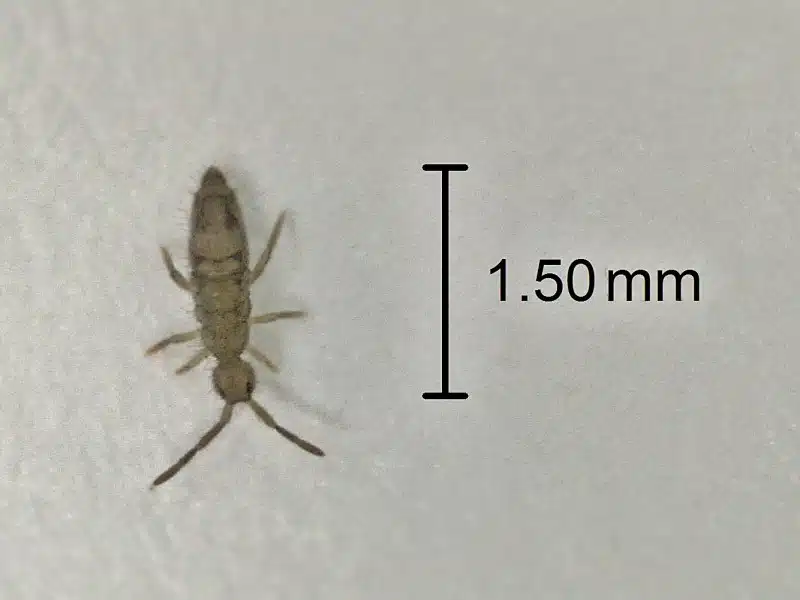
Springtails (order Collembola) are tiny gray or brown hexapods, about 1/16 inch long (1 to 2 mm), that live near moisture and launch themselves up to several inches into the air when disturbed. Depending on which extension you read, they are insects or insectlike arthropods; they don’t bite or sting, and finding them almost always means there’s a damp spot nearby worth checking.
- Look closely: does it jump erratically in random directions rather than toward you? That’s the springtail tell.
- Track down the moisture source (leaky pipe, overwatered pot, condensation) and dry it out — the step-by-step springtail removal protocol runs that search in order, and the full moisture control guide covers the air.
- If the springtails cluster in a bathroom specifically, our guide on preventing silverfish in the bathroom covers the same humidity fixes that clear both problems at once.
Identification
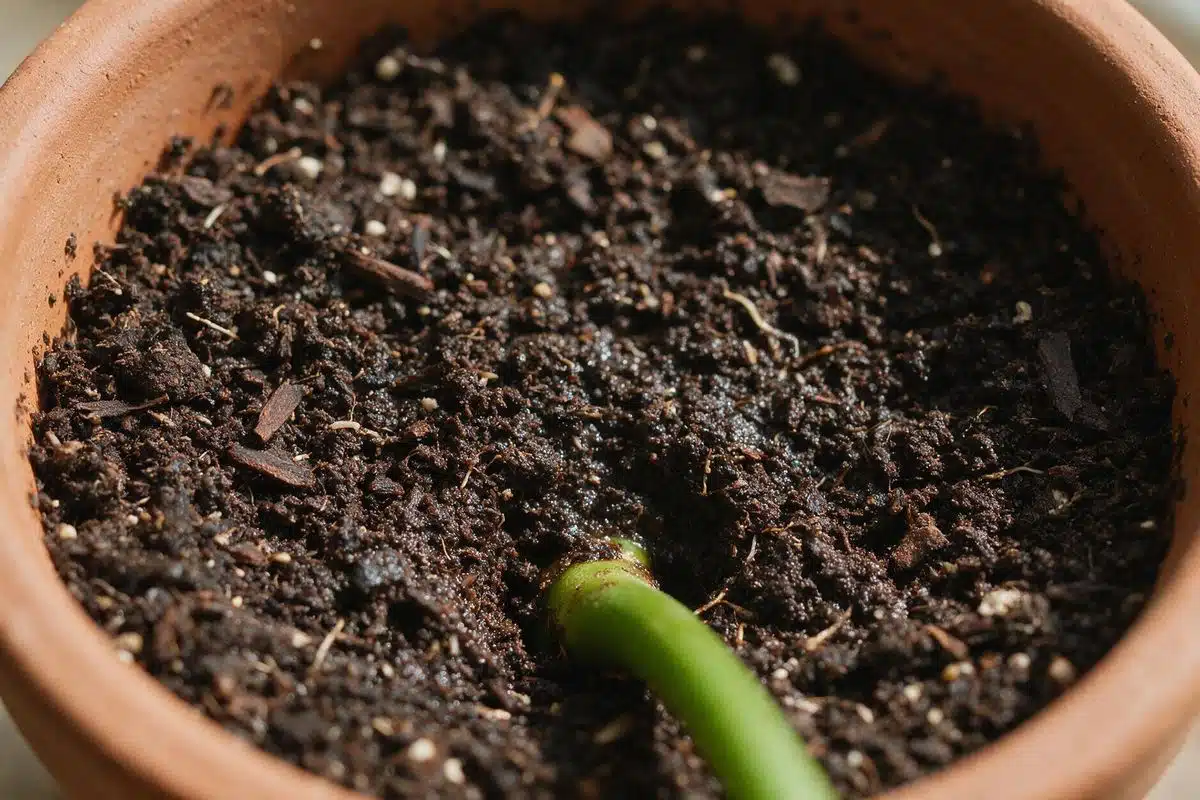
Springtails get their name from a small forked appendage called a furcula, folded and tucked under the abdomen like a loaded spring. When something disturbs them, the furcula snaps open and flings the animal into the air, up to several inches by UC IPM’s account, which for something this small looks dramatic up close. There’s no walking away calmly involved. One second they’re on the tile, the next they’re gone.
Color varies by species, but most of what turns up indoors reads as gray, blue-gray, or a dark, almost sooty brown. None have wings. Under a hand lens the body looks segmented and slightly elongated rather than round, and the whole animal moves in short bursts rather than a steady crawl.
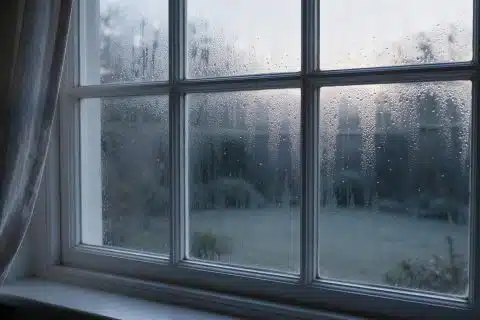
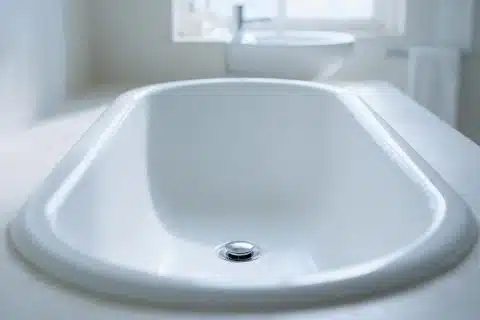
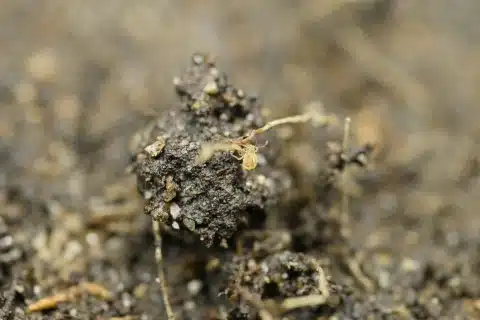
Where you find them tells you almost as much as what they look like. Springtails need constant moisture to survive, so they show up around sink cabinets, shower trays, the saucer under an overwatered houseplant, damp basement corners, and soil that never quite dries out. A few scattered individuals aren’t unusual in any home with plants. Dozens appearing at once, especially in the same spot day after day, is the animal doing you a favor: it’s pointing at a moisture problem you’d otherwise miss until it got worse.
Are springtail bugs actually insects?
Almost everyone calls them springtail bugs, and in a kitchen that is a perfectly good name. In a taxonomy key it is not. Springtails belong to the class Collembola, a lineage that split off from insects a very long time ago and kept a different body plan: six legs, yes, but internal mouthparts tucked inside a pouch in the head instead of the exposed mandibles an insect carries, and only six abdominal segments instead of eleven. That is why some university extension pages call them insects and others carefully write “insect-like arthropods” or “hexapods”. Both are defensible. Neither changes anything you have to do about them.
What the label does change is what you should expect. Springtail insects are not a pest in the way a pantry moth is a pest. They eat mould, algae and decaying plant matter, so they cannot damage a structure, spoil food or feed on a person. There is no life cycle to break and no population to knock down. Remove the water and the food they were grazing on disappears with it, which is why every honest guide on the subject ends up talking about humidity rather than insecticide.
One practical consequence: a product labelled for “insects” is not making a promise about Collembola, and a contact spray that kills the springtails on a damp windowsill this morning does nothing about the damp windowsill. The removal protocol is built around that fact, and the moisture control guide covers the reading you need from a hygrometer before you decide anything.
Look-alikes
The mix-up people run into most is fleas, and it’s an understandable one: both are small, both jump, and neither one sits still long enough for a good look. The differences hold up once you know where to check. Fleas are flattened from side to side, a dark reddish-brown, and their jump is aimed — they’re going after a warm body to bite, so you’ll find them on pets or ankles, not by the sink. Springtails jump in whatever direction they happen to launch, show no interest in you or your pets as a target, and turn up in damp, low-traffic spots instead. A flea bite that itches is a flea. A jumping speck near a wet houseplant is a springtail.
The other common confusion is booklice, which share the small size and the pale, indoor-humidity habitat but don’t have the springtail’s party trick. Booklice walk. If it’s crawling steadily across a damp windowsill rather than launching itself, you’re probably looking at a booklouse, not a springtail, though the fix is the same either way. For a broader rundown of what else gets confused for what, the identification hub covers the rest of the household lineup.
The shortcut: if it jumps straight at your leg, worry about fleas; if it jumps in every direction near a sink or a plant pot, it’s a springtail and the only thing it wants is less moisture.
FAQ
Are springtails the same as fleas?
No. They’re unrelated animals that both happen to jump. Fleas are flattened, reddish-brown, bite to feed on blood, and target pets and people directly. Springtails are gray or brown, don’t bite anything, and jump erratically rather than toward a host. If nothing in the house is getting itchy bites, fleas are unlikely to be the culprit.
Are springtails insects or something else?
They are hexapods in the class Collembola, a group that separated from true insects early enough to keep its own body plan: mouthparts held inside a pouch in the head, and six abdominal segments rather than eleven. Some extension services still list them under insects, others say “insect-like arthropods”. For anything you actually do about them, the distinction does not matter — the fix is moisture either way.
Do springtails bite or sting?
No. Springtails have no interest in humans, pets, food, or building materials. They feed on mold and decaying organic matter, and beyond being a nuisance to look at, they cause no harm to a home or the people in it.
Why do I keep finding springtails in my bathroom or basement?
Because those are the two rooms in most houses that hold onto moisture longest: a shower tray that doesn’t fully dry, a foundation wall that sweats in humid weather, a drain that stays damp between uses. The springtail removal protocol works through finding that wet spot and drying it out.
Sources
- University of California Statewide Integrated Pest Management Program, Pest Notes: Springtails, UC ANR Publication 74136.
- University of Minnesota Extension, household Collembola guidance.