Short answer
If you found irregular holes in a wool sweater or a stored blanket, the short version of how to get rid of clothes moths is this: pull every wool, fur, or felt item out of the closet, wash or freeze whatever is infested, vacuum the space thoroughly, and store the clean items sealed so egg-laying females lose interest.
- Pull every wool, fur, or felt item out of the closet and check each one under bright light.
- Wash infested items hot, or freeze the delicate ones for at least five days.
- Vacuum the closet corners and baseboards, then store everything clean in sealed containers.
The full protocol: how to get rid of clothes moths
Isolate and inspect every stored item
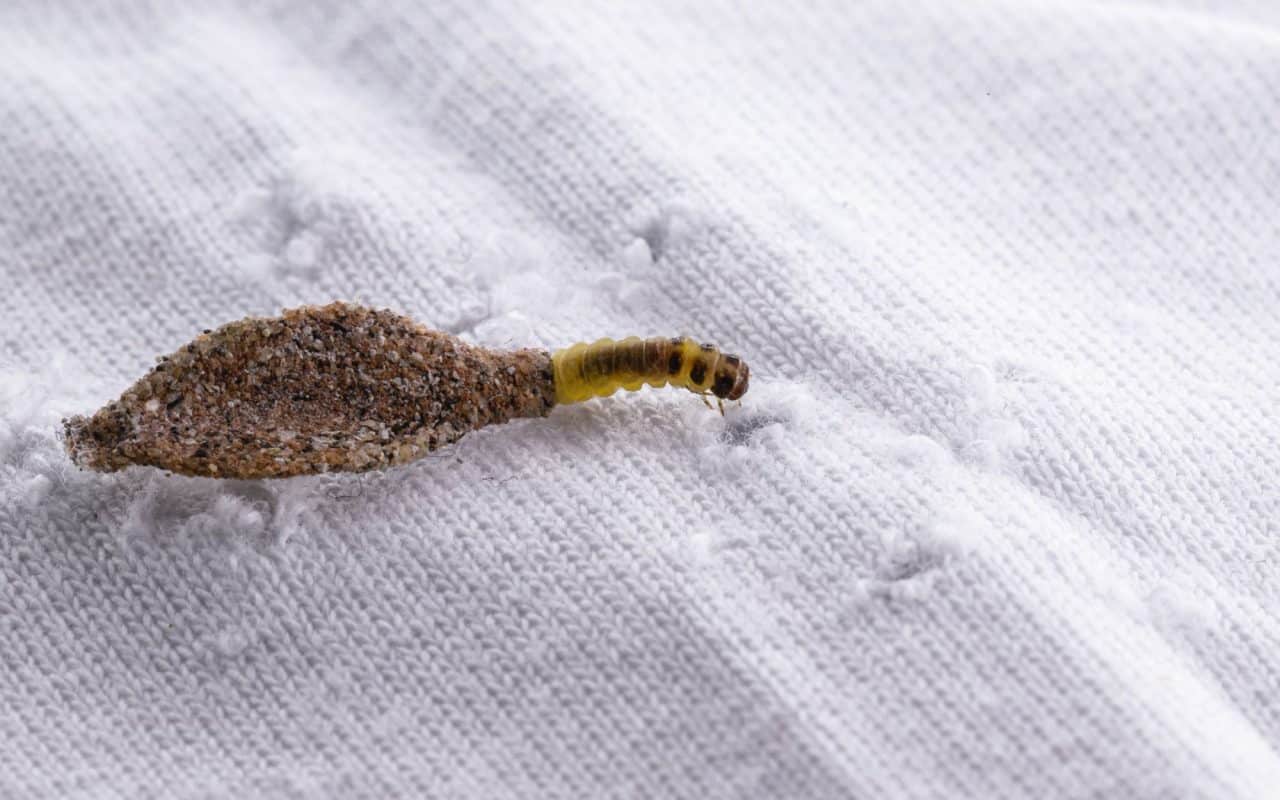
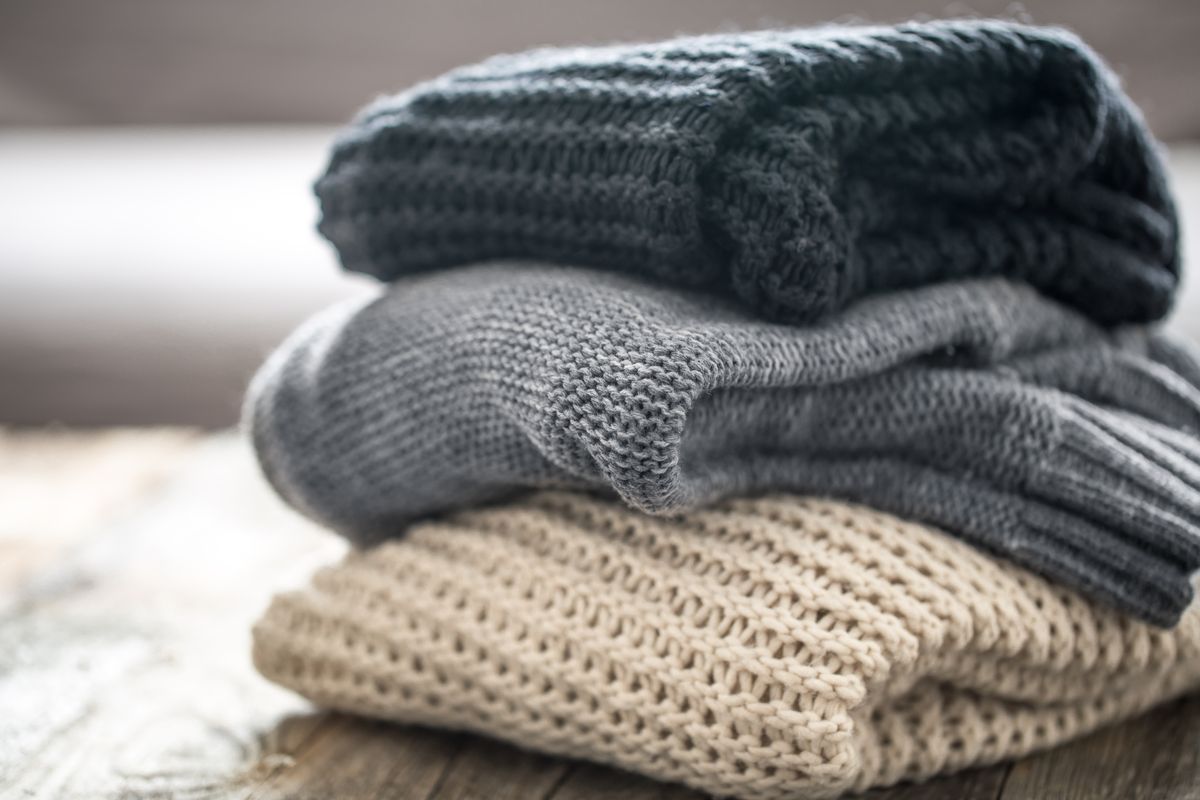
Do not stop at the one sweater with the hole. Clothes moth larvae move between items stored close together, so pull out every wool coat, wool blanket, fur trim, felt hat, natural-bristle brush, and any wool-synthetic blend, and lay them out somewhere bright. Look for irregular chewed holes, thin or missing patches of fiber, loose silk webbing stuck to the weave, or, for the casemaking clothes moth, a tiny portable silk case about the size of a grain of rice dragging along the fabric. Check soiled spots first, collars, underarms, cuffs, since the larvae prefer fabric carrying sweat or body oil over clean fiber.
Wash what can be washed, hot
Anything that can go through a washing machine on a hot cycle should. Heat kills eggs and larvae on contact, and a normal hot wash followed by a full dryer cycle clears most cotton-wool blends. If the care label says dry-clean only, take it to a dry cleaner instead of improvising a home wash. The solvent process kills the same life stages without damaging the fabric.
Freeze what cannot be washed
For delicate wool items that cannot go in a machine or to the cleaner right away, an unheated chest freezer works as a stopgap. Seal the item in a plastic bag to keep condensation off the fabric, then freeze it at 0 F (-18 C) for at least five days. Treat that five-day mark as a floor, not a guarantee. Most home freezers cycle warmer than a lab freezer and do not hold a steady 0 F, so if you can leave the item in longer, do. Freezing kills what is currently in the fabric. It does not repair holes already chewed, and it does not make the item pest-proof afterward.
Vacuum the closet from corner to corner
Vacuum the entire closet, not just the floor. Run the hose along baseboards, corners, the underside of shelves, and especially under any stored boxes or bins, since eggs and larvae settle into spots that never get disturbed. When you are done, take the bag or canister contents outside and dispose of them immediately rather than leaving them in the kitchen trash, so anything still alive does not just work its way back in.
Store everything clean in sealed containers
Once items are clean and completely dry, do not put them back on an open shelf. Clean fabric with no trace of sweat or oil is far less attractive to an egg-laying female than fabric that has been worn or stored loose, but a sealed plastic tote, a cedar chest, or a zippered garment bag adds a real physical barrier on top of that. Store off-season wool this way year-round, not just after a scare.
Hang a trap to monitor, not to fix
A pheromone trap will not solve an active infestation on its own. It lures and catches adult males, which tells you whether egg-laying is still happening. Hang one inside the closet, check it weekly, and watch the count. If it stays at zero for two or three weeks after you finish the steps above, the population is likely gone. If catches keep climbing, go back through the closet and look for an item you missed. A scented deterrent hung alongside stored items can discourage females from laying new eggs in the meantime, but it will not kill an infestation already underway, and it is not a substitute for washing or freezing infested fabric.
Don’t do this: Treat only the one damaged sweater and put everything else back in the closet unwashed. Clothes moth larvae spread between items stored close together, so a partial treatment almost always means new holes show up again within a few weeks.
The shortcut: Run a flashlight along the underside of shelves and into the back corners before you do anything else. Adult clothes moths are photophobic and scurry rather than fly when disturbed, so they sit in the darkest, most undisturbed part of the closet, not near the door or window where you would expect to spot them.
FAQ
Do clothes moths bite?
No. The webbing clothes moth and its look-alike, the casemaking clothes moth, do not bite people or pets and do not transmit disease. The only real damage they cause is to fabric, when the larvae chew on wool, fur, feathers, and felt.
What is the difference between the webbing clothes moth and the casemaking clothes moth?
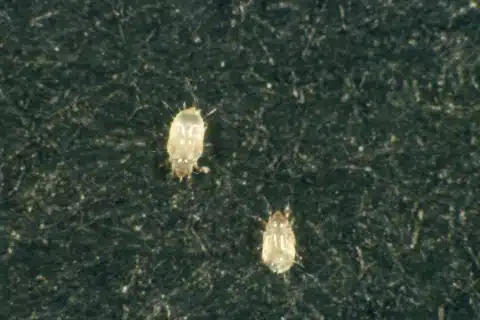
Both are small, plain buff or golden-tan moths with no wing pattern, and both feed on the same soiled wool and fur. The reliable way to tell the larvae apart is the case: a casemaking clothes moth larva drags a small portable silk case around with it as it feeds, while a webbing clothes moth larva spins silk feeding tunnels directly onto the fabric instead.
How do I tell a clothes moth apart from a pantry moth or a carpet beetle?
A clothes moth is small and a plain buff or golden-tan color with no pattern on the wings, and it hides in dark closet corners rather than near windows. A pantry moth looks different up close, its wings show a two-tone pattern, pale gray near the body and coppery brown toward the tips, and it tends to turn up near food storage and gather around windows and lights at dusk instead of in a closet. A carpet beetle is not a moth at all. At rest it has an oval, hard-shelled body instead of the elongated wing shape a moth folds over its back, and it can also feed on stored wool, so do not rule it out just because you found chewed fabric.
Is this a seasonal problem, or can it happen year-round?
Inside a heated home, clothes moths can keep breeding straight through the winter. The larvae tend to be most active during warm months, but the infestation itself does not really pause for the season. Most people find out about it the same way, by pulling a wool coat or a stored blanket out of the closet and finding holes that were not there the last time they looked.
How long do I actually need to freeze clothes to kill clothes moths?
Treat at least five days at 0 F (-18 C) as the floor, not the finish line. That is a similar cold-tolerance window to what extension guidance uses for carpet beetles in stored fabric. A home freezer often runs warmer than a true 0 F, so longer is safer, and freezing only kills what is already in the item. It will not undo holes that are already there.
Will clothes moths eat synthetic fabric?
Not on their own. Clothes moth larvae feed on wool, fur, feathers, felt, and other animal fiber, and they generally leave clean synthetic fabric alone. A wool-synthetic blend is still at risk though, since the wool content is enough to draw them in.
Sources
- University extension entomology and integrated pest management (IPM) fact sheets