Short answer
A carpet beetle in your bed is not there for you. It does not bite, it does not feed on blood, and no part of a human body is food for it at any stage. It is there because something within a few feet of the mattress is keratin: a wool blanket, a down pillow, or the hair and lint that collects under a bed frame nobody moves.
- Check the shape. A slow, bristly, tapered brown grub is a carpet beetle larva. A flat, wingless, wafer-shaped insect in a mattress seam is not, and five visible differences between a carpet beetle and a bed bug settle that in a minute.
- Look under the bed, not in it. Pull out the storage boxes, lift the rug, run a light along the carpet edge behind the headboard.
- Launder the wool and down items hot, then work the full removal protocol instead of attacking the mattress.
What a carpet beetle is actually eating in a bedroom
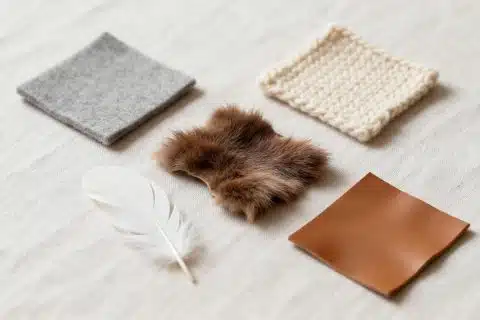
Carpet beetle larvae eat keratin: the protein in wool, silk, fur, feathers, leather and hair. That one fact explains everything odd about where they turn up. They are not drawn to warmth, to breath, or to a sleeping person, but to a protein, and they stay wherever it sits undisturbed.
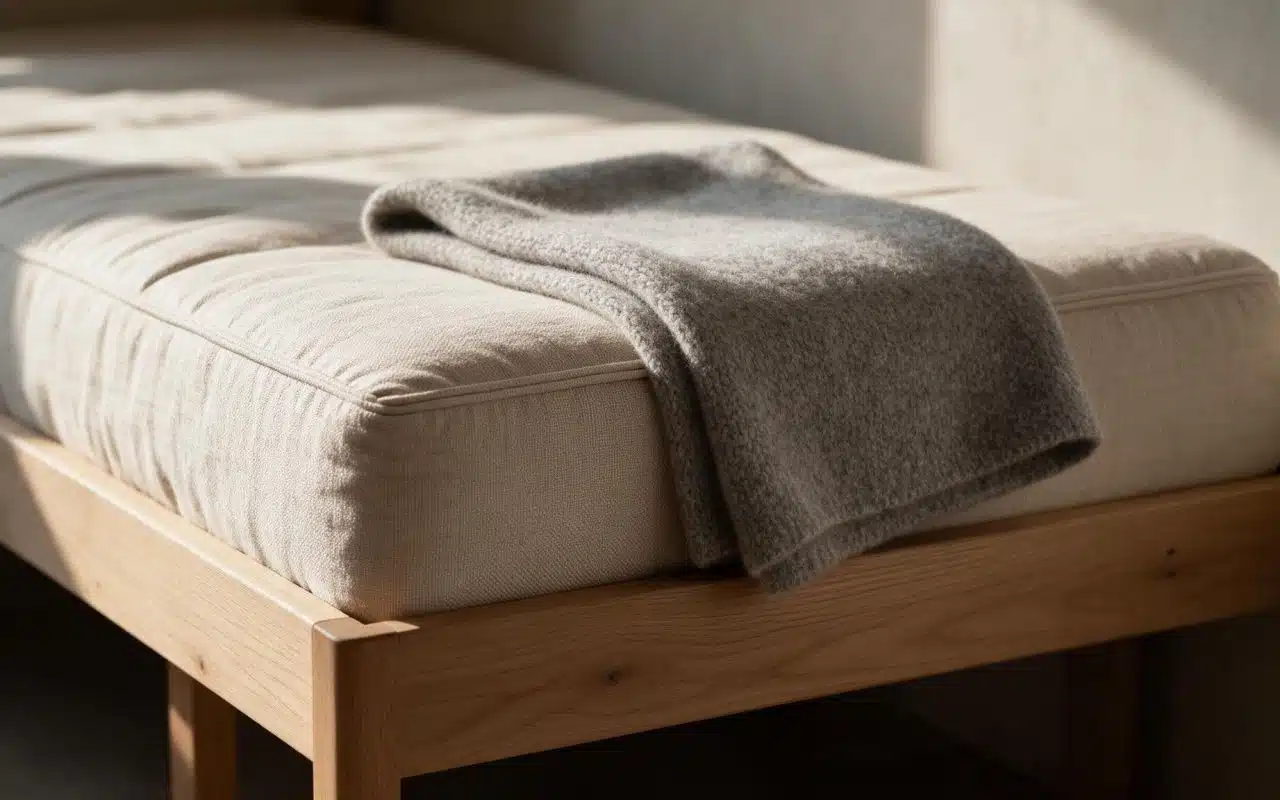
Run the inventory of an ordinary bed and most of it is not food. A foam or spring mattress, a cotton sheet, a polyester duvet shell, a jersey pillowcase: none of that is keratin, and a larva left on it would starve. What counts sits around the edges. A wool blanket or wool topper. The down inside that polyester shell, and the feather pillow. A wool or sheepskin rug beside the bed, including the half that lives in the dark under the frame. A larva grazing on those leaves thin irregular patches and loose fiber, not the clean round holes people expect. That larva measures 4 to 5 millimeters and looks hairy in the varied carpet beetle, up to about 12 and carrot-shaped in the black one, per the larvae identification page.
Then there is the dust. The grey mat under a bed is textile fiber, shed skin and hair, human and pet. Extension entomologists name lint accumulations, hair and dead insects as larval food, and that mix is what a bed frame collects. Skin flakes get quoted a lot here and they are the weakest item on the list: the protein is in the hair and the dead insects. A fly that died on a windowsill in August and got swept under the bed is a concentrated keratin package, and larvae find those reliably.
Where they actually live, and it is rarely the mattress
Larvae run from light, so a population sits under things rather than on them. A bed is the best furniture in the house for that: heavy, rarely moved, with a permanently shaded floor underneath that most vacuum routines skip. Nothing is targeting the bed. It is the largest undisturbed dark surface in the room. Work this list with a flashlight held low, raking across each surface rather than shining down on it.
| Where to look | What confirms it |
|---|---|
| Floor under the bed frame | Grey lint and hair with hollow bristly husks in it |
| Carpet edge along the baseboard behind the bed | Loose bristles in the pile, thinning right at the edge |
| Under-bed storage boxes | Wool blankets or spare pillows with grazed patches |
| Underside of the box spring and its dust cover | Husks caught in the gauze fabric |
| The half of a wool rug that sits under the bed | Pile thinner on the dark half than the exposed half |
| Gap between headboard and wall | Dust, hair and dead insects nobody has cleared |
The shortcut: count husks, not insects. The hollow shed skins outnumber live larvae heavily and stay where the feeding happened. Three husks along one carpet edge tell you more than one larva on a sheet.
It is not a bed bug, and the check takes twenty seconds
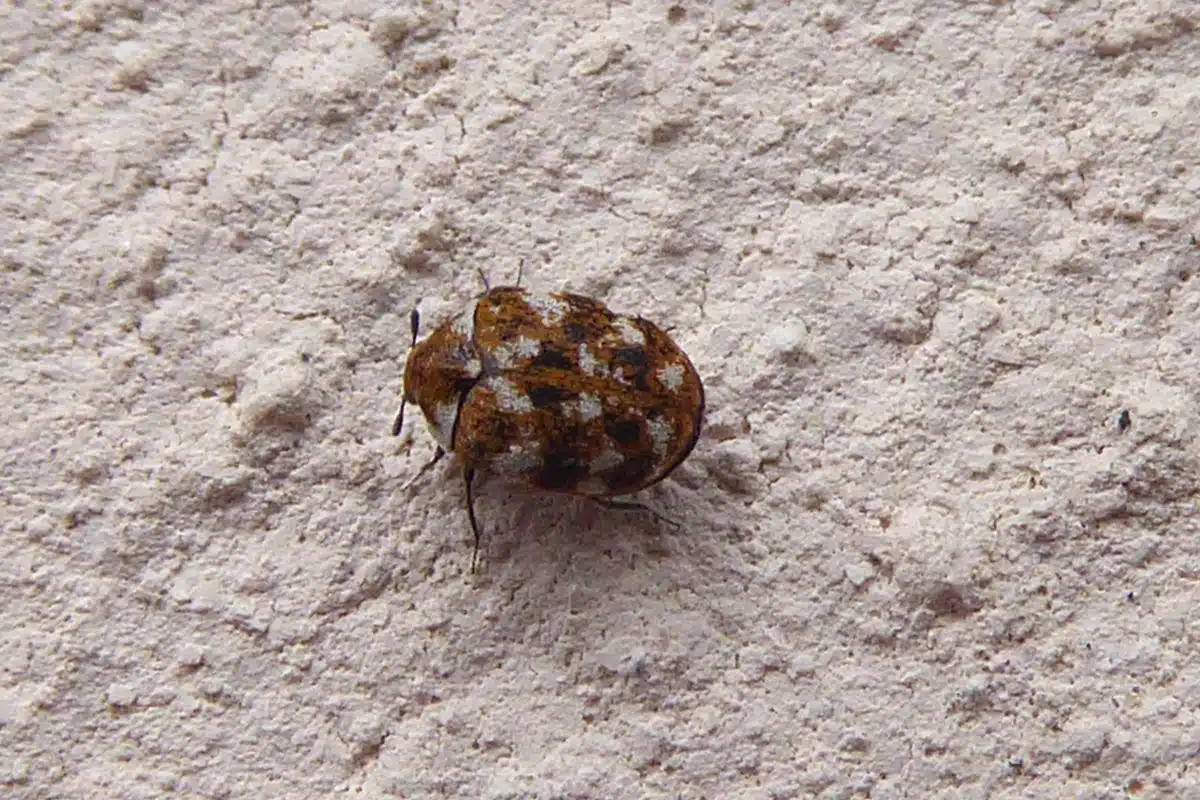
Three checks separate them, and none needs a magnifier.
- The profile at eye level. A bed bug is a wafer, flattened top to bottom to slide into a seam. A carpet beetle is a hard little dome.
- Fabric damage. Bed bugs never eat fabric, at any stage. Grazed patches or holes in wool rule them out completely.
- Dark spotting in mattress seams and box spring folds. That is digested blood, and it bleeds outward on fabric the way ink does on paper. Carpet beetles leave bristly husks instead, under the bed rather than in it.
A house can have both at once, since the two use different resources and never compete, so mixed results mean two problems. The full side-by-side comparison covers the immature stages and the size trap that catches people out.
Marks on skin cannot identify an insect. Reactions vary far too much between people to work as evidence. If a rash or persistent itching is what brought you here, that is a question for a doctor or a pharmacist.
No, it did not bite you in your sleep
Neither the adult nor the larva has mouthparts that can pierce skin, and neither feeds on blood. What gets reported as a bite is a contact reaction to hastisetae, the barbed bristles larvae shed as they grow. It appears where skin pressed against infested fabric rather than on the exposed skin bed bugs favor, and only some people react, so one person in a bed can itch while the other stays clear. Both halves are covered in full elsewhere: why carpet beetles cannot bite and what the reaction people call a carpet beetle rash actually is. For a bed the point is narrower. If bristles are reaching skin, the source is textile and it is close. Find the fabric.
What one on the sheet actually means
It depends on the stage, and the two mean opposite things. An adult is a small hard beetle, 2 to 3 millimeters for the mottled varied carpet beetle and 3 to 5 for the plain black one, and it flies toward light. Adults feed on pollen outdoors and damage nothing indoors, so one on a duvet is a passenger heading for the window. Worth noting anyway: adults indoors in spring usually mean larvae finished developing in that room over the previous months.
The larva is the informative find. It cannot fly, cannot climb smooth glass, and does not wander far from what it eats, so one on a sheet walked there and its food is within a few feet: the storage box, the pillow, the rug half, the carpet edge. If the thing you saw fluttered instead of crawling, especially near a closet at dusk, the bedroom sorting guide for small brown bugs separates a larva from an adult clothes moth.
What to do tonight, and four things that will not help
Tonight is short. Launder the wool and down items on the hottest setting the label allows. Pull everything out from under the frame, storage boxes included, and open them. Vacuum the floor, the carpet edge and the gap behind the headboard, then empty the canister outside. The sequence that follows is in the removal protocol. Four common responses buy nothing here:
- A zippered mattress encasement. It works on bed bugs because bed bugs live in the mattress. Here it seals an object that had no food in it while the larvae carry on underneath.
- Spraying the mattress or the bedding. UC IPM is explicit that these products are not applied to bedding or clothing, and nothing sold for household use is registered for it. Sprays belong along carpet edges and in closets.
- Throwing out the mattress. The most expensive way to remove an object that was not the problem.
- Washing the sheets again the next night. It removes the insect you found and changes nothing about the keratin three feet below it.
Then set expectations by the insect’s clock. Egg to adult takes nine months to two years, almost all of it as a larva, so a quiet week proves nothing. Why a carpet beetle cleanup is slow to judge gives the real test: whether beetles turn up at your windows next spring.
FAQ
Can carpet beetles live inside a mattress?
Rarely. Most mattresses contain no keratin, so there is nothing in one for a larva to eat. Bristles and husks can work into the seams from a wool topper or feather pillow laid on top, but no feeding is happening in there.
Do carpet beetles crawl on you at night?
One can end up on a sheet or an arm, and it means nothing about you. Larvae avoid light, so they move most when a room is dark and quiet, which reads as nocturnal hunting and is not. Finding one on you at two in the morning is the same behavior as finding one under a box at noon.
I found one in bed and nothing else. Is that an infestation?
One insect is a sighting, not a count. Look for shed skins, which outnumber live larvae heavily and stay put. No husks, no bristles and no grazed wool after a careful pass means a single adult probably flew in an open window, which is how most of them arrive.
Sources
- University of California Statewide IPM Program, Pest Notes: Carpet Beetles.
- University of Kentucky Entomology, Carpet Beetles, ENTFACT-601.
- Penn State Extension, Varied Carpet Beetle fact sheet.
- University of Minnesota Extension, Carpet beetles.