Short answer
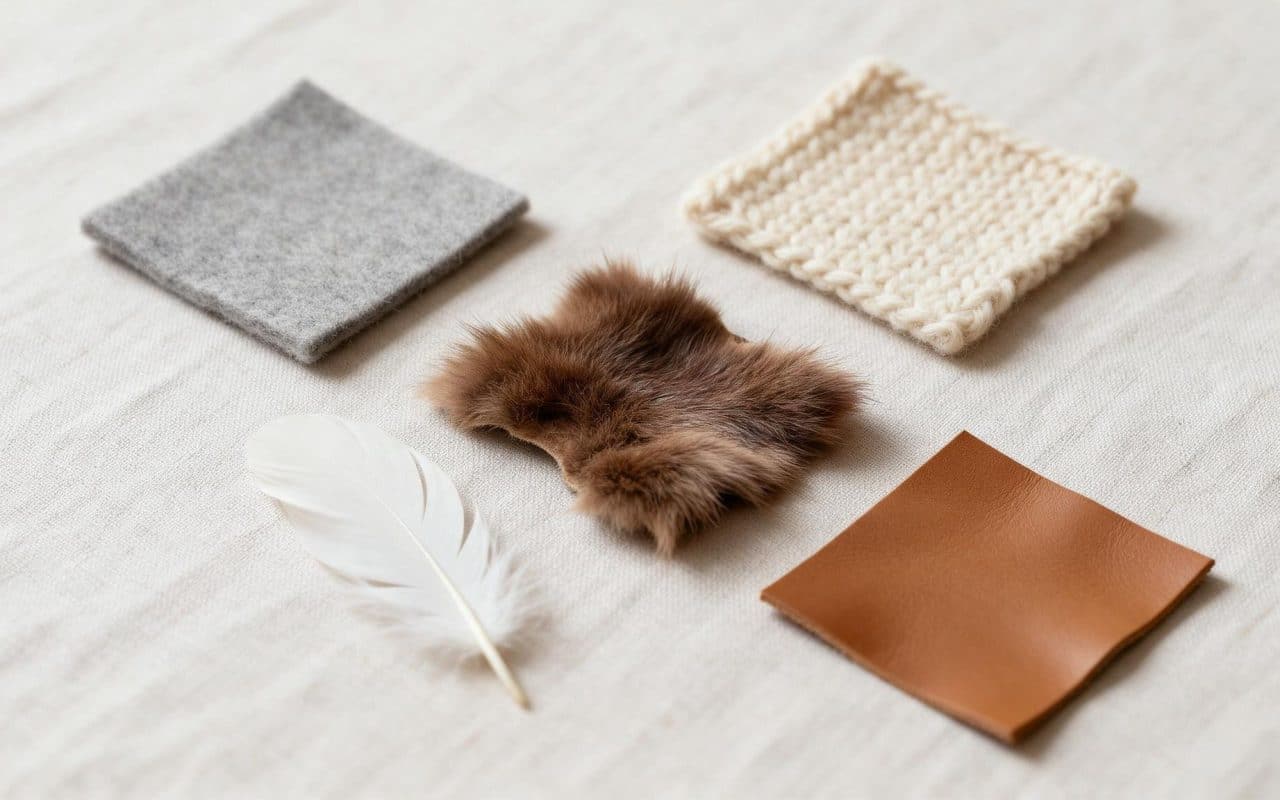
Carpet beetles eat keratin, and almost nothing else. Keratin is the protein in wool, silk, fur, feathers, leather, horn, hair and dead insects, and almost nothing else in a house can digest it. Cotton, linen and clean synthetics are not food. And the beetle itself eats none of it: the feeding is done entirely by the larva.
- If the item was once hair, skin, feather or horn, it is on the menu. Wool, cashmere, silk, down, felt, leather, fur.
- If it is cotton, linen, rayon, polyester or nylon and it is clean, it is not. Soiled changes that answer.
- The damage is done by the bristly larva, not the beetle on the windowsill, over months you never see.
Keratin, and why almost nothing else can digest it
Keratin is what your hair is made of, and a sheep’s fleece, and a bird’s feather. It is built to last: long protein chains locked to each other by sulfur bridges between cysteine units. That cross-linking is why a feather holds its shape when wet, why wool springs back, and why a horn left outdoors takes years to break down.
It also means most digestive systems cannot open it. Ordinary enzymes cut protein chains, but they cannot get at chains bolted together sideways. Carpet beetle larvae solve it one step upstream: their gut runs strongly reducing conditions that break the sulfur bridges first, and once the chains are loose, normal digestion finishes the job. Clothes moth larvae run the same trick, which is why the two compete for the same closet, and why telling their damage apart comes down to the evidence around the hole, not the hole itself.
Everything else follows from that one ability. Carpet beetles are not drawn to your sweater. They belong to the very small club of animals for which a sweater counts as food.
What keratin looks like in an actual house
The word hides the point. In a house, keratin means anything that used to be an animal, plus the animals themselves once they die. Sorted by where you would find it rather than by what it is called:
| Where it sits | The keratin in it |
|---|---|
| Closet and drawers | Wool, cashmere, alpaca, mohair, silk, felt, leather, fur trim |
| Floor and under furniture | Wool rug pile, and the edge tucked under a baseboard where nothing gets vacuumed |
| Bed | Down comforters, feather pillows, wool mattress padding |
| Baseboards, floor vents, under radiators | Matted pet hair, human hair, lint |
| Light fixtures and window channels | Dead flies, moths and ladybugs, a season’s worth of them |
| Attic, soffit, chimney chase | An abandoned bird or rodent nest: feathers, fur and the carcass |
| Shelves and display cases | Taxidermy, mounted insects, horn, bone handles, old leather bindings |
| Piano, drum kit, brush drawer | Wool felt hammers and dampers, natural bristle brushes |
A wool rug is the food everybody expects. The bottom half of that table decides whether a cleanup holds: a nest above a ceiling or a fixture full of dead flies is a food supply with no owner, and it does not care how carefully the closet was emptied. The removal protocol works those reservoirs in order for that reason.
What they will not eat
Worth knowing, because it saves things from the trash bag.
- Cotton and linen. Plant fiber, cellulose, no protein in it.
- Rayon, viscose, modal, lyocell, bamboo. Also cellulose, whatever the label implies about softness.
- Polyester, nylon, acrylic, polypropylene. Plastic in fiber form.
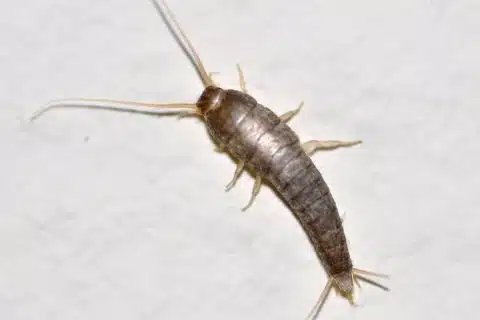
- Wood, paper and cardboard. That is a silverfish or a booklouse question, not this one.
- Houseplants and potting soil.
- You. Larvae have chewing mouthparts sized for fiber and no structure capable of piercing skin. The bumps people blame on them come from shed larval bristles instead.
The storage rule falls straight out of the menu: nothing goes into a box or a bag until it has been washed. A stored wool coat is food either way. A stored cotton shirt only becomes food when last winter’s sweat is still on the collar.
Why a part wool sweater gets holes anyway
This is where the tidy rule breaks, and three things push it over. The first is the blend itself. In a 30 percent wool knit, wool fibers run through every yarn in the garment. A larva grazing them thins the yarn until it parts, and one parted yarn in a knit is a hole. The polyester carrying the other 70 percent is untouched and beside the point.
The second is soiling. Sweat, body oil, milk and food residue are protein films on an inedible fiber, and larvae graze the film and cut the fabric underneath while they work. So read where the holes are, not how many. Collar, cuffs, underarms, the seat of stored trousers: the damage tracks the parts a body touched, not the parts an insect could most easily reach.
The third is that larvae chew through material they cannot digest to reach material they can. A wool blanket inside a cotton duvet cover, a rug rolled in thin plastic: the wrapper is a delay, not a barrier, and the cotton it costs you is collateral rather than a meal. What actually holds in a closet or a drawer covers containers that beat a garment bag.
Human hair, skin flakes, and the dust question
Human hair is keratin. So are the shed skin flakes that make up much of household dust. Both are food in principle, which is exactly why larvae turn up along baseboards, inside floor vents, under a bed nobody moves and at the back of a dresser drawer: the places where hair and lint collect and stay put.
What matters in practice is concentration. A floor vacuumed weekly holds nothing worth a larva’s time. A mat of pet hair and lint building under a radiator for two years supports a population by itself, and it is the usual answer to why a bedroom with no wool in it still produces beetles.
The one species that also eats plants
Everything above describes the Anthrenus group, the varied, furniture and common carpet beetles, which stay on animal protein. The black carpet beetle is the exception: its larvae live as well in cereal, flour, spices, birdseed and pet food as in wool, and in dry regions UC IPM treats it as a stored product pest first. Larvae in a kitchen cabinet rather than a closet are the tell: the black carpet beetle, and why the pantry belongs in its article.
Do not judge the food supply by what you can see. A nest in a soffit or a wall void feeds larvae for years and shows nothing at floor level. If larvae keep appearing in one room while the closet and the floor stay clean, look up before you buy anything.
The adults eat pollen, and nothing at all indoors

The beetle itself never eats fabric, hair or feathers at any point in its life. Adults feed on pollen and nectar outdoors, on flowering shrubs; indoors they do not feed at all. A carpet beetle on a windowsill is not damaging your carpet and never will.
Killing the beetle you can see changes nothing about the damage, because the damage happened months earlier and lower down. What an adult can still do is lay eggs near a food supply on its way through, which is the only reason it belongs in this article. Which stage you are looking at decides whether you have a problem or a visitor.
Taking the food away works, but slowly
Removing the food is the only thing that ends this, and it runs on the larva’s clock rather than yours. Published larval periods span roughly 166 to 630 days depending on species, warmth and food quality: five months to twenty. A larva that hatched under a rug in spring is still feeding in the fall, whatever you did to the closet in July.
So work the reservoirs, not the sightings. A sighting tells you an adult flew past a window. The reservoir decides whether next spring produces another crop.
FAQ
Do carpet beetles eat cotton or polyester?
Not when it is clean. Cotton and linen are cellulose, polyester and nylon are plastic, and there is no keratin in either to digest. Soiled is a different question: sweat, food and body oil leave a protein film that larvae graze, cutting the fiber underneath as they feed. A stained cotton shirt in storage can come out with holes while a clean one beside it does not.
Do carpet beetles eat human hair?
Yes, once it is off your head. Hair is keratin, and so are the skin flakes in household dust, which is why larvae collect in floor vents, under beds and along baseboards. A weekly vacuum keeps that supply too thin to matter. A two year old mat of hair under a radiator does not.
Will carpet beetle larvae get into food in the pantry?
Black carpet beetle larvae will. They feed on cereal, flour, spices, birdseed and pet food as readily as on wool. The varied and furniture carpet beetles stay on animal material and do not colonize dry goods, so larvae found in a kitchen cabinet point to the black carpet beetle.
Can carpet beetles survive in a house with no wool in it?
Easily. Down pillows, a feather comforter, leather, silk, pet hair, lint, a fixture full of dead flies and a bird nest in a soffit are all keratin, and none of them read as a fabric problem. Houses with no rug and no wool still get carpet beetles, usually from a reservoir nobody thought to open.
Sources
- University of California Statewide Integrated Pest Management Program, Pest Notes: Carpet Beetles, UC ANR Publication 7436.
- University of Kentucky College of Agriculture, Department of Entomology, Carpet Beetles, ENTFACT-601.
- Penn State Extension, Carpet Beetles.
- Clemson Cooperative Extension, Home & Garden Information Center, Fabric Insect Pests.