Short answer
No. A clover mite has no mouthpart that can break skin. It is a sap feeder, in the same family as spider mites, and its stylets are scaled to puncture a single plant cell. Nothing about that apparatus works on you.
- They do not bite, sting, or transmit disease, and indoors they have nothing to eat, so the ones on your sill are already dying.
- What they do ruin is a pale surface: a crushed mite leaves a rust-red smear on paint, curtains, and grout. Vacuum them; never wipe.
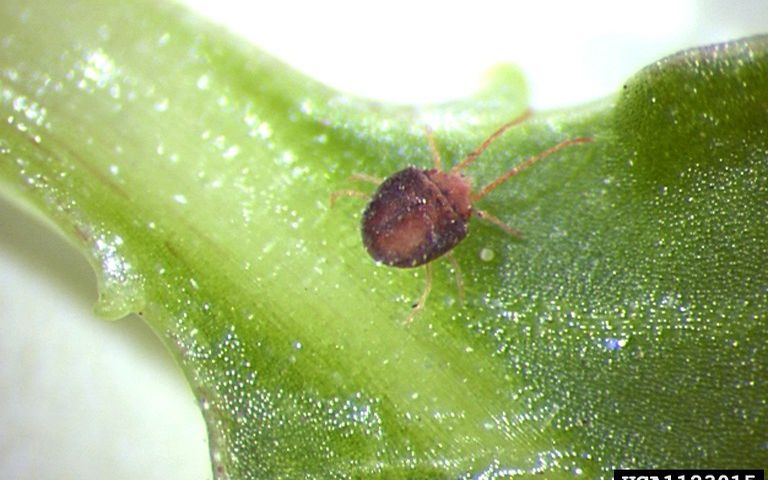
- If something really is biting, the culprit lives in a nest, not on a windowsill. What a clover mite looks like up close settles the identification first.
Why a clover mite physically cannot bite you
To bite, an animal needs hardware for it. A mosquito carries a needle. A bed bug carries stylets long enough to find a blood vessel. A flea has jaws built to cut. The clover mite, Bryobia praetiosa, sits in the family Tetranychidae, the spider mites, and its mouthparts are a matched pair of fine stylets that slide into one plant cell, drain it, and withdraw.
That is the whole engineering problem in one sentence. Those stylets are sized to a cell wall, a structure measured in fractions of a hair’s width, and there is no muscle behind them to force the issue. Human skin is a keratinized barrier orders of magnitude tougher than anything in that mite’s diet. It is not that a clover mite chooses not to bite. It has no way to. It also carries no venom, no stinger, and no documented role in transmitting anything to people or pets.
So are clover mites harmful? Only in two cosmetic ways
The list of what they cannot do runs long. They do not feed on fabric, wood, paper, or stored food, and they do not nest in walls or chew wiring. They also cannot build an indoor population, because there is no plant sap in a living room: extension guidance is consistent that clover mites indoors die within days for that reason. Whatever came through the window frame this afternoon is on a clock it cannot beat.
That makes them unusual. Most pests you find indoors are feeding on something indoors, which is why carpet beetle larvae keep going through a wool sweater long after you notice them. Clover mites have no equivalent. What is left is two costs, and both are cosmetic: the stain, and the sheer number of them.
The red smear is pigment, not blood
Press a clover mite with a tissue and you get a rust-red mark. People read that as blood and conclude the mite had bitten someone. It had not. The color is body pigment, present whether the animal has fed or not, and the eggs are the same bright red before anything has ever fed at all.
So wiping is the wrong move, and it is the move nearly everyone makes first. One stroke of a cloth drags fifty crushed mites across a sill and stains paint, caulk, grout, curtain hems, and light upholstery for months. The animal is harmless. The reflex is what does the damage.
The shortcut: vacuum with the nozzle held slightly off the surface, so the mites lift rather than roll under the brush. Sticky tape works for a small cluster on a frame. Already smeared one? Blot with plain cold water before it dries: the pigment sets, and detergent on a set stain mostly spreads it.
The real nuisance is the count, and the count comes from your lawn
One clover mite is nothing. A thousand along a south-facing sill is a Saturday. Two facts explain the timing and the fix. First, they reproduce without mating: every clover mite you will ever see is female, each laying on the order of seventy eggs, so a population needs no partner and no lag to get started. Second, temperature sets the calendar. They move in the mild band, roughly 45 to 85 degrees Fahrenheit, which is why spring and fall are clover mite season and midsummer is not. Above about 85 degrees the eggs go dormant in foundation cracks and under siding, then hatch when things cool. A wall clean in July can carry a rusty film of them in late September. Numbers like that arrive already assembled rather than building up indoors, which is why bugs that appear all of a sudden so often turn out to be either these or carpet beetle adults.
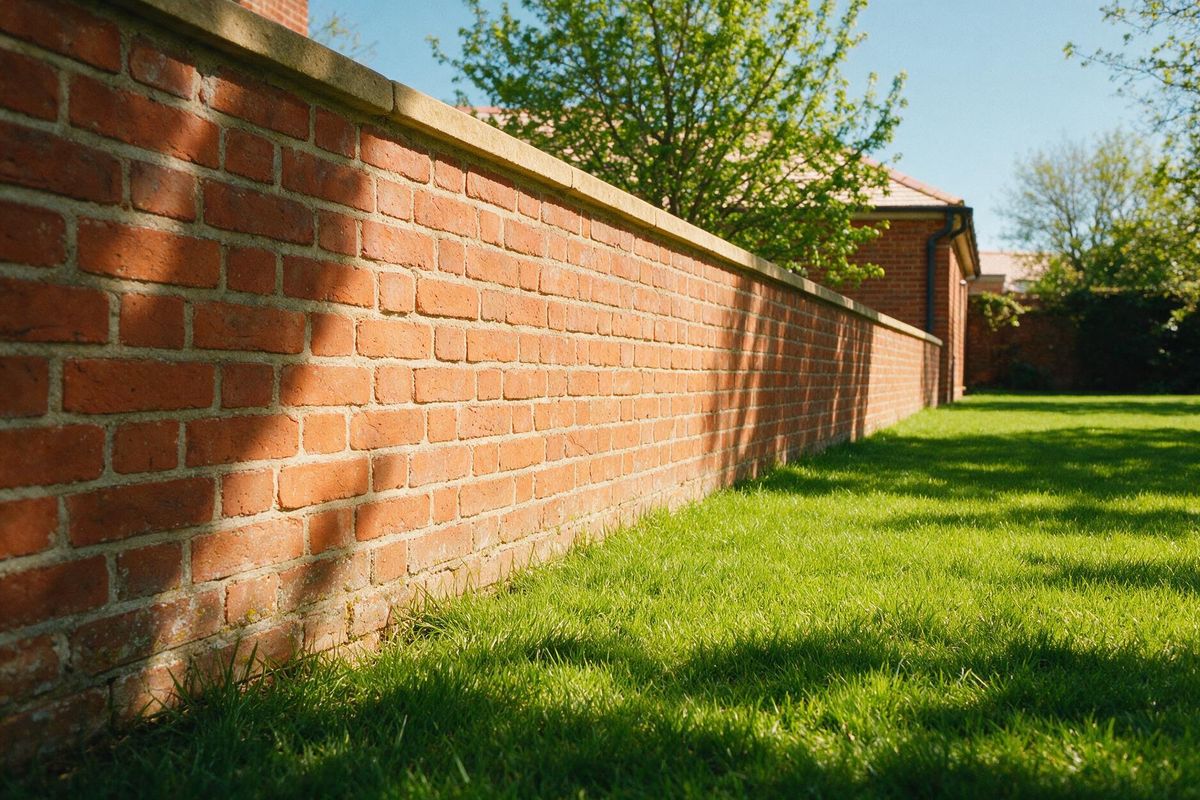
Where they come from is more specific than “outside.” It is the strip of ground touching your foundation on the sunny south and west walls. A dense, well-watered, heavily fertilized lawn growing right up to the siding is close to ideal habitat, and fertilization is the factor extension publications name most consistently. In big numbers their feeding gives turf a silvery cast, the only real damage on the list. Then the weather shifts and they walk up the warm wall to your window frame.
If something is genuinely biting you, it is not this
This is the search that brings most people here, so it deserves a straight answer rather than reassurance. Some mites do bite. None of them are the red specks on your window frame.
| What you can check | Clover mite | A mite that actually bites |
|---|---|---|
| Where you find them | Sunny windowsills, frames, screens, exterior walls | Near a nest site: attic, soffit, chimney, wall void, or a pet’s bedding |
| Color, and when | Red before it has ever fed. The pigment is permanent | Pale gray or straw-colored, turning red to near-black only after a blood meal |
| Front legs | First pair roughly twice the length of the others, held forward like antennae | Legs in proportion, nothing held out front |
| Timing | Spring and fall, inside a 45 to 85 degree band | Follows the host, not the thermometer. Often just after nestlings fledge |
| What it feeds on | Plant sap only. Nothing indoors sustains it | Blood or skin, from a bird, a rodent, or a pet |
The classic indoor biting-mite scenario is a nest that has just been abandoned. The mites lose their host, disperse inward through the wall, and end up on people because nothing else is left. That is an inspection job: find the nest, remove it, close the entry.
This page describes the mite, not your skin. We can tell you what a clover mite’s mouthparts can and cannot do. We cannot tell you what a rash or welt on your arm is, and we do not try. Unexplained skin symptoms are a question for a doctor. Here is why we draw the line there.
Keeping them out is groundskeeping, not spraying
An indoor spray is the wrong answer, for an unusually clear reason: the mites you would be treating are already starving, and the sill refills the next warm afternoon from a supply you never touched. What changes the count is all outdoors, and it works because clover mites walk rather than fly: a strip of bare ground against the sunny walls, with nothing growing on it, is a real obstacle to an animal under a millimeter long.
Sealing the window frames on that wall closes the doorway. The house-wide prevention guide covers the same entry points for everything else that uses them. And if the identification is not settled, do that first: tiny reddish-brown bugs in the house separates the window case from the kitchen one, and the identification hub sorts the rest by color, size, and movement.
FAQ
Do clover mites bite humans or pets?
No. Their mouthparts are stylets built to pierce a plant cell and draw sap, with no capacity to break skin. They have no stinger and no venom, and they are not known to transmit disease. They cannot live on a pet either, because they eat only plants.
Are clover mites harmful to my house or my things?
Not to the structure or the contents. They do not eat fabric, wood, paper, or stored food, and they cannot breed indoors. The only damage is the rust-red stain left when one is crushed against paint, caulk, or light fabric. Outdoors, heavy feeding can give a lawn a silvery cast.
Why do I have so many all at once?
Because they arrive as a group rather than building up inside. Every clover mite is female and lays around seventy eggs without mating, so an outdoor population scales fast in the mild spring and fall band. When the lawn stops suiting them, that whole population moves onto the warm sunny wall at once.
Something is biting me and I keep finding red specks. What is going on?
Almost certainly two separate things that coincide. Clover mites cannot be the cause. Mites that do bite indoors usually trace back to a bird or rodent nest in a soffit, attic, chimney, or wall void, and they show up after the host leaves or dies. That is an inspection question, and anything happening on your skin is a question for a doctor.
Should I spray the windowsill?
Close to pointless. The mites indoors are starving already, and the sill refills from the lawn the next sunny afternoon. The exterior band and the caulk are what change the outcome.
Sources
- Ohio State University Extension, Ohioline, Clover Mites.
- Penn State Extension, Clover Mites fact sheet.
- University of Kentucky Entomology, Clover Mites, Household Pests series.
- Colorado State University Extension, Clover Mites.