 Cosmetic stains only
 Short answer
If you’re seeing a cluster of reddish specks along a windowsill or window frame that seem to vanish when you look straight at them, you’re probably dealing with clover mites. They’re harmless, but there’s one habit worth breaking before you touch them.
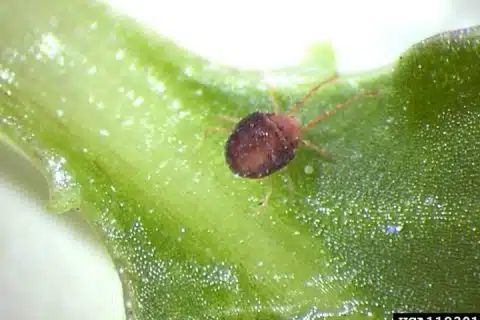
- Look closely (a magnifier helps): under 1mm, bright red to rust-colored, with front legs that stick out long in front of the body — not antennas, mites don’t have any, just unusually long legs. That’s the giveaway.
- Vacuum them up instead of wiping or squashing them. Crushed clover mites release a reddish-orange pigment that stains walls, curtains, and light fabric.
- Still not sure what you’re looking at? Compare it against other tiny indoor bugs on the identification hub.
Identification
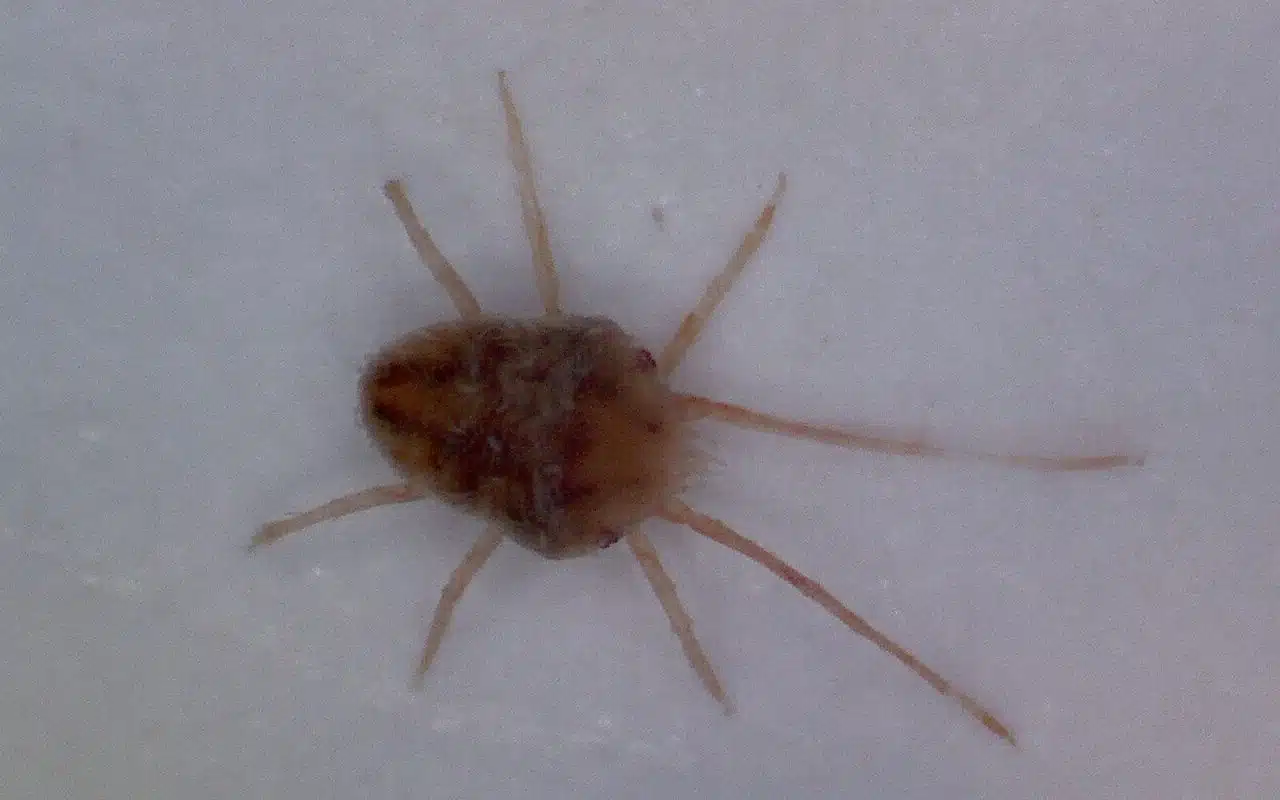
The first thing to get straight about clover mites is that they aren’t insects at all. They’re arachnids, related to spiders and ticks, which means eight legs instead of six. That single fact explains most of the confusion people run into when they try to identify them: a bug this small and this fast is hard to count legs on, but it’s the detail that separates clover mites from the ants and gnats they get mistaken for.
Size is the other giveaway. Clover mites are under 1mm long, roughly the size of a period on a printed page, and colored anywhere from bright red to a duller red-brown. Under magnification, the front pair of legs is noticeably longer than the rest and held forward past the head, which is why some people describe them as having antennas. They don’t have any — mites never do. What you’re seeing is just an oddly proportioned set of legs on an otherwise unremarkable little mite.
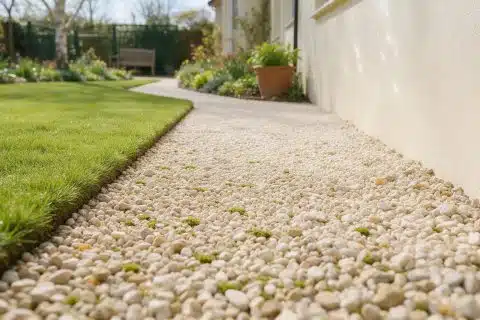
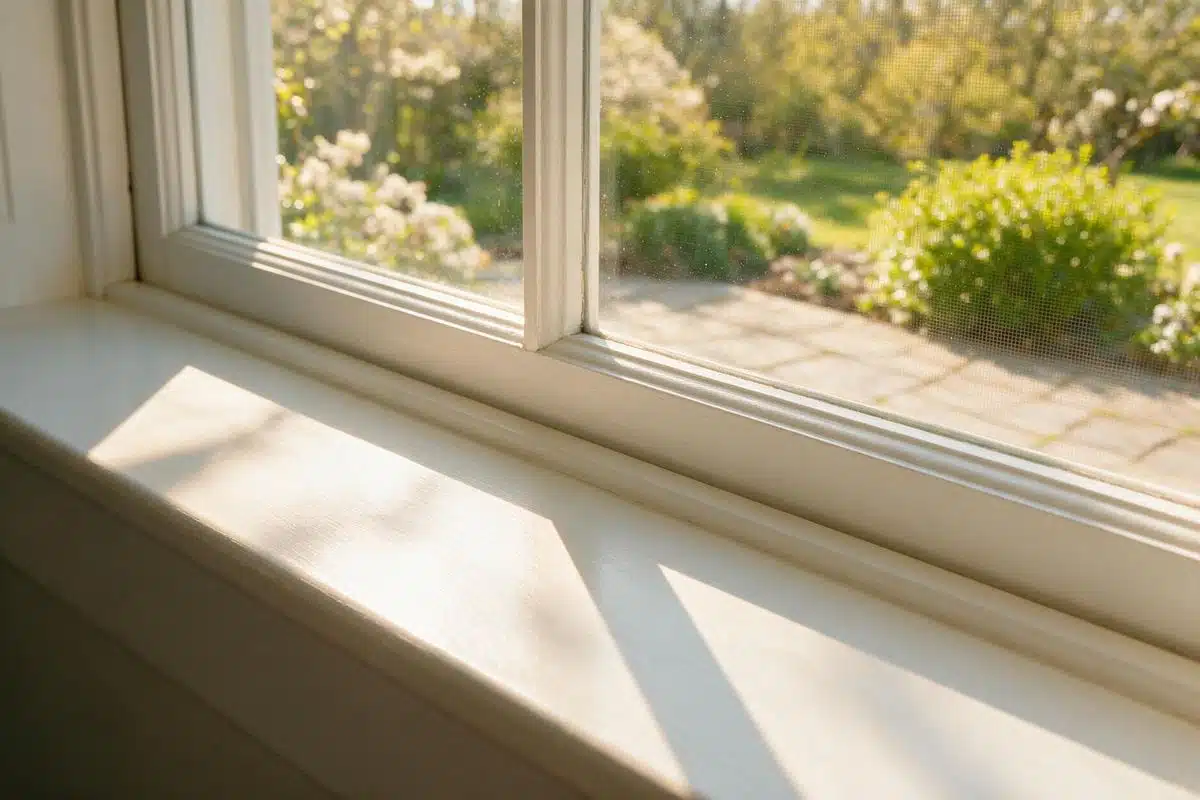
Where you find them matters as much as what they look like. Clover mites gather in large numbers on the sunny side of a house: window frames, sills, and exterior walls that catch direct light, usually in spring and fall when temperatures are mild. They’re moving in from the lawn and foundation plantings, where they feed on clover, grass, and other vegetation. Once inside, they have nothing to eat. No food source, no fabric, no wood interests them, so a sighting on a windowsill tends to stay a windowsill problem rather than spread through the house.
Look-alikes
Chiggers are the mix-up that actually matters, because chiggers do bite and cause real itching, while clover mites never bite anything. Both are tiny and reddish, but chiggers are typically found outdoors in tall grass and leave itchy welts on skin within a day of contact. If nothing is biting you and the bugs are showing up on glass and window frames rather than on your skin or clothing, you’re looking at clover mites, not chiggers.
People also mistake clover mites for tiny red ants or young ticks. The size settles it: clover mites stay under 1mm their entire life and never grow into anything larger, while ants and juvenile ticks are bigger or grow bigger. The long front legs are the other tell. Nothing else this small in a house carries legs stretched out quite that far forward.
The shortcut: never wipe or press a clover mite with a cloth or tissue. Their body pigment leaves an orange-red mark on paint, curtains, and upholstery that’s more annoying than the mite ever was. A vacuum or a piece of sticky tape picks them up without the stain.
FAQ
Do clover mites bite people or pets?
No. Clover mites feed only on plant sap and have no interest in human skin, pet fur, food, or fabric. They’re a nuisance because of their numbers, not because of anything they do to you.
Why do they leave a red stain when I squash one?
The red color is a body pigment, not blood. When a clover mite is crushed, that pigment smears onto whatever it touched, which is why vacuuming or taping them up works better than wiping them with a cloth or tissue.
Are clover mites even insects?
No, they’re mites, a type of arachnid related to spiders and ticks. Count the legs under a magnifier and you’ll find eight, not six, which is the clearest way to rule out an insect.
How do I stop them from getting inside?
Since they’re migrating in from grass and plantings near the foundation, sealing gaps around windows and siding makes the biggest difference. The prevention hub covers how to seal common entry points around a house.
Sources
- University extension entomology departments
- Cooperative Extension Service household pest fact sheets
- Standard urban entomology references used in pest management education