Short answer
Clover mites swarm a sunny wall every spring and a smaller second time in fall, and the habits that keep them out start months before either wave hits, not after the first one shows up on a sill. Pull vegetation back from the foundation, ease off the fertilizer on that strip of lawn, and close the gaps a mite under a millimeter wide can still use.
- Clear an 18- to 24-inch bare strip along the sunny wall before the grass grows back thick in late winter.
- Caulk window frames, siding joints, and foundation cracks on that wall while the weather still lets you work outside.
- If a few are already crawling across a sill this week, the removal guide covers clearing them out without staining anything.
Prevention and removal are two different jobs
Clover mites are plant feeders that live on grass and clover against the foundation, not on anything indoors, so a houseful of them is really a lawn problem that walked up a wall. They cannot bite, cannot feed on anything inside the house, and die on a windowsill within a few days of arriving. That is good news for whoever finds them, but it also means the work that actually changes the count never happens on the sill. It happens outside, at the base of the wall they are using, and it has to happen before the next wave, not during it.
Once they are already inside in numbers, the removal protocol walks through vacuuming them without crushing them, finding the wall, and building the same barrier described below under time pressure. This article is the version you do before any of that is necessary: a seasonal routine rather than an emergency response, aimed at the fall or late-winter window when nothing is swarming yet and the fix only takes an afternoon.
Clear the band before the grass grows back thick
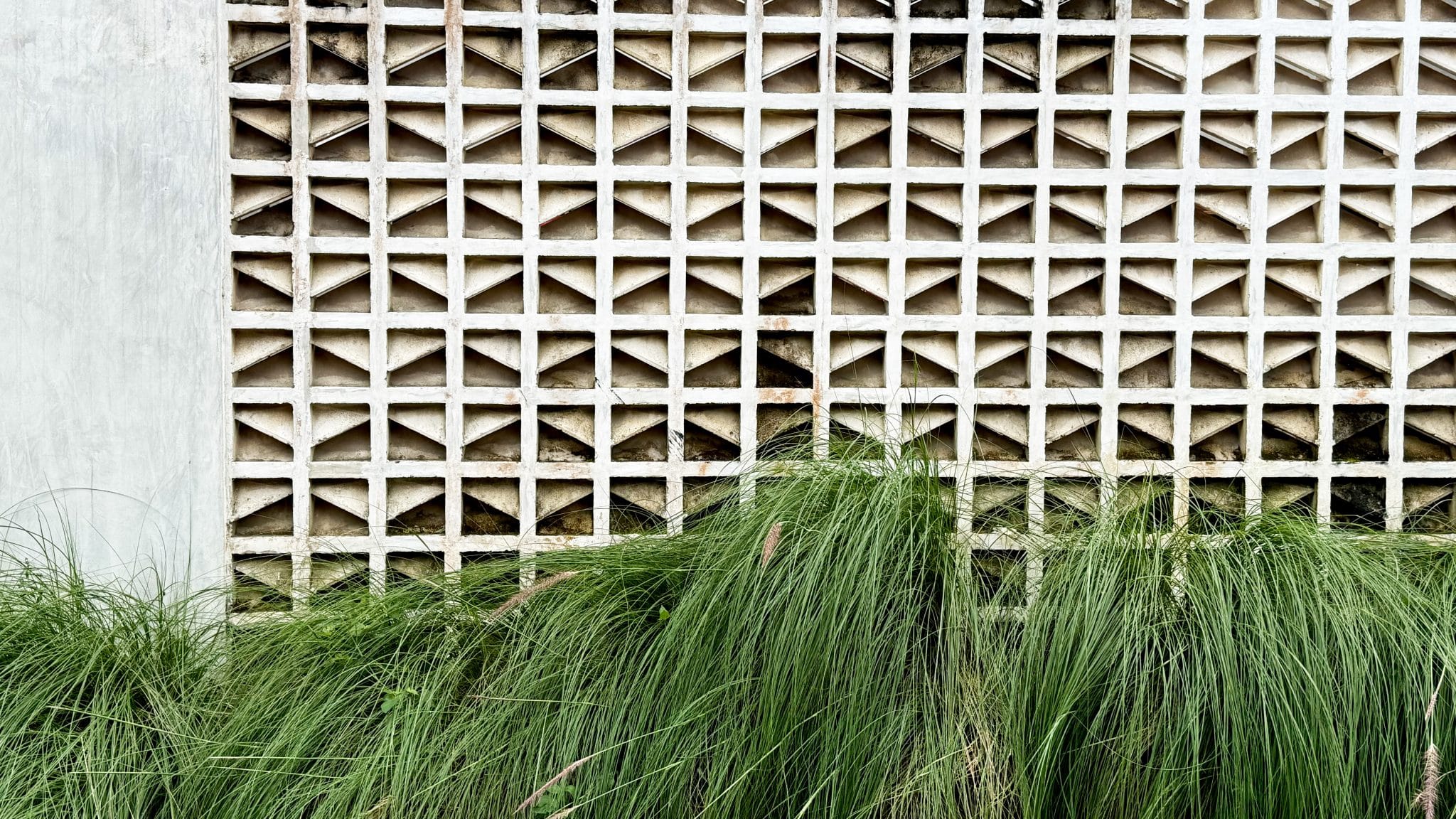
Purdue University’s Department of Entomology puts the fix in one sentence: lay a barrier of pea gravel 18 to 24 inches wide along the foundation, on whichever wall gets the most sun. Grass and shrubs growing against the wall are what give clover mites easy access to the house in the first place, so the strip only works if it runs the whole wall and stays bare, not just the section under one window. If gravel is not practical for the look of the yard, Purdue lists bare soil or a flower bed as acceptable substitutes, as long as the bed does not fill back in with ground cover that touches the siding.
Late winter or early fall is the right time to do this, in the gap between the two swarms, because it cuts off a wave that has not started yet instead of fighting one in progress. If this is a new yard to you and you are not sure which wall is the problem, stand outside on the next mild, sunny morning and look for grass blades touching the foundation, clover growing thick in the strip nearest the wall, or ivy on the masonry. That is the wall to work on first.
Ease off the fertilizer close to that wall
Purdue’s guidance names a specific condition that sets up an infestation: a heavy growth of well-fertilized grass close to the foundation. Nitrogen pushes exactly the kind of fast, lush turf clover mites feed on, so the strip nearest the house is the one place on the lawn where skipping a feeding or two actually helps. This is not a whole-yard change, just a narrower one: keep the fertilizer program for the rest of the lawn and let the band nearest the foundation run leaner.
Mow that strip a little shorter, too. Shorter, less fertilized turf next to the foundation is less attractive to a mite than the thick growth everywhere else on the lawn, and it makes it easier to see if vegetation is creeping back toward the wall.
Seal the entry points while the weather still lets you work outside
A barrier strip stops most of the traffic, but a mite smaller than a pinhead still finds its way through gaps a hand would never notice. Run a bead of exterior caulk into the joint where window and door frames meet the siding, into cracks in the foundation above grade, and around anything that passes through the wall: hose bibs, vents, cable lines. Replace weatherstripping that has gone flat under exterior doors and patch torn screens on the sunny side of the house. Do this work on the same schedule as the barrier, before the ground freezes in fall or before it warms up in late winter, and it covers both the current gap and the cracks where eggs overwinter.

Fall and spring are the two windows that matter
Clover mites are most active in fall and spring, and go quiet through the hot stretch of summer and the cold stretch of winter. That shape gives the prevention routine an actual calendar instead of a vague “sometime.” Work done in late winter heads off the bigger spring wave; work done in early fall heads off the smaller one that follows it. Doing the barrier and the caulking in the middle of a swarm is still worth it, but the payoff lands at the next season’s peak rather than this one.
| Window | What to do | Why then |
|---|---|---|
| Late winter, before the thaw | Rebuild the bare band, caulk, check weatherstripping | Cuts off the larger spring wave before eggs hatch |
| Early fall, after the heat breaks | Re-check the band for regrowth, top up gravel, re-caulk any gap | Cuts off the smaller fall wave and the eggs it leaves behind for winter |
Check the hiding spots, not just the lawn
Between swarms, clover mites do not disappear. Purdue notes that they crawl into cracks and crevices to molt and lay eggs, and the common spots are not exotic: under loose bark on a tree close to the house, on the foundation wall itself, beneath siding, and around window frames. A seasonal walk of the sunny wall, done at the same time as the barrier check, catches a new crack or a piece of bark-mulch pushed against the siding before it becomes next season’s entry point.
Don’t do this: treat the windowsill with an indoor insecticide as a standing prevention habit. The sill is a surface mites are passing across, not living on, and spraying it does nothing to the band, the fertilizer, or the cracks where the next wave is actually coming from.
If you already have crowds this week
Prevention is a habit for the quiet months, not a fix for a windowsill that is covered right now. If that is where you are, do not wipe or crush what you see: a crushed clover mite leaves a rust-red stain that does not come out of paint or fabric. The full removal guide covers lifting them safely with a vacuum, finding the exact wall they are coming from, and building the same barrier described above on a faster timeline. Come back to this page once the current wave has passed, for the next one.
If what is on the sill does not quite match (it jumps instead of just walking, or it is pale rather than reddish-brown), the sub-2mm sorting guide separates clover mites from the other small bugs that get mixed up with them. And for the rest of the house beyond this one wall, the seasonal whole-house checklist folds this same kind of band-and-seal habit into one pass covering the kitchen, closets, and basement too; the prevention hub links out to the room-specific guides.
FAQ
Will planting something other than grass next to the foundation keep them away?
Purdue’s guidance does not name specific replacement plants, only that pea gravel, bare soil, or a flower bed all work in place of turf, as long as the strip stays clear and nothing grows back across it. A flower bed that fills in with ground cover touching the siding defeats the purpose just as grass does.
How often does the barrier need to be redone?
Check it twice a year, at the start of the two swarm windows: late winter and early fall. Gravel migrates and soil washes out over a season, and a band with a gap in it is a band a mite can still cross, so the fall and late-winter check is really a top-up rather than a rebuild from scratch.
Do I need to treat the lawn itself, not just the strip by the wall?
No published guidance calls for treating the whole lawn. The strip closest to the foundation is the part that matters, because that is the stretch a mite actually has to cross to reach the house; a lawn-wide treatment or fertilizer change further out does not change what is happening at the wall.
Is it worth hiring someone for this instead of doing it myself?
The barrier, the fertilizer change, and the caulking are all do-it-yourself work with hand tools. A licensed pest professional is worth considering only if an outdoor perimeter treatment becomes necessary on top of the barrier, which is a different, separate decision from building the band itself.
Does cutting the grass shorter near the wall actually matter, or is the band enough?
The bare band does most of the work on its own. Keeping what grass remains nearby shorter and less fertilized is a smaller, supporting habit, not a substitute for the strip. It reduces how attractive the lawn is right at the edge of the band, nothing more.
Sources
- Purdue University, Department of Entomology, Publication E-59, Clover Mites in the Home.