Short answer
Booklice spread wherever a surface stays damp long enough to grow the microscopic mold they eat: a bookcase against a cold wall, a damp cardboard box, a pantry shelf that catches steam. Prevention means drying those surfaces before the film starts, not spraying what walks across them. Hold a room under about 50% relative humidity and the mold, and the booklice grazing it, stop finding anything to live on.
- Keep rooms a hygrometer actually confirms are under 50% relative humidity, especially where books and paper sit.
- Store paper, cardboard, and secondhand books off cold exterior walls and damp floors, not sealed against them.
- Seal dry pantry goods in tight containers before the grain dust on them has a chance to grow anything. If you already have booklice, the removal guide covers finding the damp surface and clearing them out.
A booklouse goes where the mold is, not where the clutter is
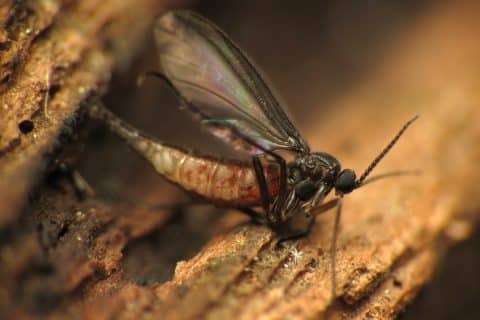
Booklice, also called psocids, do not eat paper, wood, or fabric. Penn State Extension’s guidance on the insect is built around a single number: lowering relative humidity to less than 50% prevents both mold growth and booklouse development, because the insect is grazing the mold film, not the material underneath it. Cut the humidity and the food supply goes with it. The species page covers what one looks like under a lens, including the detail that settles an identification fast: a booklouse walks, sometimes in short jerky bursts, and never jumps. If what you are watching flicks itself through the air instead, it is something else.
That is also why cleaning alone does not prevent an infestation. Penn State’s fact sheet is specific about the actual fix: remedy the underlying water issue that is letting them reproduce and persist, whether that is a slow pipe leak, a roof that weeps after rain, or moisture trapped behind drywall. Utah State University Extension treats booklice the same way, calling them an indicator of a moisture problem rather than a pest problem in their own right. A vacuum clears what is in front of you today and leaves the surface exactly as damp as it was.
Skip the spray and the cedar block. Contact insecticides and scent-based repellents do not change a damp surface. A product that claims to keep booklice out without addressing humidity is treating a symptom the mold will replace within days.
Keep the room under 50 percent humidity
The target is not a feeling of dryness, it is a number you check. A cheap hygrometer left in a room for a few days, read at its worst hour rather than its best, tells you more than a walkthrough does. For most homes, a dehumidifier sized to the room, or just better ventilation in bathrooms and kitchens, is enough to hold the reading under 50% most days. The room-by-room guide to bringing indoor humidity down covers sizing a dehumidifier and the ventilation habits that do the most for the least effort.
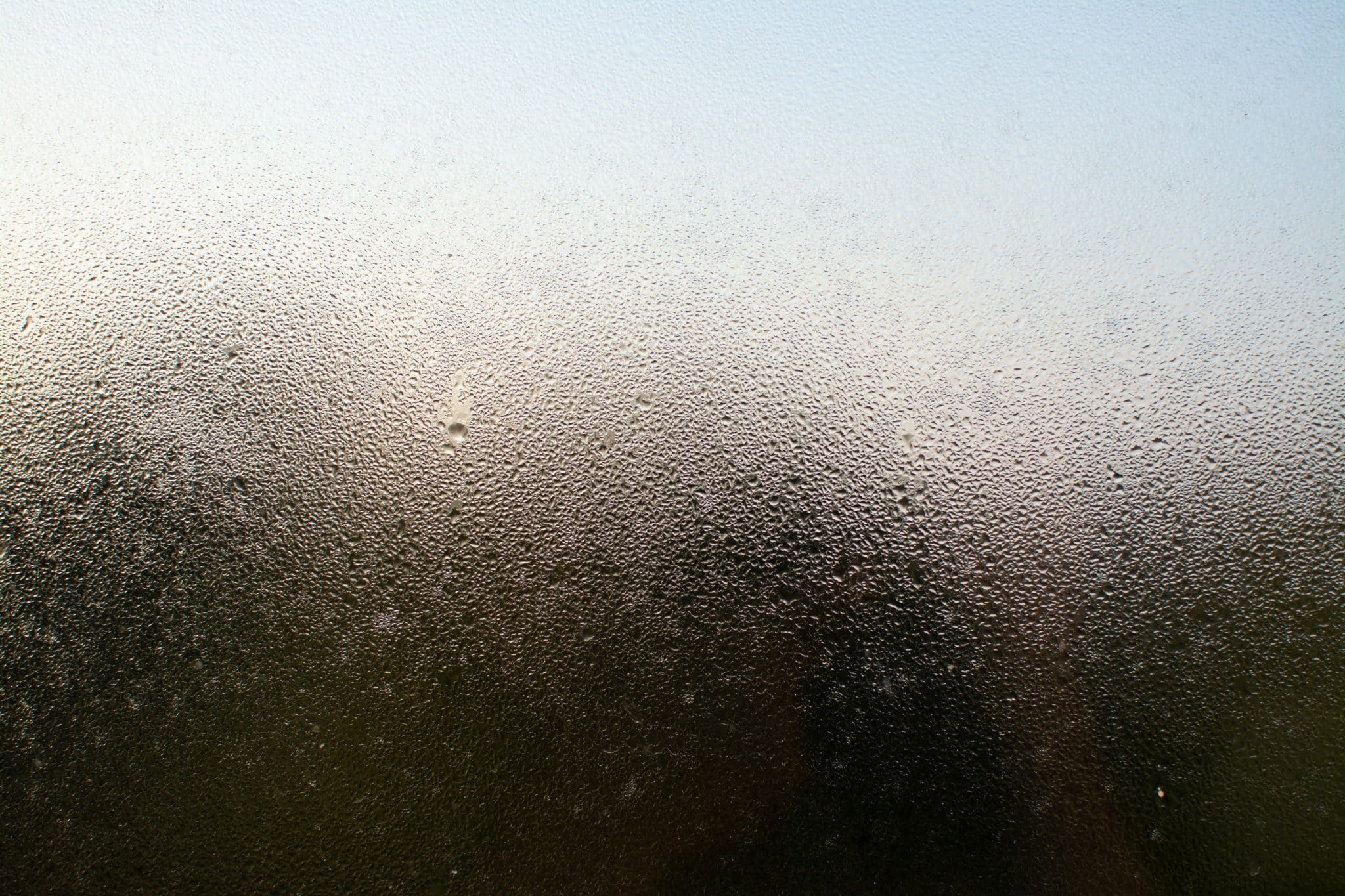
Rooms with the least airflow are the ones that creep past that line without anyone noticing: a closed spare room, a cabinet under a sink, a corner behind furniture pushed flush against an exterior wall. Pull furniture a few inches off a cold wall where the layout allows it, and open interior doors between a damp room and a dry one so the dry air actually reaches it. A window that fogs overnight, like the one above, is worth a look at the same early hour each day rather than a quick wipe on the way past.
Read the worst hour, not the average. A room can read 55% at noon and well past 70% at 7 a.m. in a bathroom, or right after the heating cycles off in a closed room. Check at the time that room is actually at its dampest.
Give books, paper, and cardboard air, not a cold wall
Paper and cardboard do not feed booklice directly, but they hold water far longer than a wood shelf does, which is exactly what grows the film they do eat. A bookcase flat against an exterior wall sits against the coldest surface in the room, so the air right behind the books stays wetter than a hygrometer reading mid-room would suggest. Pull it an inch or two off the wall where you can, and avoid lining an outside wall with boxes you rarely open.
For anything staying in storage longer than a season, cardboard is the wrong container. It absorbs moisture and gives mold something to grow on even where the room itself is reasonably dry. Switching to sealed plastic bins, kept off a concrete or tile floor on even a basic shelf, removes both problems at once: the bin does not wick water the way cardboard does, and raising it off the floor keeps it off the coldest, dampest surface in the room. The basement storage guide covers the same habit for the rest of what sits down there.
Inspect secondhand books and boxes before they come inside
A used book or a box from someone else’s garage can arrive already carrying a damp-surface problem you have not grown yet. Check the back cover and the page edges for a faintly limp feel, a musty smell, or foxing, the small brown spots that mean the paper has been damp before. Water-stained spines and swollen page blocks are the clearest signs to set a box aside rather than shelve it straight away.
No extension source consulted for this article tests freezing as a fix for paper specifically, the way some of them do for stored grain, so this site will not repeat that as a verified step for books. The safer move with a questionable box is to let it dry fully in a warm, well-ventilated room before it goes near a shelf, and to keep it apart from other paper until you are sure it is dry all the way through, not just on the surface.
Seal dry pantry goods before a film gets started
The kitchen version of this problem starts the same way: humidity, not hunger. Penn State’s guidance is direct about the fix for stored food: keep uncontaminated food dry and store it in tight-closing glass or plastic containers, and discard anything already contaminated with mold or booklouse droppings rather than trying to salvage it. Utah State’s advice lands on the same point from a different angle, recommending pest-proof containers as a standing habit, not just a response. A bag of flour or cereal left open in a cupboard that catches steam from the stove or dishwasher is exactly the setup that grows a film on the grain dust inside.
A container with a true gasket seal, not just a snap-on lid, is what actually keeps that cupboard dry on the inside regardless of what the kitchen air is doing. If a package has already gone questionable, this site’s established freezing threshold for pantry pests, 0°F (−18°C) for about four days, kills what is inside a sealed bag before it goes in the trash, but a dry, sealed container is the step that keeps the problem from starting in the first place.
A new house or a fresh remodel needs a longer first year
This is the booklice bloom nobody warns buyers about. Concrete, plaster, joint compound, and framing lumber all go in wet during construction, and that moisture leaves the building through the indoor air for months afterward, often worst in the first heating season, when the house is sealed tight and ventilation habits are not set yet. A new build with no clutter and no leak can still grow booklice on window reveals or the paper facing of drywall in month two or three. A single-room remodel, a newly tiled bathroom, or a room with paste still curing behind new wallpaper does the same thing on a smaller scale.
It is not a defect and not a cleaning failure. Run exhaust fans well past the end of a shower, keep vents open, and avoid drying laundry indoors for that first year, and the construction moisture leaves faster than it would on its own schedule.
A seasonal check for the rooms that grow it
Put the check on a schedule instead of waiting for numbers to show up. Each row below is a spot that stays damp quietly, without announcing it the way a kitchen leak does.
| Where | What to check | How often |
|---|---|---|
| Bookshelves on exterior walls | Back covers for a cool, faintly limp feel | Each season |
| Window sills and reveals | Condensation at the coldest hour, usually early morning | Weekly in cold months |
| Basement or garage boxes | Soft bottom edges, corners touching the floor | Each season, and after heavy rain |
| Under sinks | Darkened particleboard, a musty smell | Monthly |
| Pantry shelves | Open packages, lids that no longer seal fully | Monthly |
If you already have a few
A few booklice on a windowsill are a reading, not an emergency, and prevention from this point is the same habit list above. Larger numbers on a bookshelf or in a cupboard mean a surface has been damp long enough to grow a film you have not found yet, which is a different job: locating that surface, drying it, and confirming the room holds under 50% for days running rather than just after the fan runs. The full removal guide walks through that search and the timeline for how fast a dried-out room actually clears.
FAQ
What humidity level keeps booklice away?
Penn State Extension puts the threshold at under 50% relative humidity: below that, mold stops growing and booklice stop developing. Utah State University Extension gives the same advice without a specific number, framing it as reducing humidity in the trouble area. Aim for under 50% and hold it there, since a reading taken once after a fan runs does not tell you what the room does the rest of the day.
Do I need to freeze secondhand books to be safe?
No extension source consulted for this article tests freezing as a fix for paper the way some do for stored grain, so there is no verified duration to give for books specifically. The safer step with a questionable secondhand book or box is to let it dry fully in a warm, ventilated room and keep it apart from other paper until you are sure it is dry throughout.
Why do booklice show up in a brand-new house?
Because the house is still drying. Concrete, plaster, joint compound, and framing lumber release construction moisture for months, and the first sealed-up heating season concentrates it. That is not a build defect, and it resolves as the building finishes drying; running ventilation hard through the first year shortens it.
Will cedar blocks or mothballs keep booklice out?
No extension source consulted for this site recommends a scent-based repellent for booklice, and the mechanism does not fit: booklice are not drawn in by a smell, they are held in place by a damp surface. A cedar block does nothing to the humidity behind the bookcase.
How long before a damp bookshelf is safe again?
Once the surface is genuinely dry, the mold film stops growing and the booklice grazing it go with it, usually within a few days to two weeks depending on how long the surface stayed wet. A cabinet floor dries in an afternoon; a wall that has taken water for a season gives it back for weeks.
Sources
- Penn State Extension, Department of Entomology, Booklice.
- Utah State University Extension, School Integrated Pest Management, Booklice and Psocids.