Short answer
A silverfish in the basement is rarely a boxes problem. Ohio State University Extension lists 75 to 95 percent relative humidity as the band the species needs, and a basement holds that more reliably, for longer, than almost any other room in the house. Find the water first — the cardboard is just what they happen to be standing on while they wait for you to find it.
- Check the sump pit lid before anything else — a loose or missing cover is a standing source of moisture and soil gas, not just a drainage fitting.
- Run a hand along the cold concrete walls for dampness that looks like a leak but is actually condensation forming on a surface that never warms up.
- Treat stored paper and cardboard as a secondary draw, not the reason they moved in to begin with.
Why a basement hits a silverfish’s exact comfort zone
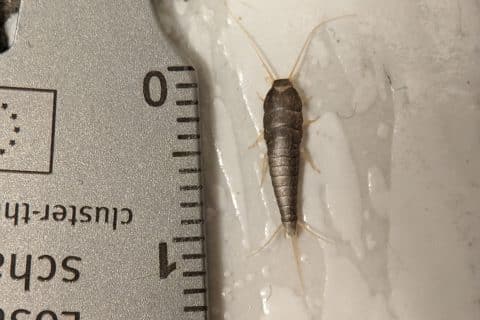
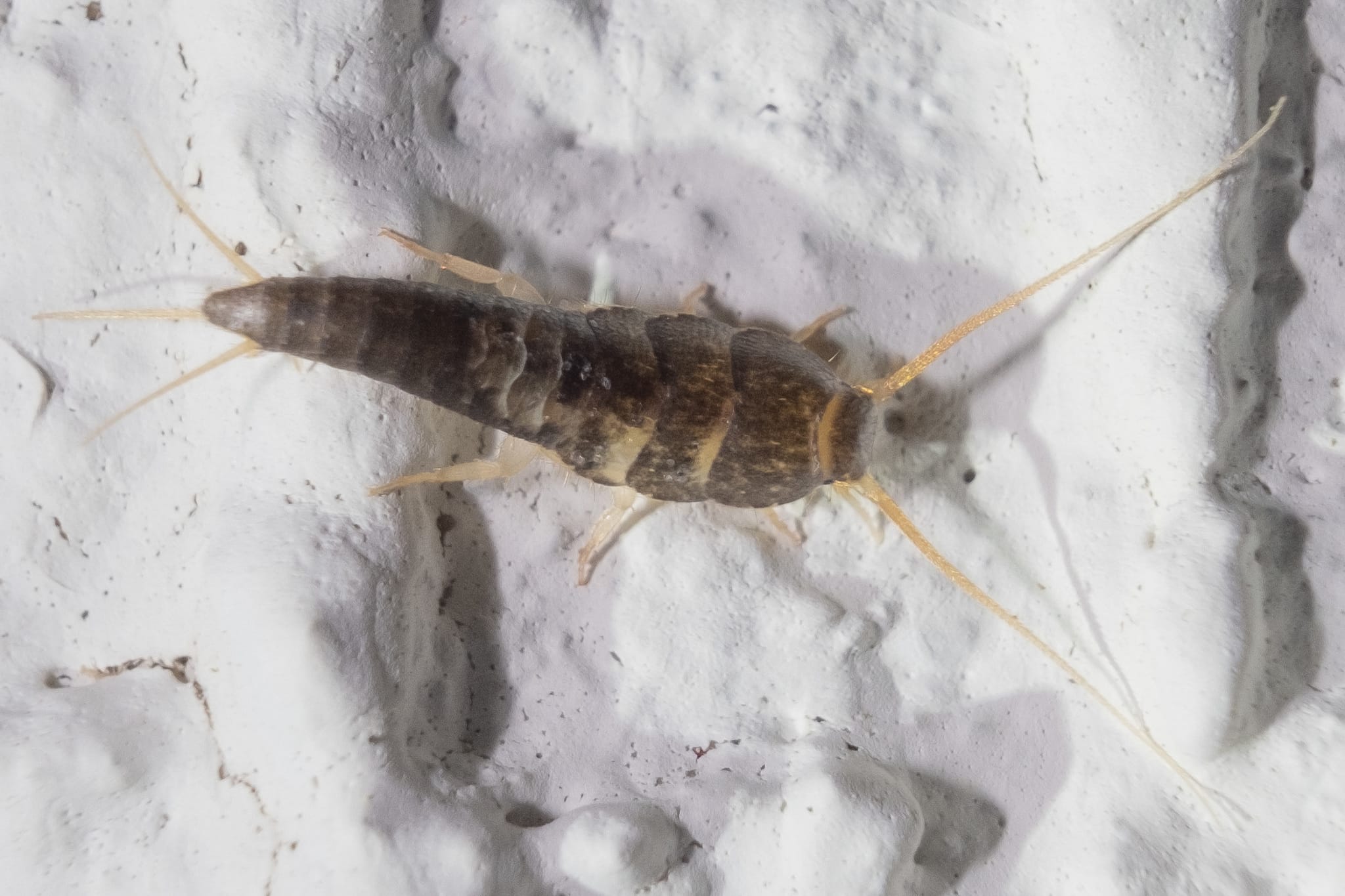
Ohio State University Extension’s fact sheet on Lepisma saccharina and its close relative the firebrat puts the species at 8 to 19 mm (1/3 to 3/4 in) long, flat-bodied, nocturnal, and most often found “in the basement, bathroom and kitchen.” The same sheet gives their preferred range as 75 to 95 percent relative humidity. Almost no other room in an average house sits in that band on its own; a basement does, because poured concrete below grade stays cooler than the walls upstairs, and cool surfaces hold onto moisture that a heated room would lose.
Diet is the second piece, and it is broader than most people assume. OSU Extension describes silverfish as feeding on “a wide variety of foods,” with a preference for carbohydrates and protein — which in practice means the starch in paper, book bindings, wallpaper paste, and the glue holding a cardboard box together, the same starch-or-cellulose diet behind silverfish turning up anywhere in a house. A basement supplies that too, in volume, because it is where paper goes to be stored and forgotten. What changes room to room is not the food. It is whether the air stays damp enough, long enough, for that food to matter.
The sump pit nobody covers
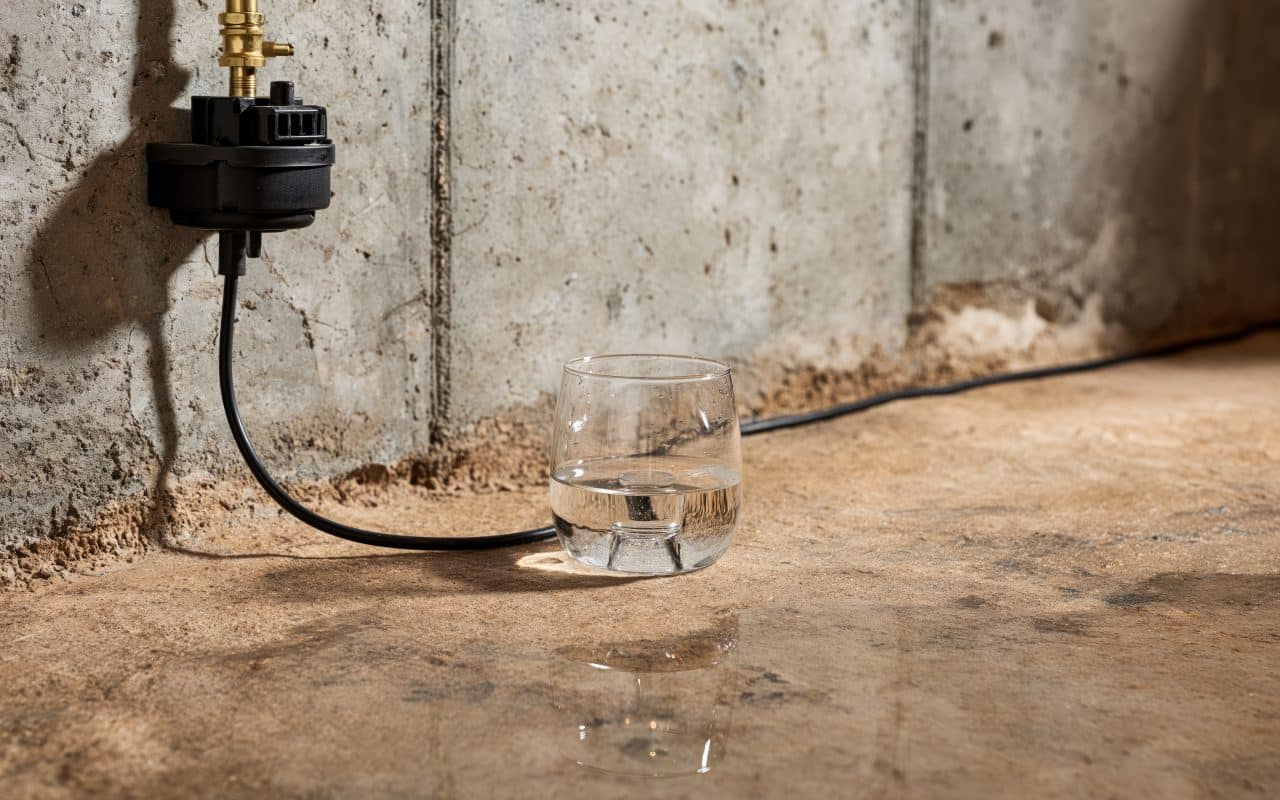
If the basement has a sump pump, start there before checking anything else. The U.S. Department of Energy’s Building America Solution Center, with content from Building Science Corporation, is specific about what an uncovered pit does: “if not covered, the sump can allow soil gases (including radon, water vapor, herbicides, termiticides, methane, etc.)” into the house, and adds that “the sump pit should have an airtight cover for indoor air quality reasons.” Water vapor is on that list for a reason — a pit that is open, or capped with a lid that only rests on top rather than sealing, is feeding damp air into the room around it on a schedule that has nothing to do with the weather outside.
The same guidance is specific about the fix, too: a cover that is “tight fitting, gasketed,” and “mechanically fastened,” not just set in place. It should still let you see into the pit and reach the pump for service — a cover you have to unscrew every time defeats its own purpose just as much as no cover at all.
A 30-second check, no tools required: run a hand around the rim of the sump lid. If it lifts without unscrewing anything, or you can see a gap at the edge, that gap is doing the same job as an open window into a damp crawlspace, every hour of every day.
Condensation reads like a leak, and isn’t one
A second, separate source sits in plain sight: the walls themselves. Concrete below grade stays close to the temperature of the soil outside it, which in most of the country is colder than a basement’s air for a large part of the year. When warmer, more humid indoor air reaches that cold surface, moisture condenses out of it the same way it beads on a cold glass on a humid day — not because water is getting in from outside, but because the room’s own air cannot hold onto its moisture once it touches something that cold. The result can run down a wall or pool at the base of it, and it is easy to mistake for a slow seep through the foundation, even though the fix is different: a seep needs the crack sealed or the grading outside corrected, while condensation needs the air inside dried out or kept moving.
Either source hands a silverfish exactly what it needs, right at floor level, next to whatever is stored against that wall. Telling the two apart matters for the fix, but not for the insect — it will use either one.
The boxes are not why they moved in
Cardboard is edible to a silverfish — the corrugated fiber is cellulose, and the glue holding the flaps together is starch-based — so a box really is food in the narrow, technical sense OSU Extension describes. But a stack of boxes sitting in a basement that stays dry rarely draws a population on its own; what usually happens is the water problem comes first, and the boxes are simply the nearest flat, dark, undisturbed surface once the air around them is damp enough to matter. That is why moving to sealed plastic bins helps but does not fix anything by itself: it removes one food source while leaving the humidity that made the room attractive in the first place untouched.
Where to check, room by room
| Spot in the basement | What’s usually going on |
|---|---|
| Sump pit and its lid | Standing water plus a loose or missing cover, letting water vapor and soil gas into the room |
| Laundry hookup | A supply hose that weeps, or a drain pan that never fully empties between loads |
| Cold exterior walls, especially corners | Condensation where warm indoor air meets concrete that stays near soil temperature |
| Window wells | Debris or standing water holding dampness against the frame from outside |
| Stored paper, cardboard, and fabric | A resting surface and a food source, not the water source itself |
Drying the basement out
OSU Extension’s own control advice is short and lines up with everything above: “reducing available water and lowering the home’s relative humidity with dehumidifiers and fans is helpful,” and separately, “repair leaking plumbing and eliminate moisture around laundry areas.” In order, that means:
- Seal the sump pit with a gasketed, mechanically fastened lid, not a loose cap, per the Building America Solution Center guidance above.
- Fix the laundry hookup — a weeping supply hose or a slow drain pan is an easy, overlooked water source right at floor level.
- Run a dehumidifier sized for the space and keep it running, rather than switching it on only when the room feels obviously damp; see sizing one for basement bugs specifically.
- Treat the target as a room-comfort goal, not a biological cutoff. This site’s own guide to reducing indoor humidity aims for roughly half the 75–95 percent band silverfish prefer — a practical setting for the dehumidifier, not a number any source claims stops the species from reproducing.
- Ohio State University Extension, Silverfish and Firebrats, Fact Sheet ENT-64.
- U.S. Department of Energy, Building America Solution Center, content by Building Science Corporation, Drain or Sump Pump Installed in Basements or Crawlspaces, last updated December 20, 2017.
When a dehumidifier isn’t enough
Give the fixes above a few weeks. Moisture-driven populations fade as the room dries rather than vanishing overnight, the same timeline that applies to a silverfish problem in a bathtub or sink elsewhere in the house. If sightings continue after the sump is sealed, the laundry area is dry, and a dehumidifier has been running steadily, work through the full six-step, humidity-first removal protocol rather than reaching for a spray, which does nothing about the moisture that is still feeding the population.
This is not a waterproofing or radon inspection guide. A sump pump that cycles constantly, standing water that returns after it is mopped up, or a persistent musty smell point to a bigger moisture problem than a dehumidifier can solve, and that is a job for a basement waterproofing contractor, not a pest fix.
FAQ
Does seeing silverfish in the basement mean I have an infestation?
Not from a sighting or two. A few silverfish in a basement are common and usually just mean the room is on the damp side. Repeated sightings in several spots, or finding them in rooms upstairs as well, is a better signal that the moisture problem is larger than one damp corner.
Will a dehumidifier alone get rid of them?
Often, yes, if the moisture really is coming from the air rather than a specific leak. But a dehumidifier working against an uncovered sump pit or a weeping laundry hose is fighting a source it cannot fully offset — seal or fix the specific source first, then let the dehumidifier hold the rest of the room dry.
Do silverfish actually eat the cardboard boxes?
They can. The cellulose in the cardboard and the starch in the glue holding it together are both on OSU Extension’s list of what silverfish eat. But a dry basement with the same boxes rarely draws a population — the moisture decides whether the boxes matter, not the other way around.
Why do I only ever see them at night?
Silverfish are nocturnal; OSU Extension describes both silverfish and firebrats as “nocturnal, fast-moving insects” that stay hidden in cracks and behind stored items during the day. Flipping on a light at night and seeing one or two dart for cover is normal behavior, not a sign of a larger problem on its own.
Should I cover the sump pit even if it has never overflowed?
Yes. An uncovered sump does not need to overflow to be a problem — standing water and soil gas move through an open or loose-fitting lid continuously, which is why the Building America Solution Center recommends an airtight, gasketed cover as a standard fixture, not something reserved for pits with a history of flooding.