Short answer
Booklice in a bathroom are not living in the drain. They are grazing the thin mold film on one surface that never fully dries between showers: a grout line, a failed caulk joint, or a pipe that sweats with condensation. Dry that one spot and hold the room under about 50% relative humidity, and the booklice run out of anything to eat.
- Confirm it walks. A pale, slow speck that never launches itself sideways is a booklouse; one that jumps is a springtail. The walk-or-jump test, in detail.
- Skip the drain and the bleach. Go looking for a surface that is still damp hours after the last shower.
- Dry that surface and fix whatever keeps re-wetting it. The mold film stops growing, and the booklice grazing it stop too. The full removal guide covers the rest of the house.
They’re not coming from the drain
This is the easy mix-up, because a bathroom has two other small, pale insects that genuinely do come from the plumbing or the drop itself. Drain flies breed inside the gelatinous film coating a slow drain, which is a real pipe problem. Springtails jump, and they graze wet surfaces the same way booklice do, which is why the two get confused constantly; springtails in a bathroom are their own case, with their own six wet points to check. Booklice do neither: they have no stage that lives in water, and a booklouse walks in short, steady steps instead of launching itself sideways. The four bugs that turn up in bathrooms sorts out which one you actually have before you treat anything.
Because nothing lives in the pipe, nothing poured down it changes the count. The food source is sitting in the open, on a surface you can touch.
What a booklouse is actually eating
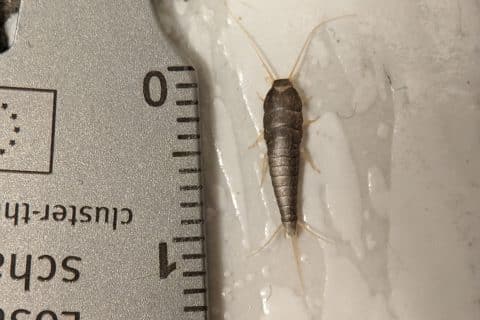
Booklice, order Psocoptera, are soft, wingless insects about 1 to 2 mm long (1/25 to 1/13 in), flattened, and tan to nearly translucent. Penn State Extension’s entomology department is specific about the diet: they feed on mold and fungi, not on the material growing it, which is why a grout line or a damp windowsill is just as viable a food source as a stack of old paper. Utah State University Extension’s integrated pest management notes describe the same insect turning up around leaking or sweating pipes and anywhere mold can grow, which covers most of what a bathroom offers. The species page has the identifying detail worth checking under a lens or a phone camera zoomed in: a booklouse walks, sometimes in short bursts, and never jumps.
Penn State’s fact sheet is also direct about what they are not: booklice do not bite, do not transmit disease, and unlike silverfish, do not damage paper or fabric directly. What they contaminate is stored food, with droppings, which is a pantry problem rather than a bathroom one.
They also rebound fast if the surface stays wet. Penn State’s data puts a female at roughly 60 eggs during the warm months, with the egg-to-adult cycle finishing in under a month in warm, humid conditions; in a cooler room it slows to three months or more. That is the practical reason a one-time wipe-down never holds: a grout line that re-wets itself every day can rebuild a visible population within a couple of weeks of the last cleaning.
The damp spots a bathroom actually offers
A bathroom concentrates exactly the conditions Penn State and Utah State both point to: more water events per day than any other room, several porous or semi-porous materials within reach of it, and often the least airflow in the house. Work down this list in order, and do not stop at the first damp thing. A bathroom that has grown mold in one spot usually has a second spot doing the same thing quietly.
| Where to look | What confirms it |
|---|---|
| Grout line at the base of the tub or shower | Still dark, soft, or faintly slimy hours after the last shower |
| Caulk joint around the tub or shower pan | Bead pulled away from the tile, or a musty smell right at the seam |
| Behind or under the toilet tank | Condensation beading on the porcelain and dripping to the floor |
| Vanity cabinet floor, around the supply lines | Darkened or swollen particleboard, a ring under the trap |
| Window sill and frame | Fogging still present well after the mirror has cleared |
Bleach cleans the surface, not the cause. Scrubbing a grout line removes the mold film they were eating and makes the problem look solved. The surface is still exactly as damp as it was, the film regrows within days, and so do the insects grazing it. Penn State’s guidance is blunt on this point too: pesticides are not normally necessary, because fixing the water problem works better than spraying it.
Cut the humidity, not just the mold
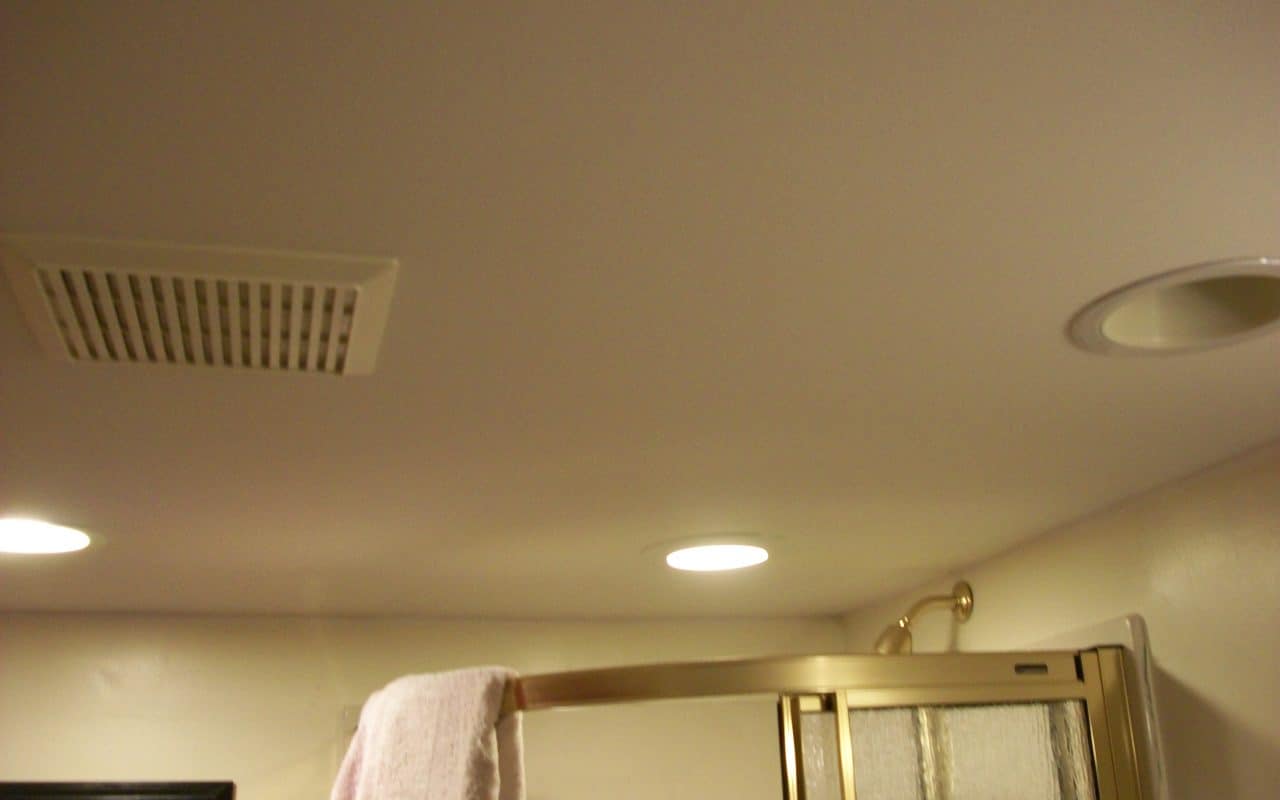
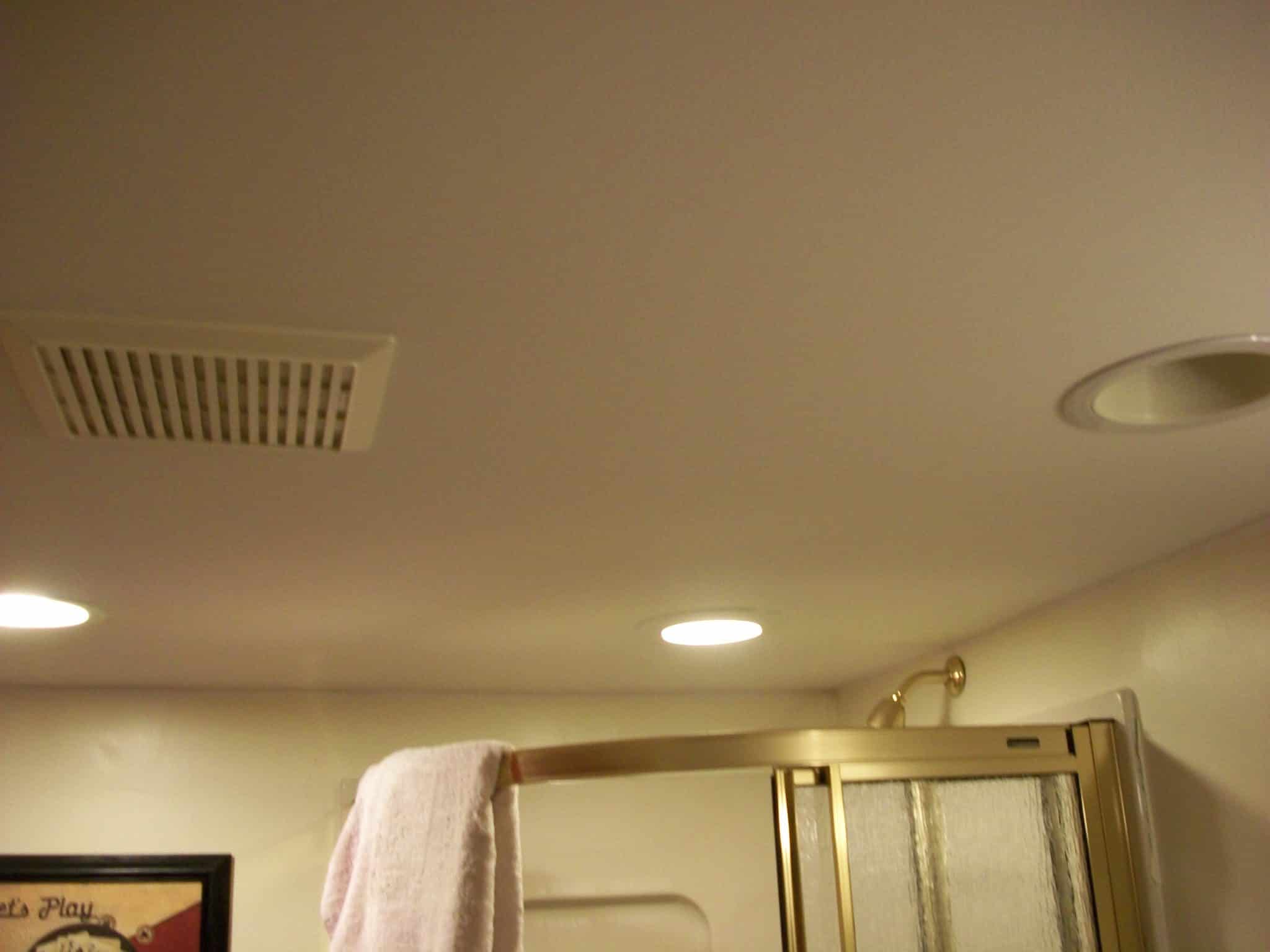
Start with the fan. Run the exhaust fan during every shower and for a good 20 to 30 minutes after, not just until the mirror clears, since the grout and caulk at floor level stay wet long after the glass does. A bathroom with a window can split the work between the fan and a few inches of airflow, but an interior bathroom with no window needs the fan doing the job alone.
From there, match the fix to the spot. A pulled-away caulk bead needs cutting out and re-sealing, not just wiping; regrout a joint that is crumbling rather than soft. A toilet tank that sweats in summer, or a cold supply line under the vanity, is a plumbing fix: a plumber can insulate the line or fit an anti-sweat valve so the metal stops reaching dew point. For the room as a whole, Penn State’s published target is relative humidity under 50%, the same number that stops the mold growing in the first place. The room-by-room guide to bringing indoor humidity down covers sizing a dehumidifier if the fan and the fixes above are not enough on their own.
Check the grout at the end of the day, not right after cleaning. A line that looks fine ten minutes after you wiped it down can still be sitting on a film that never actually dried. Press a dry fingertip into it a few hours after the last shower instead.
How long before they’re gone
Once the surface is genuinely dry, the mold film stops growing and the booklice grazing it have nothing left, usually within a few days to two weeks depending on how long that spot stayed wet. A cabinet floor that only got a little damp clears fast; a grout line that has taken water all season gives it back more slowly. The whole-house prevention guide covers the same habit for books, pantry shelves, and storage boxes, if the bathroom turns out not to be the only damp spot in the house. A bedroom usually points to a fogged-up window instead of a grout line, as this look at booklice in the bedroom walks through.
If they keep coming back
A rebound after a genuinely dry room is almost never a treatment failure, because cleaning was never the treatment. Most of the time it means a second wet spot was missed, which is why the list above is worth working all the way through rather than stopping at the first damp tile.
The other answer is water arriving through the assembly rather than sitting on top of it: a shower pan liner that has failed, a supply line weeping inside the wall, or a subfloor that stayed wet from a leak months ago and is still giving the water back. Booklice that keep turning up at the same baseboard no matter how dry the tile looks are a sign for a plumber or a contractor to open that section up, not a reason to clean harder. The bathroom moisture routine covers the fan, caulk, and bath-mat habits that keep a room from re-soaking itself in the first place.
FAQ
Do booklice bite?
No. Penn State Extension’s entomology department is explicit that booklice do not bite, do not transmit disease, and do not otherwise affect human or animal health. Their name is misleading: they are not related to the lice that live on people.
Are booklice coming up through the bathroom drain?
No. Booklice have no aquatic life stage and no reason to be inside a pipe. That is drain fly behavior, and the two get confused because both show up near the same fixtures. A booklouse near a drain is on the wet tile around it, not in it.
What humidity keeps booklice out of a bathroom?
Penn State Extension puts the threshold at under 50% relative humidity: below that, mold stops growing and booklouse development stops with it. A bathroom can read a reasonable average on a hygrometer for most of the day and still keep one grout line saturated, so the number that matters is the surface, not the room average.
How do I tell booklice apart from springtails in the bathroom?
Movement. A booklouse walks, sometimes in short jerky bursts, and never jumps. A springtail launches itself several inches sideways when disturbed. The full walk-or-jump comparison covers both, plus the drain fly they also get mistaken for.
Will bleach or a mold-killing spray get rid of them for good?
Not on its own. Bleach removes the visible mold film, which knocks the population down for a few days and looks like a fix. The surface underneath is still damp, the film regrows, and the booklice come back with it. Penn State’s guidance treats pesticides as unnecessary once the water problem is actually fixed.
Sources
- Penn State Extension, Department of Entomology, Booklice.
- Utah State University Extension, School Integrated Pest Management, Booklice and Psocids.