Short answer
A booklouse in the bedroom almost never means the books did anything wrong. It eats the thin film of mold that grows on paper, not the paper itself, so a bookshelf only turns into a problem once something nearby keeps the air around it damp. In a bedroom that is usually a window that beads with condensation overnight, a houseplant saucer that never gets emptied, or a humidifier running too close to the nightstand. Dry that one source and hold the room under about 50% relative humidity, and the mold stops growing, which leaves the booklice with nothing left to graze.
- Confirm it walks, not jumps. A slow, steady booklouse and a springtail that launches itself sideways get mixed up constantly. The full walk-or-jump comparison sorts out which tiny bug you actually have.
- Skip the bookshelf first and check the window, then the plant saucer and wherever a humidifier sits.
- Dry that spot and the shelf clears on its own within a few days to two weeks. The full removal protocol covers a room that needs more than that.
They’re not actually eating the books
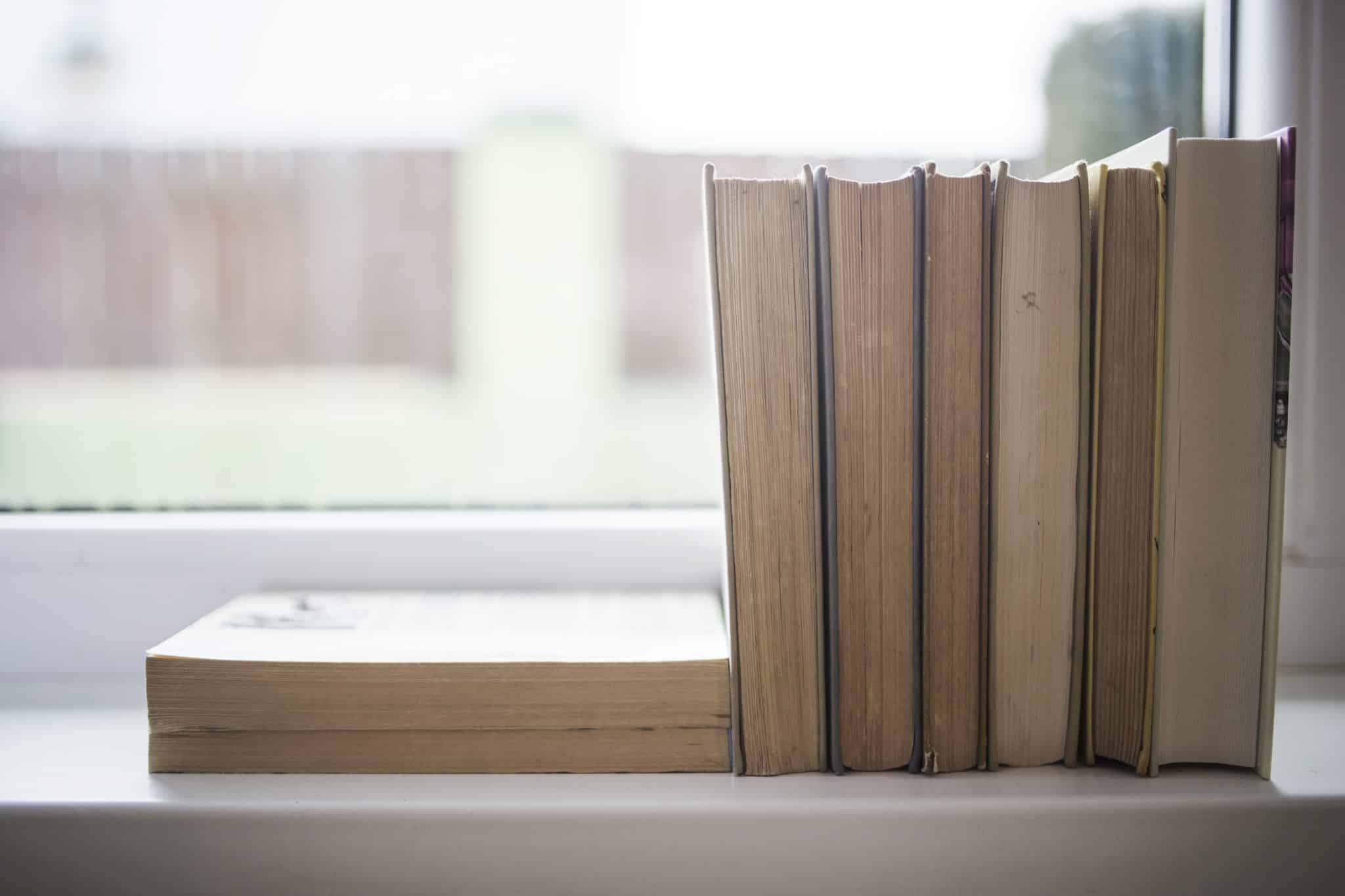
Penn State Extension’s entomology department is specific about the diet: booklice feed on mold and fungi, and they turn up wherever that film has somewhere to grow, which in practice means paper, books, book bindings, wallpaper, flour, and stored grains. None of that is the meal. It is the surface that holds enough moisture, for long enough, to grow one. A bookshelf is just a stack of absorbent material sitting in a room, and it only feeds a population once something else in that room is already keeping it damp.
That distinction matters because it points the search in the wrong direction otherwise. A reader who finds a dozen pale specks on a paperback usually starts by checking the book itself: the cover, the spine, whether it got wet in a move. But a book that looks and feels dry can still be sitting a few inches from the one surface in the room that isn’t. This site’s main booklice guide covers the same mechanism for a whole house; a bedroom just narrows the list of likely sources to a handful of things.
The window is usually the real source in a bedroom
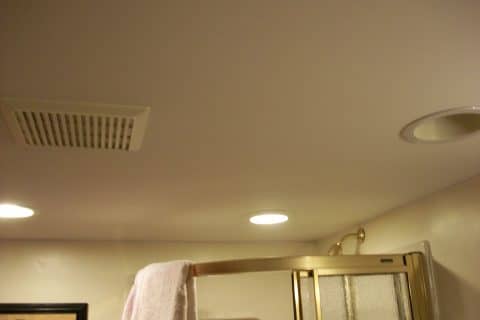
Warm, humid air inside a bedroom meets the coldest surface in the room every night, and that surface is almost always the window glass. Once the glass drops below the dew point, water condenses straight onto it and onto the sill underneath. Curtains or blinds make this worse rather than better: they trap a pocket of still, moist air right against the cold glass and block the airflow that would otherwise help it dry out by morning. A single-pane or older double-pane window, common in a lot of bedrooms, loses heat fast enough that this can happen on an ordinary cold night, not just during a cold snap.
A sill that stays wet for a few hours every night is already past what Penn State’s fact sheet treats as the threshold for mold growth, which is why a window is such a reliable source even in a room that otherwise reads dry on a hygrometer. If a bookshelf, a desk, or a stack of stored paper sits against that same window or anywhere close to it, the film growing on the glass has a second surface to spread onto.

Three other damp spots this room actually has
A window is the most common source, but not the only one. Work through these before assuming the bookshelf is to blame on its own.
- A houseplant saucer on a windowsill or dresser. Water left standing in it for hours after a regular watering keeps the wood or the stack of papers underneath damp on a schedule, which is exactly the kind of repeat exposure a mold film needs to establish itself.
- A humidifier or a CPAP machine. Both add moisture to the air on purpose, and both tend to sit on a nightstand within reach of whatever books or papers are already piled there. A reservoir that gets topped off but rarely cleaned, or a unit aimed straight at a stack of paperbacks, can keep that one corner of the room wetter than the rest of it reads on average.
- A house, or a room, that’s still drying out. If the bedroom is in a house built or renovated in the past year or two, or a wall was recently replastered or repainted, the construction moisture itself may still be leaving the walls. This site’s main booklice guide covers that case in more detail, with the sources behind it.
- Crack the window or run a fan for a few minutes each morning. Letting the room’s air actually exchange, instead of staying sealed behind curtains all night, is usually enough on its own to stop a window from condensing as heavily the next night.
- Wipe the glass and sill dry during cold months, not just when it’s visibly dripping. A squeegee or an old towel run along the bottom of the frame takes thirty seconds and removes the water before it has all night to soak into whatever sits nearby.
- Empty the plant saucer after every watering instead of letting it refill the pot from below. A saucer that drains completely within the hour never gets the chance to keep the surface under it wet.
- Move the humidifier away from stacked paper and clean the reservoir on a schedule. A few inches of clearance and a reservoir that doesn’t sit stagnant for weeks both cut down on how much moisture lands on nearby surfaces.
- Let a damp book or stack of papers dry flat in a warm, dry room for a few days before it goes back on the shelf. Putting it straight back against the same window or wall just restarts the cycle.
- Penn State Extension, Department of Entomology, Booklice.
- University of Minnesota Extension, Psocids (booklice).
A closet is a fourth possibility, and a common one, but it is its own case with its own set of checks. Silverfish in the bedroom walks through why a closet traps humidity so well; the same reasoning applies to a booklouse found there, just with a slower-moving insect and a mold film instead of a starch-and-cellulose diet.
Where to check, in order
| Where to check | What confirms it |
|---|---|
| Window glass and the sill under it, especially behind heavy curtains or blinds | Still beaded or damp well after the rest of the room has aired out, especially on a cold morning |
| Books or papers stacked directly on or against that same window or sill | Pages feel slightly cool and faintly soft rather than dry and crisp |
| The saucer or tray under a windowsill or dresser-top houseplant | Standing water left in it more than an hour or two after watering |
| A humidifier or CPAP machine’s reservoir, and the surface it sits on | A damp ring or a chalky residue on the nightstand underneath |
| Photo albums, scrapbooks, or old paperwork stored in a closed box or drawer near any of the above | Pages stick together slightly or feel soft instead of crisp when fanned |
Wiping the shelf isn’t the fix. Cleaning the book or the sill removes the visible film and makes the shelf look clear for a few days. If the window keeps fogging up every night or the saucer keeps holding water, the film grows back and the booklice come back with it. The surface has to actually dry, not just get wiped once.
Dry the source, then deal with the books
Once the damp spot is identified, the order of operations is airflow first, then the specific fix, then the books themselves.
How long before they’re gone, and what a rebound means
Once the surface genuinely stays dry, the mold film stops growing and the booklice grazing it run out of food, usually within a few days to two weeks depending on how long that spot was wet to begin with. A window sill that only got a little damp clears fast; a stack of paper that sat against a cold wall for a season gives its moisture back more slowly.
A rebound after the room has genuinely dried out is almost never a sign that the cleanup failed, since wiping a shelf was never the actual treatment. It usually means a second damp spot was missed: a saucer that refilled, a humidifier reservoir that never got emptied, or the window fogging up again once the weather turns colder. Work back through the list above rather than assuming the first fix didn’t take.
Make sure it’s actually a booklouse
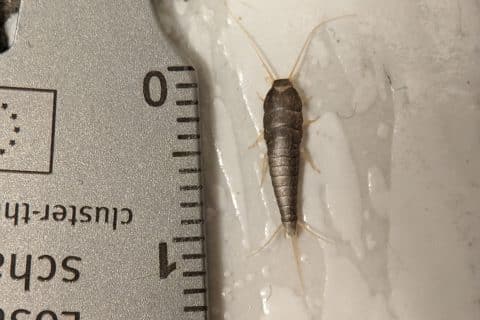
A bedroom produces more look-alikes than most rooms, mainly because it also holds wool sweaters, old photo albums, and whatever else gets stored in a closet. A booklouse is pale tan to nearly translucent, about 1 to 2 mm long, and it walks at an unhurried, steady pace, sometimes in short bursts, but it never launches itself through the air. A silverfish is bigger and faster, silvery and carrot-shaped, and runs in a straight line rather than wandering. If what you’re looking at jumps several inches sideways when disturbed, that’s a springtail, not a booklouse, and it points to standing water rather than a mold film. The full comparison between booklice, springtails, and clover mites covers all three side by side.
FAQ
Will booklice ruin my books?
Not directly. Penn State Extension’s fact sheet is clear that booklice do not chew or structurally damage paper, since they are grazing the mold film on its surface rather than the paper itself. A heavily grazed page can look faintly dusty from droppings, but the damage worth worrying about is whatever kept the book damp long enough to grow that film in the first place.
Do booklice bite or carry disease?
No. They have no interest in people or pets, do not bite or sting, and are not known to transmit disease. Despite the name, they are not related to the lice that live on people or animals.
Why do I only see them in the bedroom and nowhere else?
Because the conditions they need, a mold film growing on a damp surface, are usually concentrated in one spot in that room rather than spread evenly through the house. A sighting confined to the bedroom points to that room’s window, a plant saucer, or a humidifier first, before anywhere else in the house.
Is this different from finding them in the closet instead?
The insect and the fix are the same; the likely source changes. A closet traps humidity behind a closed door and tends to hold stored boxes and off-season clothing, which is the case this site’s piece on silverfish in the bedroom walks through. A window, a plant saucer, or a humidifier are open-room sources that don’t need a closed door to stay damp.
Will running a dehumidifier in the bedroom fix this on its own?
It helps the room overall, but it won’t dry a window that fogs up every night on its own, since the condensation is forming directly on the cold glass rather than building up in the room’s air. Wiping the glass and improving airflow around it does more for that specific surface than a dehumidifier running elsewhere in the room.