Short answer
No. Silverfish cannot bite people or pets. Their mouthparts are built to scrape starch and paper, not pierce skin, and they carry no stinger or venom of any kind.
- Their jaws are mechanically too weak to break human skin; entomologists describe what they do to paper as scraping, not biting.
- The fear they trigger comes from how they move (a fast, erratic dash in low light), not from any real physical threat.
- The genuine risk is to your belongings, not your body. If you’re dealing with an active infestation, our removal guide covers what to do next.
Why Silverfish Physically Can’t Bite You
To bite something, an insect needs mouthparts built for the job: something that can puncture, grip, or slice. Mosquitoes carry a needle-like proboscis. Bed bugs use a pair of sharp stylets to reach a blood vessel. Silverfish have neither. Their mouthparts are the chewing type — small, horizontally opposed mandibles built to grind soft, starchy material down one tiny fragment at a time.
That distinction matters more than it sounds. Mandibles built for shredding book glue or wallpaper paste aren’t shaped, or strong enough, to break human skin, which is far tougher than anything silverfish are adapted to process. The University of California’s Statewide Integrated Pest Management Program puts it plainly: silverfish and firebrats have “very weak mandibles” that cause them to scrape, rather than bite, the surface of paper. If their jaws can barely leave a scuff mark on a book page, breaking skin isn’t a realistic option.
This lines up with what our silverfish species profile already says: silverfish have no stinger and don’t bite people or pets. Clemson University’s extension entomologists put it even more bluntly: silverfish don’t bite or sting, and they don’t carry disease. No one has ever documented a silverfish biting a person, and given the anatomy involved, that’s not really surprising.
So Where Does the Fear Come From?
If silverfish are harmless, why do so many people flinch at the sight of one? The answer has almost nothing to do with actual risk and everything to do with behavior. Silverfish are nocturnal and spend the day wedged into cracks, behind baseboards, or between the pages of a stored book. You usually only see one because you’ve just disturbed its hiding spot: pulling a box off a shelf, opening a cabinet, flipping on the bathroom light at night. Whatever happens next is fast — an unpredictable scramble for cover, metallic scales flashing as it goes.
That combination of sudden appearance, speed, an erratic path, and a shiny, faintly reptilian look is exactly what trips a startle response, whether or not the animal behind it is dangerous. A silverfish weighs next to nothing and carries no weapon of any kind. None of that registers in the half-second it takes for a glinting shape to dart out from under a stack of magazines. By the time your brain catches up, it’s already filed the thing under “threat.”
Silverfish vs. the Bugs People Actually Fear
Part of the anxiety probably comes down to mistaken identity. In a half-second glimpse under bad lighting, a fast-moving silverfish can get lumped into the same mental category as insects with a much scarier reputation — house centipedes, for instance. House centipedes are long-legged, extremely fast, and often assumed to be venomous or aggressive, even though encounters with people are uncommon. Nobody stops to count legs mid-startle.
The good news: silverfish are easy to identify once you know what to check for, and nothing on the list is a feature that should worry you.
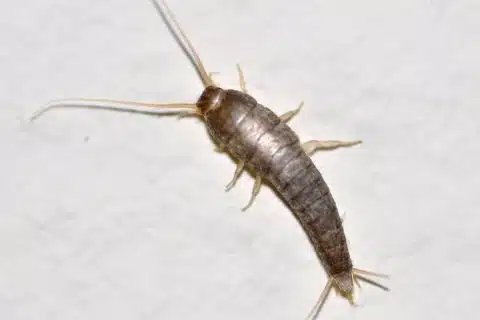
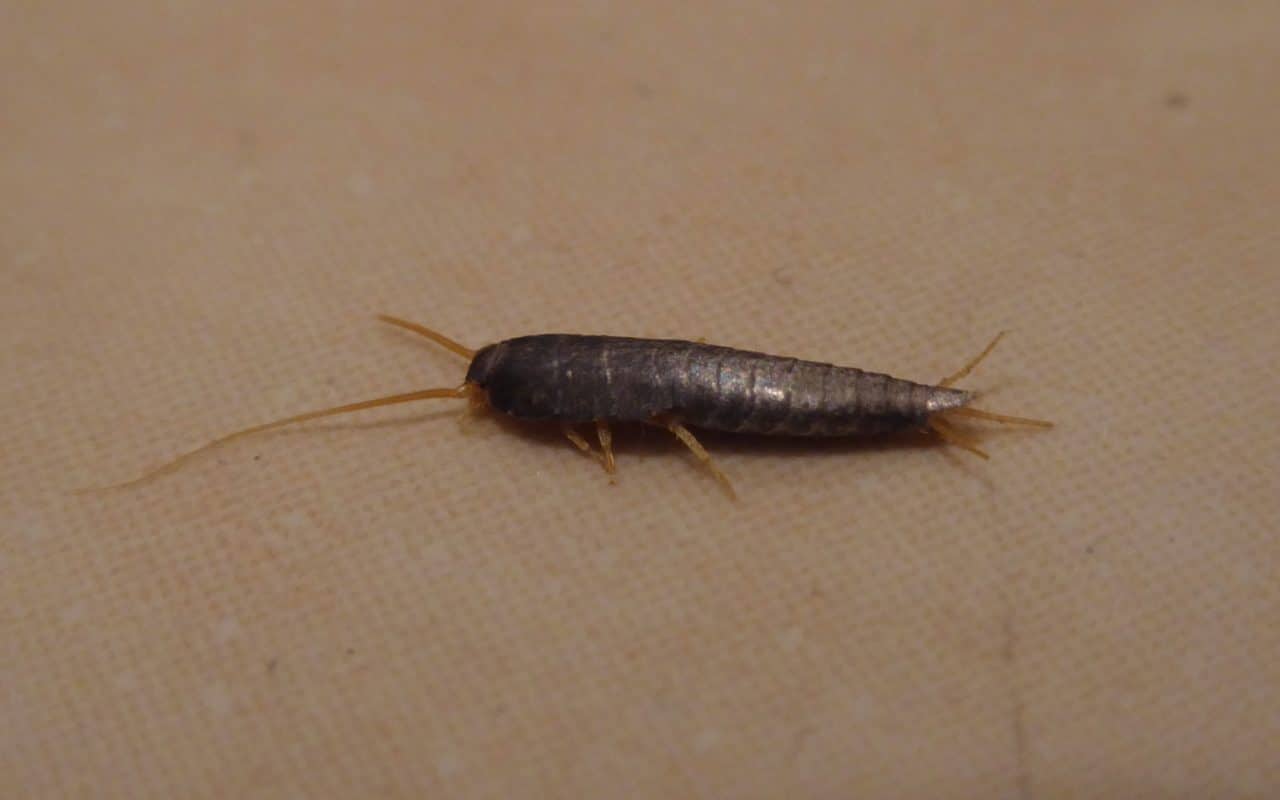
Quick ID check: Silverfish have exactly three long, thread-like filaments trailing off the tip of the abdomen, a flattened, carrot-shaped body that tapers toward the tail, and no legs running along the sides of the body. No fringe of legs, no pincers, no venom apparatus of any kind — just a fast, scaly insect built to hide, not to hurt anyone.
The one insect silverfish get confused with for good reason is the firebrat, a close relative with mottled brown coloring that prefers hot, dry spots near furnaces and attics instead of the damp corners silverfish favor. Both are equally harmless to people. Our species guide breaks down how to tell the two apart in more detail.
What About Allergies?
There’s one health-adjacent angle worth addressing honestly, because it’s the one place this topic brushes up against something real: indoor allergens. Silverfish are unusual in that they keep molting all through adulthood — UC’s IPM program puts the total at roughly 45 to 60 molts over a lifetime, far more than most insects ever go through. Every molt leaves something behind. NC State extension researchers note that infestations typically leave cast skins, scales, and fecal matter on whatever the insects have been feeding on.
In a heavy, long-running infestation, that debris works its way into household dust, the same as shed material from other indoor insects does. If you’re already sensitive to dust, mold, or similar particles, a heavier-than-normal buildup of insect debris of any kind is a plausible contributing irritant, silverfish included. We won’t dress that up as more than it is, though. This isn’t a widely studied, formally recognized “silverfish allergy” the way dust mite or cockroach sensitivity is, and extension entomologists don’t consider silverfish a health hazard. Call it a general housekeeping consideration, not a reason for alarm.
To be clear: none of this is medical advice, and silverfish aren’t known to cause bites, stings, or skin reactions through contact. If you have an unexplained skin reaction, ongoing respiratory symptoms, or anything else you can’t otherwise account for, that’s a question for a doctor or allergist, not a pest ID guide.
The Real Risk: What Silverfish Actually Damage
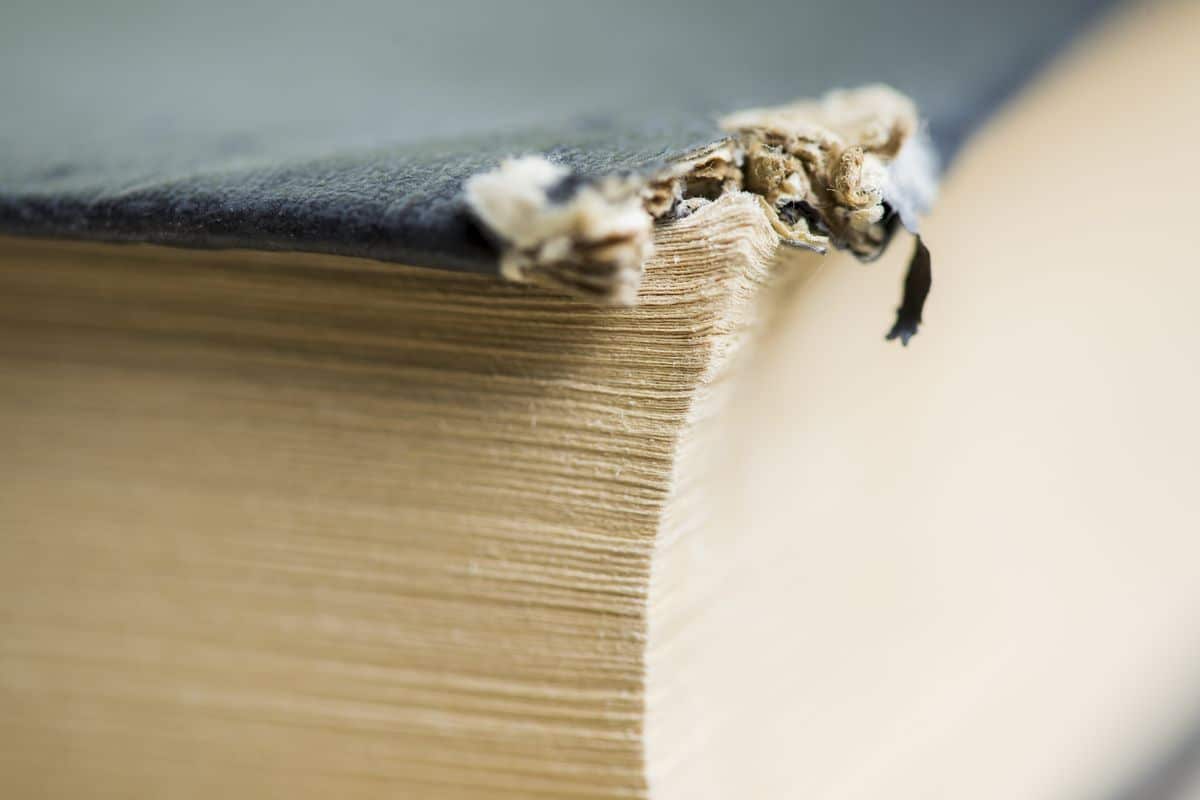
Once you redirect the concern to where it belongs, silverfish stop being a body-safety question and become a household-maintenance one. These insects feed on cellulose and starch: paper, book bindings, glue, wallpaper paste, cardboard, starched fabrics like cotton or linen. They’re not after keratin, which is what draws carpet beetles to wool, fur, and feathers instead. The two pests damage different materials for entirely different biological reasons, which is worth keeping straight when you’re trying to identify what’s actually living in your home.
Signs of a silverfish problem show up on the objects they’ve been eating, not on skin: notched or ragged edges on paper, irregular holes in book bindings, a yellowish dust of scales and frass around stored items, etched or missing patches on wallpaper. Left alone, an established population can quietly chew through stored documents, photographs, or books over months or years. That’s the real reason to take an infestation seriously, not anything to do with your skin.
If you’re finding silverfish on a regular basis, not just the occasional one in the bathtub but a pattern in a closet, basement, or bookshelf, our full silverfish removal guide walks through humidity control, sanitation, and treatment step by step. Once the active population is under control, prevention mostly comes down to not giving them the damp, undisturbed conditions they need in the first place. Our guide on how to repel silverfish covers that side of things in more detail.
FAQ
Do silverfish bite people or pets?
No. Silverfish have chewing mouthparts built for scraping starch and cellulose, not for piercing or tearing skin, and they have no stinger. There’s no verified case of a silverfish biting a person or a pet.
Are silverfish dangerous to my health?
Not in any direct way. They don’t bite, sting, or transmit disease. The closest thing to a health angle is that heavy, long-term infestations leave shed scales and droppings that add to household dust, worth knowing if you’re already sensitive to dust or mold. It’s a housekeeping note, not a diagnosis.
Do silverfish spread disease?
No. Extension entomologists are clear on this: silverfish aren’t known to transmit disease to people or pets. They’re classified as a nuisance and fabric-and-paper pest, not a health hazard.
How can I tell a silverfish from a bed bug?
Easily, once you look closely. Bed bugs are reddish-brown, flat, oval, roughly apple-seed sized, and feed on blood near mattress seams. Silverfish are silvery, elongated, and carrot-shaped, usually turn up near books, paper, or bathrooms instead of a mattress, and feed on starch, not blood. Different shape, different diet, different hiding spots.
What should I do if I find silverfish in my home?
Start by cutting down on moisture and decluttering paper and fabric storage, since both feed and shelter them. If it’s more than an occasional stray, a structured removal plan works better than one-off spraying.
Sources
- Clemson Cooperative Extension, Home & Garden Information Center, Silverfish & Firebrats, HGIC 2443.
- University of California Statewide Integrated Pest Management Program, Pest Notes: Silverfish and Firebrats, UC ANR Publication 7475.
- NC State Extension, Silverfish and Firebrats, Household Pests Series.