Short answer
A silverfish under the kitchen sink is not a food problem. It is a moisture problem that happens to be standing next to the pantry. Fix the damp cabinet first, or you will keep restocking the dry goods for nothing.
- Confirm the insect: silverfish run fast on six legs and never jump, so a pantry moth or a weevil is a different problem entirely.
- Check the cabinet under the sink before the pantry shelf. Condensation on a cold supply line creates the humidity silverfish need, even with no visible leak.
- The same three conditions that drive silverfish anywhere in the house apply here; a kitchen just supplies two of them in the same few feet.
Why a kitchen can host silverfish even though nothing lives in the food
Every explanation for a silverfish starts with the same two conditions: damp air and something starchy to eat. The University of California Statewide Integrated Pest Management Program lists cereals, flour, pasta, and pet food among their preferred diet, alongside paper bound with glue or paste. A pantry has all of that sitting in boxes and bags. What it usually does not have, on its own, is the humidity. That is the part that actually turns up under a kitchen sink.
UC IPM puts the species’ preferred range at relative humidity above about 75 percent, at temperatures between roughly 71°F and 90°F (22 to 32°C). A kitchen cabinet rarely holds air that damp on its own. The space under a sink does, because it wraps around plumbing that is often colder than the room around it, and because a cabinet door traps whatever humid air collects there instead of letting it mix back into the kitchen; it is the same logic behind every room covered under moisture control on this site. A basement with an uncovered sump pit shows the same pattern at a larger scale, covered in this breakdown of silverfish in the basement.
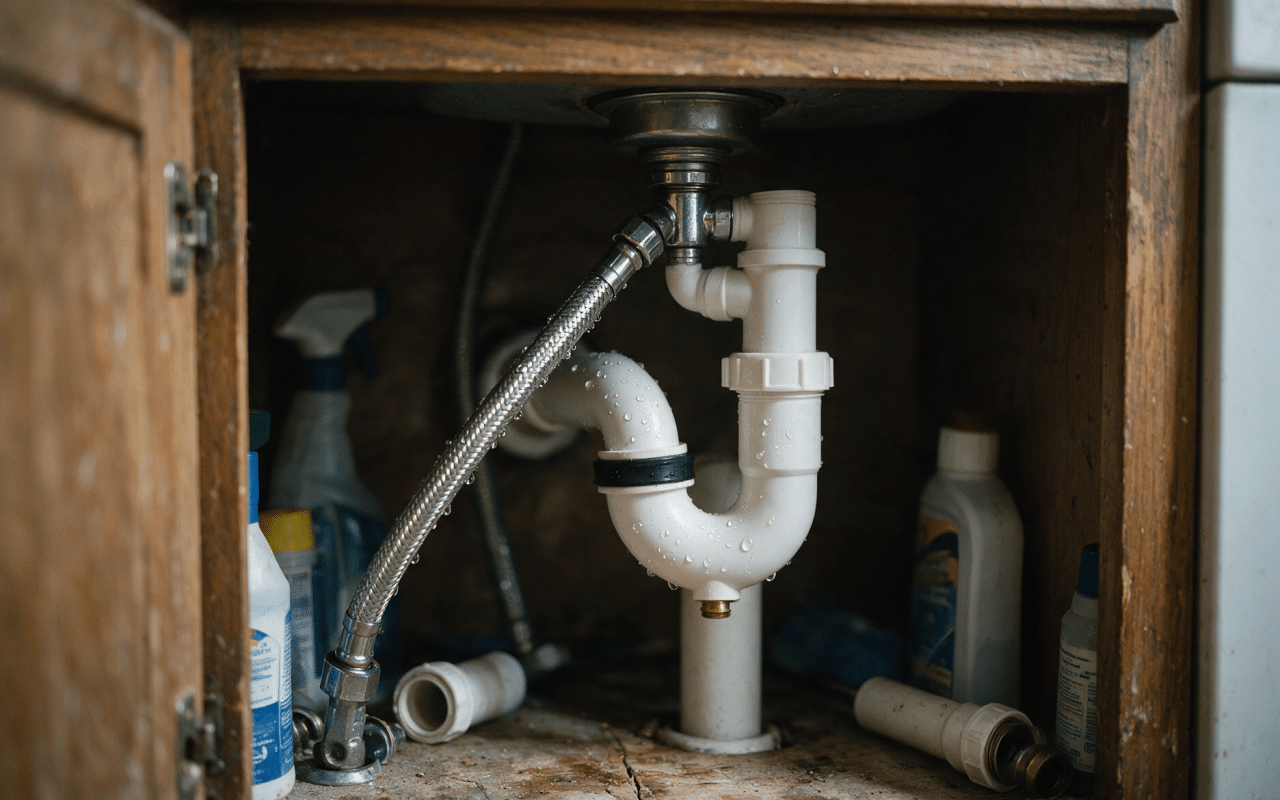
You don’t need a leak for this to work: a supply line carrying cold water through a warm kitchen sweats condensation the same way a cold glass does on a humid day. The National Pesticide Information Center, run by Oregon State University under a cooperative agreement with the EPA, lists insulating a pipe with visible water droplets on the outside as a direct control step, separate from fixing an actual leak.
Where to check under the sink and around the pantry
Work through these in order. The first three are about moisture, and they explain most kitchen sightings on their own; the last three are about the food side, which matters but rarely matters first.
| Where to check | What makes it attractive |
|---|---|
| Cabinet under the sink, around the P-trap | Condensation beads on the cold supply line and drain pipe even with no active leak |
| Gap where the water line passes through the back of the cabinet | A rough-cut hole around the pipe is rarely sealed, and stays damp longest |
| Dishwasher kickplate and the floor behind it | A door gasket that never fully dries holds humid air at floor level |
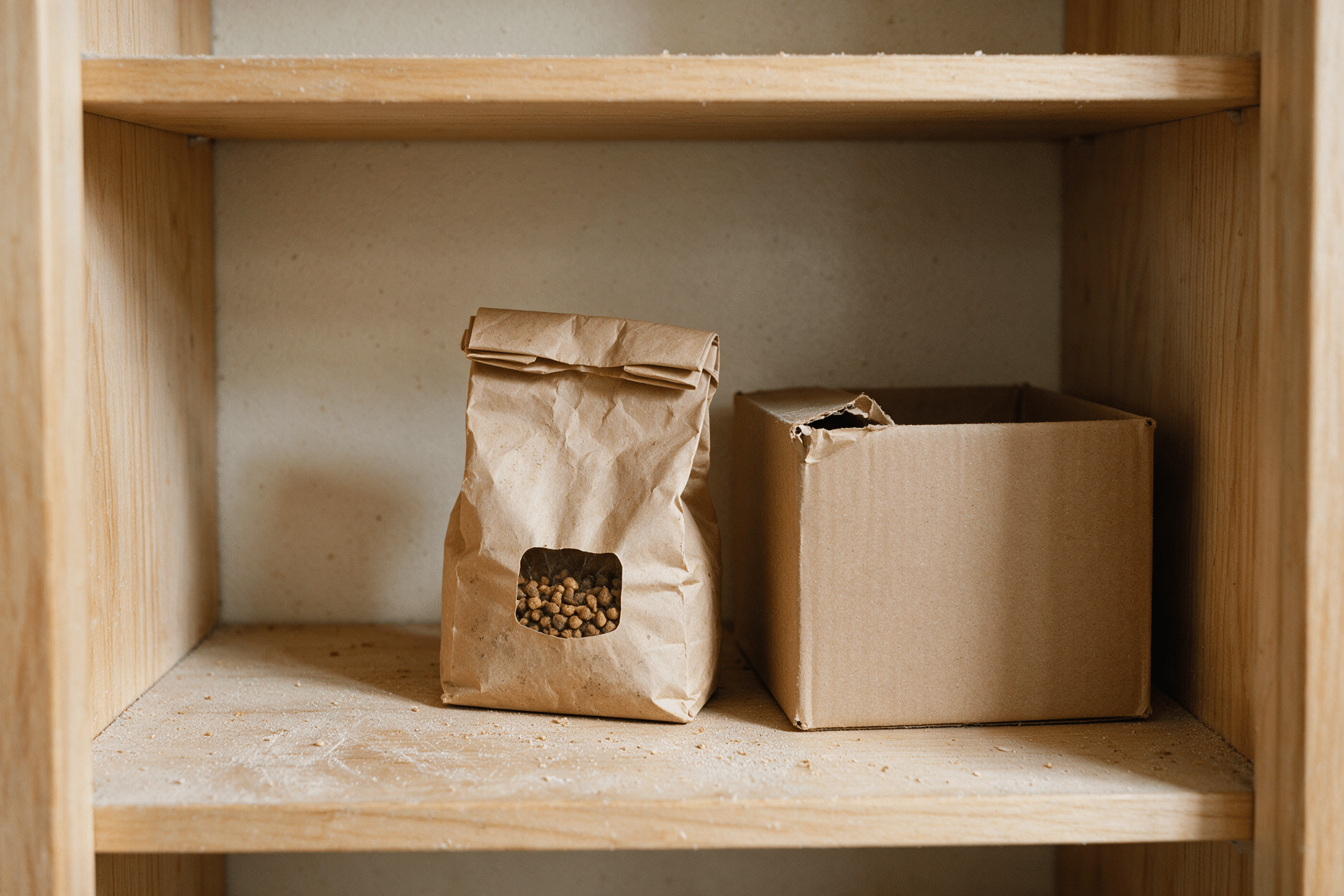
| Pantry shelf holding cereal, flour, pasta, or dry pet food | Starchy dry goods are the diet UC IPM and NPIC both name specifically |
| Flattened cardboard stacked near the sink for recycling | Cardboard is bound with starch-based glue, a food source on its own |
| Trash can with a damp liner or food residue on the lid | Adds humidity at floor level without being an actual plumbing leak |
The two-trap test that tells you sink or pantry
This settles the question in one night instead of a week of guessing. Loosely roll two sections of newspaper and dampen each one slightly, the same trick used to confirm an identification. Set one roll in the cabinet under the sink and the other on the pantry shelf, leave both overnight, and check them in the morning before anyone runs water or opens a cereal box.
- Mostly the sink roll: the cabinet is the source, and the pantry is just close enough to visit.
- Mostly the pantry roll: check it for an actual gap or crumbs rather than moisture; a dry pantry with a true infestation usually means a torn bag or box feeding a population inside the shelf itself.
- Both, or neither: run the test again after a few humid days, since silverfish wander more when the air is damp and a dry spell can make an active population look quiet.
- Dry the cabinet, not just the leak. Wipe the pipe and the cabinet floor completely dry, then leave the door open for a few hours so the trapped humid air actually clears instead of just the visible water.
- Insulate a pipe that sweats. A snap-on foam sleeve from a hardware store stops condensation at the source; NPIC lists this as a standard step for exactly this situation.
- Seal the gap where the pipe enters the cabinet. Expanding foam or a simple escutcheon plate closes the dark, damp opening that otherwise sits undisturbed behind the plumbing.
- Run the exhaust fan a few minutes longer. Extra time after washing dishes or running the dishwasher clears humid air before it has a chance to settle into the cabinet below.
- Move dry goods into containers with a real gasket seal. A folded bag clipped shut is not airtight; UC IPM and NPIC both name cereal, flour, pasta, and pet food specifically, so this is the one step that removes the food side of the equation.
- Break cardboard down instead of stacking it. Flatten and recycle boxes promptly rather than leaving them against a cabinet wall that is already running damp; the glue binding the cardboard is a food source on its own.
- University of California Statewide Integrated Pest Management Program, Pest Notes: Silverfish and Firebrats, Publication 7475.
- National Pesticide Information Center, Oregon State University (cooperative agreement with the U.S. EPA), Silverfish and Firebrats.
- Iowa State University Extension and Outreach, Donald Lewis, Silverfish, Yard and Garden.
Fix the moisture first
Once you know which cabinet is doing the work, the first pass is building maintenance, not pest control.
Then lock up the food
The food side is not nothing, it is just rarely the first thing worth fixing. Once the cabinet is dry, these two steps close off the diet UC IPM and NPIC both describe.
Don’t do this: spray inside a cabinet that holds food, dishes, or pet supplies. UC IPM treats moisture, food, and hiding-place removal as the actual control and reserves insecticide for infestations that keep coming back elsewhere in the house, not for routine use next to where you store pasta. A dry treatment like diatomaceous earth is the closer fit for a food-storage area, and only once the cabinet itself is dry. If you still have silverfish turning up in more than one room after the kitchen is dry, the full humidity-first removal protocol covers the whole house rather than one cabinet.
Make sure it’s actually a silverfish
A kitchen produces more look-alikes than a bathroom does, because the pantry itself breeds insects that get mistaken for a silverfish at a glance. A silverfish runs in a fast, steady line along the floor or the back of a cabinet, silvery and carrot-shaped, tapering to three long tail bristles; it never flies and never jumps. A pantry moth or a flour weevil, by contrast, turns up inside the food itself, not wandering the cabinet floor, and the rest of the kitchen lineup is sorted by what it is found near rather than how it moves.
The closer look-alike is the firebrat, a near-identical relative with mottled brown-gray coloring instead of silvery-gray. The difference that matters here is habitat: firebrats prefer hot, dry locations, closer to an oven, a water heater, or a furnace, while silverfish need the damp a sink cabinet provides. Something you are finding near the stove rather than the sink, in a kitchen that otherwise runs dry, is worth a second look before you treat it as a silverfish. The same fall-in mechanism shows up in a bathtub or sink elsewhere in the house, for comparison. A closet in a bedroom down the hall can host the same conditions, just with paper and cardboard standing in for the pantry shelf.
FAQ
Does finding a silverfish near the sink mean my food is contaminated?
Not from a sighting on the cabinet floor. Silverfish are a nuisance and packaging pest, not a disease vector, and no extension source lists a pathogen associated with them. If you find one actually inside an open bag of flour or cereal, discard that package; a silverfish wandering near a sealed container has not touched what is inside it.
Should I just spray under the kitchen sink and be done with it?
No. Extension sources treat spraying without removing the moisture and food as treating the symptom rather than the cause, and a residual insecticide in a cabinet that stores dishes, pots, or pet food is a bigger problem than the insect. Dry the cabinet and seal up the dry goods first; a spray is a last resort for an infestation that keeps returning after that.
Could this actually be a firebrat instead of a silverfish?
Possibly, especially near the stove. Firebrats look almost identical but prefer hot, dry spots, like near a water heater, a furnace, or sometimes behind an oven, rather than a damp cabinet. If the sink area is dry and what you are seeing is close to a heat source, check there before assuming it is a silverfish.
My dishwasher door always feels damp. Is that connected?
It can be. A door gasket that never fully dries, or a kickplate with standing moisture behind it, holds humid air at floor level right next to the cabinet the sink shares. Check the gasket and the floor behind the kickplate the same way you would check under the sink.
How long before the silverfish are gone once I fix the leak?
No extension source publishes a timeline for a kitchen specifically, so treat this as reasoning rather than a citation: silverfish can survive months without food, so drying the cabinet stops the population from growing, but clearing out what is already there is gradual. Expect sightings to taper off over several weeks, not days, once the source is actually dry.