Short answer
“Bugs in the kitchen” is a broad search for a reason: HouseBugGuide tracks six different insects that turn up in that room, and which one you’re seeing depends almost entirely on what it’s near. Dry food, ripe food and trash, and standing water each draw a different bug, so tracing the source is the fastest route to a name.
- Look at what’s closest to where you spotted it: an open bag of flour or cereal, a bowl of fruit or the trash can, or a drain and a houseplant.
- If it’s the pantry, small brown bugs with wings sorts out the three brown flyers side by side.
- Once you’ve got a source, prevention covers how to seal it off so it stops coming back.
Which bug is it?
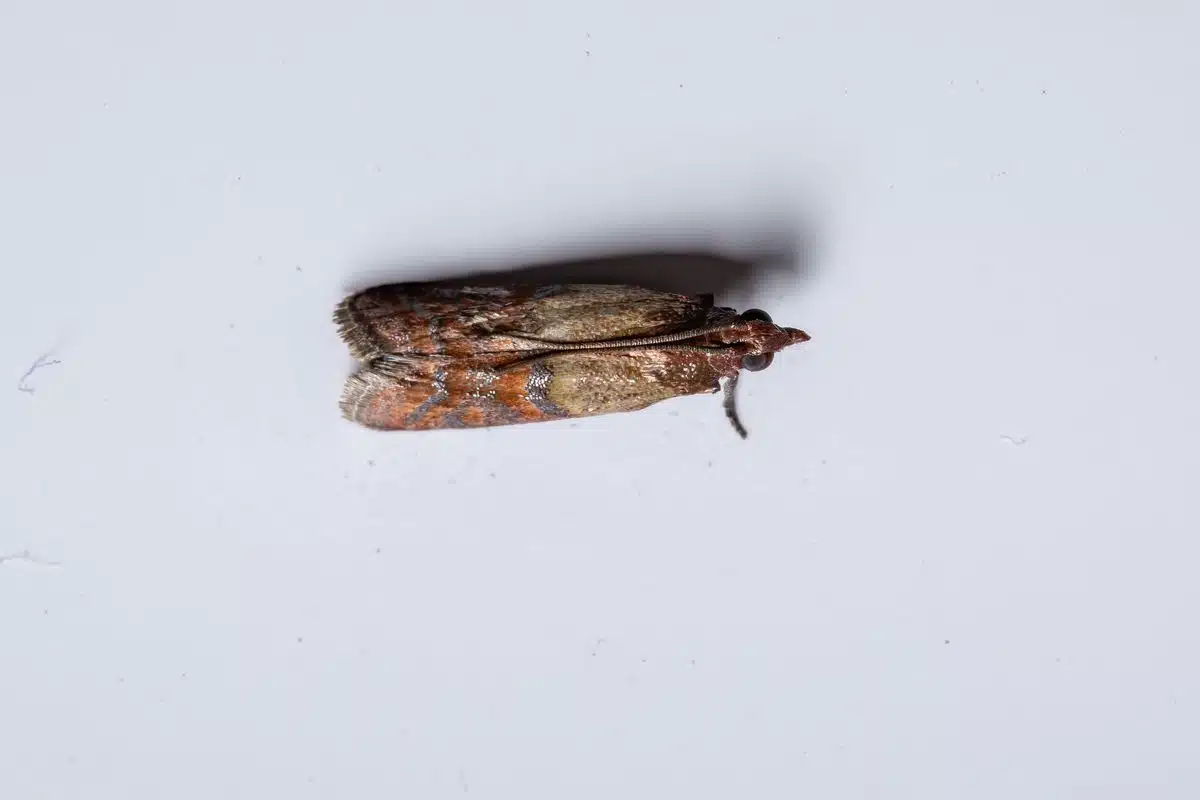
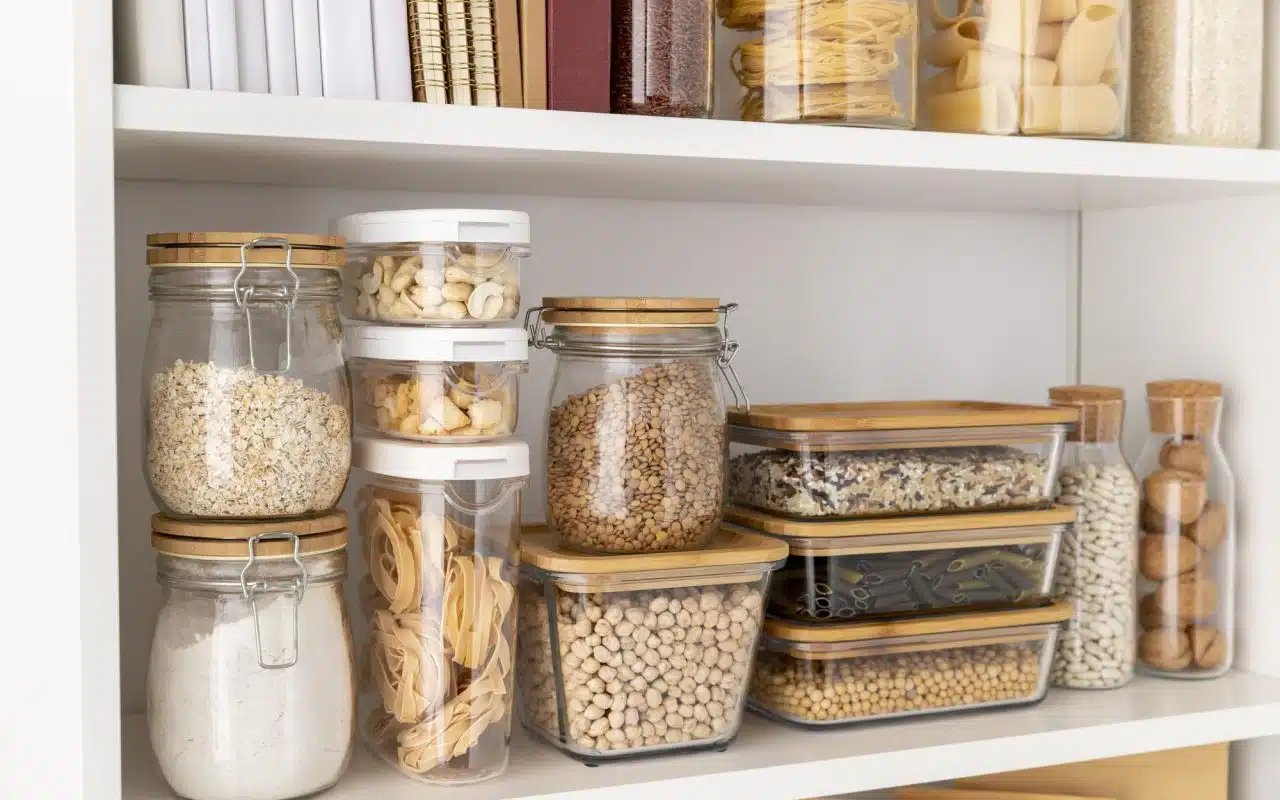
If everything points back to a bag of flour, a box of cereal, or a tin of dried spices, you’re dealing with one of four regulars. A tan, copper-toned moth fluttering low near the cupboards around dusk is the pantry moth (pantry moth); it’s usually the first one people notice, since it flies right past your face instead of staying hidden. Something smaller and reddish-brown crawling through the flour itself, in no particular hurry, is more likely the flour or rice weevil (flour weevil) — the rice weevil flies, so it can turn up some distance from the package it emerged from, while the granary weevil has no functional wings at all and can only walk. Two more reddish-brown beetles turn up in the same cupboards and get mixed up with each other constantly: one fuzzy with grooved wing covers, the other smoother with a slightly humped back. Rather than guess between them here, the side-by-side comparison at small brown bugs with wings is built exactly for that call. Pantry bugs sorts the whole cabinet lineup.
A different set of clues points to the fruit fly (fruit fly). If what you’re seeing is tiny and tan with a pair of red eyes, and it keeps landing on ripe fruit, an unwashed dish, or a trash can that’s overdue for a trip outside, that’s your answer. Fruit flies show up within a day or two of something starting to spoil, and their numbers climb fast; a couple seen today can turn into a small swarm by next week if the fruit or the trash stays put. How to get rid of fruit flies works through the likely breeding sites in order.
Then there’s the pair tied to moisture rather than food: gnats and drain flies (gnats and drain flies). These are small, dark, and weak fliers, more likely to hover unsteadily than to zip across the room. Look for them near a floor drain, a garbage disposal, or the damp soil of a windowsill plant. They’re breeding in the film built up inside a slow drain or in soil that’s been kept too wet, not in anything sitting in your cupboards. Sorting a gnat from a fruit fly from a drain fly comes down to which of those three sources it keeps going back to.
Whichever one turns out to be yours, the fix takes the same shape every time: find the source, clear it out, and make it harder for the next generation to start. On the pantry side, airtight containers and pheromone traps cover the two products that make the biggest dent, and product comparisons has the wider list if you want to look past those two. Still not sure what you’re looking at? the identification hub has the full lookup, and the prevention guide walks through pantry, drain, and moisture fixes room by room.
FAQ
Could I have more than one of these at once?
Yes, and it’s more common than it sounds. A pantry infestation and a drain gnat problem have nothing to do with each other, since one lives in stored food and the other in a wet drain or an overwatered plant, so clearing one won’t touch the other. Check each source on its own.
Why do I mostly see them in the evening?
Pantry moths in particular are more active around dusk, and kitchen lighting tends to draw them out right when you’re cooking or cleaning up. Fruit flies and drain gnats don’t follow that same pattern; they’re around all day, just easier to miss until you’re standing still at the sink.
I cleared the counter and they’re still showing up. What’s going on?
That usually means the source wasn’t actually removed. A moth or weevil infestation can sit inside a sealed bag of flour or a box pushed to the back of the shelf, and drain gnats keep hatching until the drain itself gets cleaned, not just wiped around. The prevention guide has the room-by-room version of this.