 Food contamination
 Short answer
If you’re seeing small tan-and-copper moths near your cupboards, here’s the fast version:
- Toss any package with webbing, larvae, or droppings inside it
- Check every other open food package in the pantry, not just the one you found
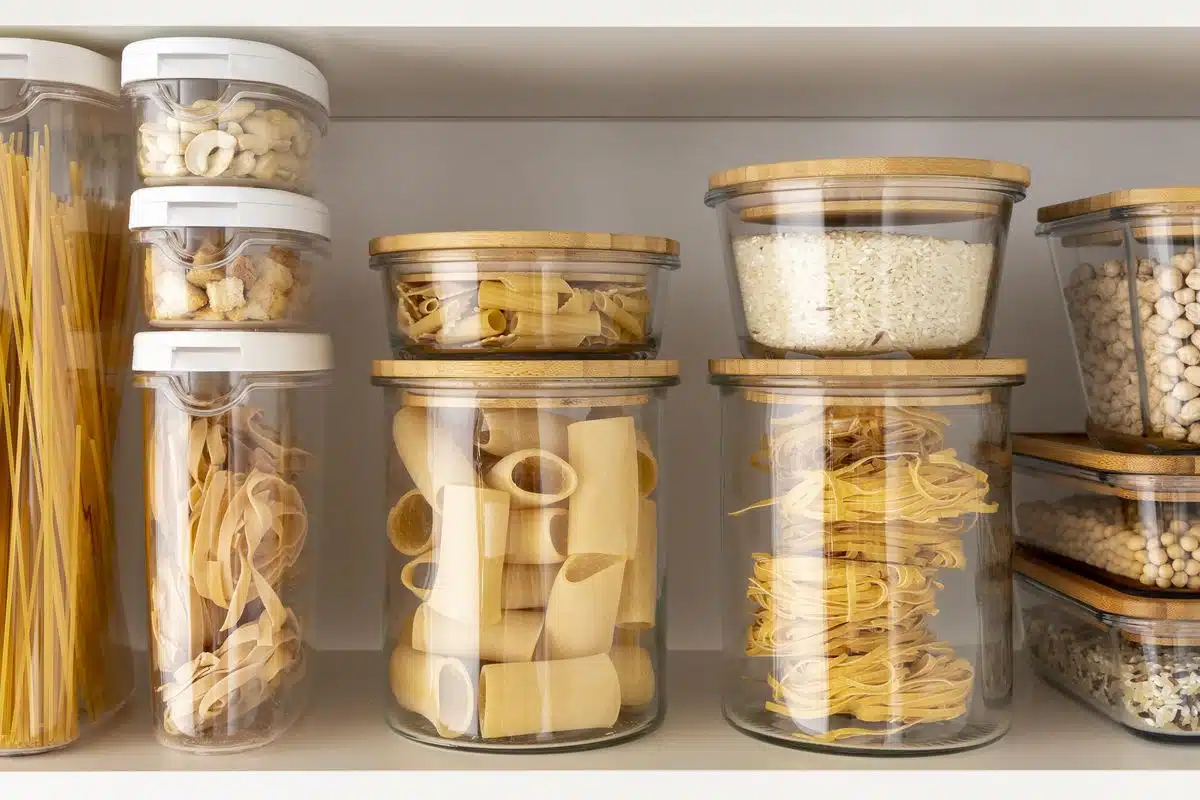
- Vacuum shelves thoroughly and switch to airtight containers
Identification
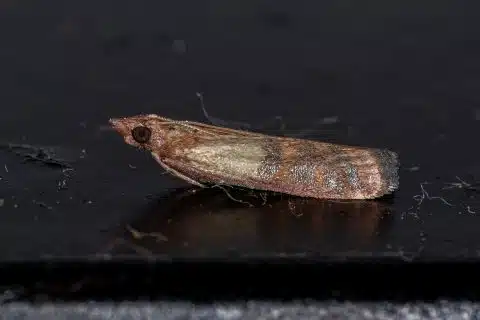
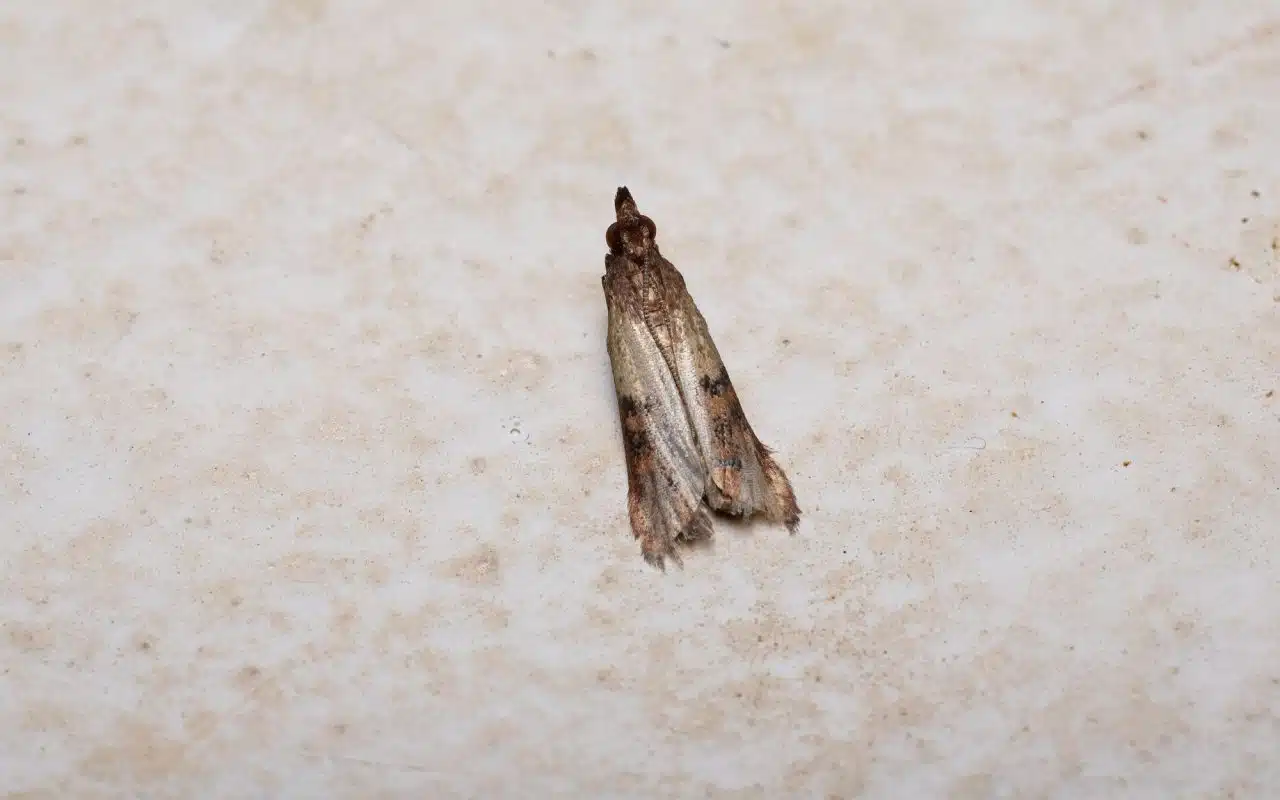
The adult pantry moth (Plodia interpunctella) is small: the body runs about 8 to 10 millimeters, with a wingspan of roughly 16 to 20 millimeters, about 3/4 inch. The easiest way to identify it is the wing pattern: the base third near the body is a pale gray-tan, and the outer two-thirds is a coppery reddish-brown, giving the wing a clear two-tone look when the moth is at rest. You’ll typically spot them fluttering near kitchen cupboards, pantry shelves, or windows around dusk, since the adults are most active in low light. The larvae do the actual damage: small cream or off-white caterpillars that spin fine silky webbing through flour, cereal, dried fruit, nuts, pet food, and birdseed, often clumping the food together or lining the inside of the package.
Look-alikes
Pantry moths get mixed up with clothes moths fairly often, but clothes moths are smaller, a more uniform buff or golden color without the two-tone wing pattern, and they feed on wool, fur, and fabric rather than food. If you’re finding webbing in flour or cereal, that rules out a clothes moth. The other common mix-up is a random moth that wandered in from outside and is resting near a window or light fixture. Those tend to be larger, don’t cluster near food storage, and move on once you let them back outside. A pantry moth keeps showing up in the same spot near your stored dry goods.
The shortcut: Before you restock the pantry, check spice jars and bags of birdseed too. Both get overlooked constantly and are among the pantry moth’s favorite hiding spots.
FAQ
Are pantry moths dangerous or do they bite?
No. Pantry moths don’t bite. They contaminate stored dry goods with webbing, larvae, and droppings. Extension factsheets record no disease associated with pantry pests, but UC IPM adds a qualified caution that they can introduce microbes that go on to produce mycotoxins in food stored warm and humid, which is why the guidance is to discard an infested package rather than sift it.
Why do I still have pantry moths after throwing away the food I found them in?
Larvae wander before they pupate, so they’re often not in the same package where you spotted the moth. Check every open bag and box in the pantry, not just the obvious one, and look in cracks and corners of shelving where a larva may have crawled off to spin a cocoon.
How do I get rid of pantry moths for good?
Find and discard every infested package, vacuum out the cupboard thoroughly including corners and shelf tracks, wipe the shelves down, and switch to storing dry goods in airtight containers going forward. Which pantry bug you have is worth confirming first if the webbing does not look like moth work, and the pantry moth removal protocol has the full sequence. Pheromone traps can help you monitor whether the infestation is actually gone. If moths keep coming back despite doing all this, it’s worth calling a licensed pest control professional.
Sources
- University agricultural extension entomology departments
- National Pest Management Association resources on stored-product pests
- Cooperative Extension Service stored-product pest fact sheets