Short answer
A pantry moth larva is a small caterpillar with a hard brown head and three pairs of tiny legs behind it. The one on your ceiling is not feeding up there. It ate its fill inside a package of dry food, then left to find a seam for its cocoon.
- Head and legs mean a moth larva. A maggot has neither, and points to something wet and rotting, not flour.
- There is no pantry moth nest. There is an infested package, and larvae walking away from it.
- Silk is the evidence that matters: flour that clumps in strands, a filmy layer under a jar lid. The pantry moth profile covers the adult.
Most people meet this insect twice. First as a pale worm in the rice. Then, days later, as a single worm inching along a ceiling in a room with no food in it. The second sighting explains the first.
What a pantry moth larva actually looks like
Indian meal moth larvae (Plodia interpunctella) hatch nearly white and barely visible. Bigger ones pick up color and can look yellowish, greenish, or pink, which throws people off. Penn State Extension puts the full-grown length at half to five-eighths of an inch; Colorado State University Extension describes a mature caterpillar of roughly two-thirds of an inch.
Two features settle it. The head is a hard brown capsule, clearly separate from the pale body. Behind it sit three pairs of true legs plus five pairs of fleshy prolegs. That layout is why it crawls in slow loops instead of wriggling.
Why larvae turn up on the ceiling and the walls
Here is the fact that explains the rest. Colorado State University Extension notes that a full-grown Indian meal moth caterpillar leaves its food source and travels a considerable distance before it pupates. It is not lost and it is not hungry. It has finished eating and wants a tight seam to spin a cocoon in.
A ceiling offers that. So does the joint where a cabinet meets the wall, the gap behind a shelf, or a hard fold in packaging. The awkward part: where you saw the larva says almost nothing about where the food is. People find one on a bedroom ceiling and search the bedroom. The source is a package elsewhere, and the larva walked.
There is no pantry moth nest
“Pantry moth nest” is one of the first things people search after a sighting, and the picture behind the phrase costs them time. Nests belong to wasps, ants, and birds. Moths do not build one, so there is no structure to find and remove.
What exists is messier. Each larva feeds in or beside a tube of silk and droppings it spins as it goes, and that tube shelters one animal, not a colony. A bad bag of cornmeal holds silk tubes tangled through the grain and no headquarters. The cocoon on your ceiling is one caterpillar, finishing.
Stop hunting for the nest: looking for one hidden structure is why these infestations come back. Each infested package is its own starting point, and the clean-looking bag beside it is often the source.
Moth larva, maggot, or carpet beetle larva?
This matters, because the two findings send you in opposite directions. A caterpillar has a hardened head and true legs; a maggot has neither. The UC IPM larval key notes that fly larvae are legless and lack a head capsule, and University of Minnesota Extension describes seedcorn maggots as pointed at the front, blunt at the rear.
| Check | Pantry moth larva | Fly maggot | Carpet beetle larva |
|---|---|---|---|
| Head | Hard brown capsule, visible | None; tapers to a point | Present; bristles are what you notice |
| Legs | Three pairs plus five pairs of prolegs | None | Three pairs, no prolegs |
| Surface | Smooth, cream to pink or green | Smooth, glossy, cream | Bristly or hairy, often banded |
| Silk | Yes, everywhere it goes | No | No; leaves shed skins |
| Points to | A package of dry stored food | Something wet and decaying | Wool, fur, feathers, dead insects |
That last row is the entire point. A maggot in the kitchen means something is rotting: under the trash can liner, in a drain, in a forgotten potato. A different search entirely. If the thing is bristly rather than smooth, you are probably looking at a carpet beetle larva, which eats keratin, not flour.
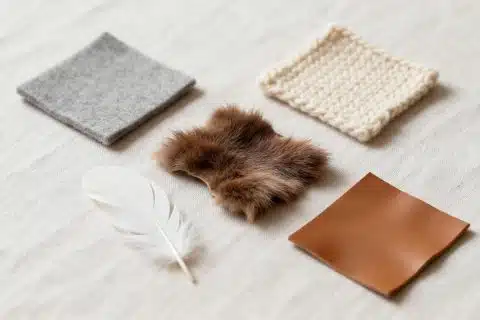
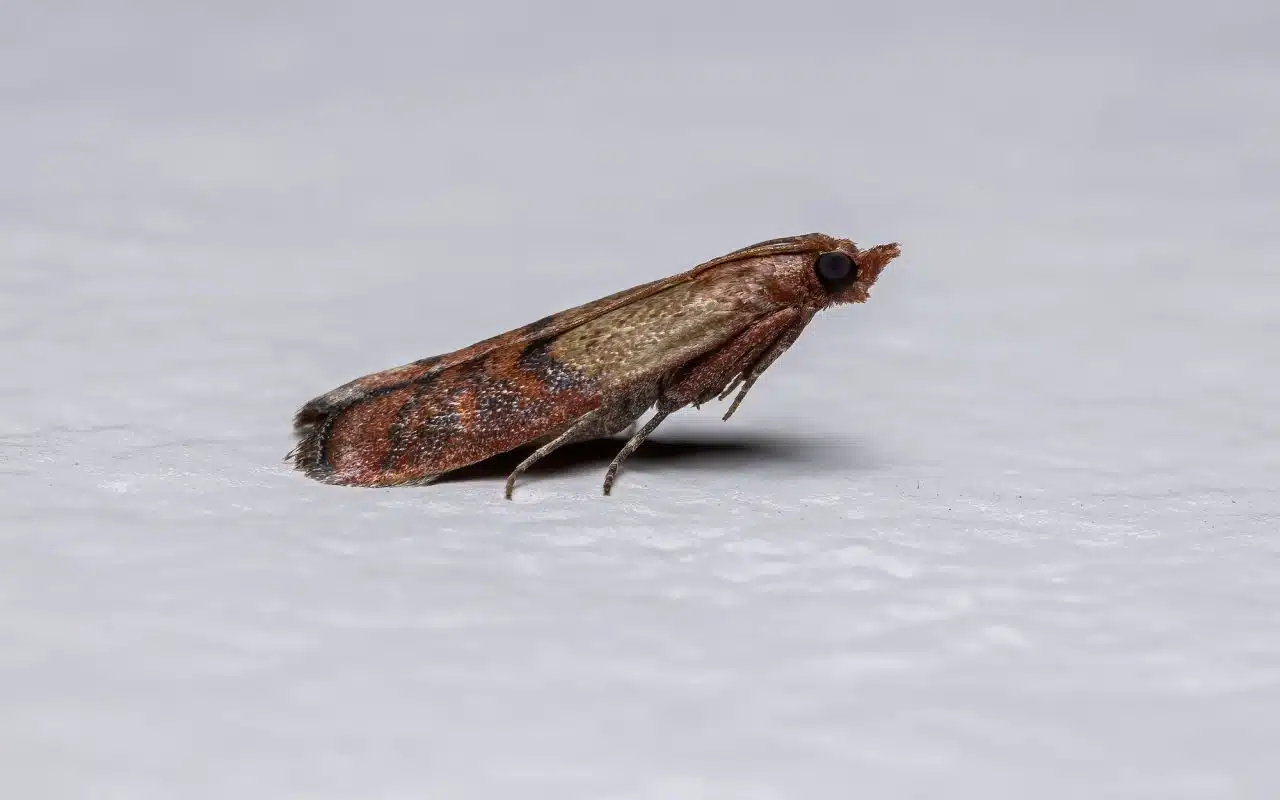
Clothes moth larvae spin silk too, the other half of the confusion, but they feed on wool and similar animal fibers rather than grain. If the silk is on a sweater instead of in a jar, read clothes moth larvae; if you only saw the adult, pantry moth vs clothes moth separates them.
Follow the silk, not the larva
Colorado State University Extension notes that the larva leaves silk threads wherever it goes, and that the webbing is often heavy enough to catch the eye. Silk is easier to find than the caterpillar, which by then has usually left.
In a cupboard: flour that clumps in strands instead of pouring, a gray filmy layer under a jar lid, oat flakes matted to a container wall. Any of those beats a single worm, because it tells you larvae fed right there.
Getting rid of them starts with checking everything dry: flour, rice, cereal, pasta, dried fruit, nuts, spices, chocolate, pet kibble, birdseed. The last two are the ones people skip, since they live outside the kitchen.
Do not stop at the first bad bag: pulling out one infested package feels like a resolution and usually is not. Larvae disperse before anyone notices, so open every dry package on the shelf, sealed ones included.
Where pantry moths come from, and where the eggs are

Almost nobody gets pantry moths because their kitchen is dirty, and the same holds for the other five pantry bugs. The insect arrives inside a package that was already infested, usually before it reached the store shelf, and the eggs are too small to notice at checkout. That is the honest answer to what causes pantry moths, and why a spotless pantry is not much protection.
The eggs are whitish and oval, and Clemson’s Home and Garden Information Center notes they are difficult to see without magnification. Females lay them on or beside food, singly or in small clusters, never on walls or ceilings.
Containers earn their place here, though not the way people assume. An airtight container will not kill anything sealed inside it. It decides whether an infestation stays in one bag of oats or spreads across a shelf. A real gasket is what makes that work; the airtight container guide covers which lids actually seal. The rest of the routine is in how to prevent pantry moths.
FAQ
Are the worms in my flour maggots or moth larvae?
Moth larvae, almost certainly. Check the front end: a pantry moth larva has a dark head capsule and three pairs of legs; a maggot has neither and tapers to a point. Dry flour does not support fly larvae, which need moist rotting material.
Where do pantry moths lay their eggs?
On or beside food, usually inside the package the larvae will feed in. Clemson Extension calls the eggs hard to see without magnification. Anything on a wall or ceiling is a wandering larva or a cocoon.
What causes pantry moths if my kitchen is clean?
Groceries. The insect comes home in a package infested before you bought it, which wiping down shelves will not prevent. Containment does more than cleaning here. The routine is in how to prevent pantry moths.
How far will a larva crawl from its food?
Far enough that the room you are in may not be the room the food is in. Extension sources say a considerable distance without giving a figure, so check every dry package in the house.
Could it be a clothes moth larva instead?
What the silk is attached to answers that. Grain, cereal, or pet food point to a pantry moth; wool, fur, or feathers to a clothes moth. See clothes moth larvae.
Sources
- Colorado State University Extension, Indian Meal Moth, fact sheet 5.598.
- Penn State Extension, Indian Meal Moth.
- Clemson Cooperative Extension Home & Garden Information Center, Indian Meal Moth.
- University of Minnesota Extension, Pantry pests: insects found in stored food; Seedcorn maggot.
- University of California Statewide Integrated Pest Management Program, Pantry Pests; UC IPM key to larval body forms.