 Food contamination
 Short answer
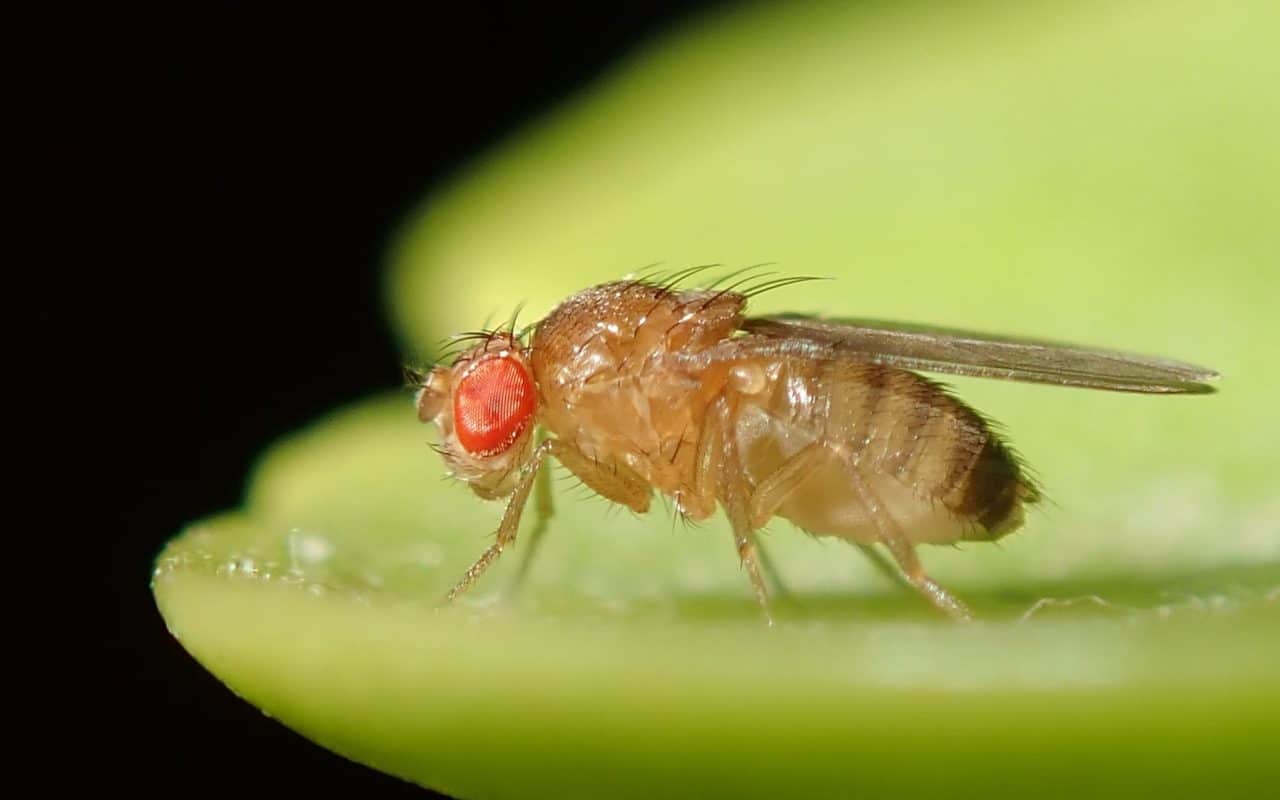
A fruit fly is small, tan-colored, and has bright red eyes that are easy to spot once you know to look for them. It lands directly on ripe or rotting food instead of hovering near soil or drains.
- Check the eyes: most fruit flies have vivid red eyes, on a light brown body about 3 mm (1/8 in) long. Dark eyes don’t rule one out, since D. repleta has them, so read eye color together with where it lands. If what you’re seeing is darker and flying weakly near potted plants, it’s probably a different insect.
- Find where they’re landing. A bowl of overripe fruit, a trash can with juice residue, or a recycling bin usually turns out to be the breeding site, not just a feeding stop.
- Clear out every fermenting source you find. The source hunt, in order, works through the likely spots, and our prevention guide covers how to keep them from coming back.
Identification

Fruit flies in house environments are usually the first sign that something sweet is fermenting somewhere it shouldn’t be. Adults measure about 3 mm (1/8 in), roughly the size of a sesame seed, and have a body that’s tan to light brown rather than black or gray. The usual giveaway is the eyes: in most species bright red, disproportionately large for the size of the insect, and visible even to the naked eye if you get close enough. Their flight is erratic and looping rather than a straight line, and instead of buzzing around a room they tend to converge on whatever piece of fruit or spilled juice drew them in and land directly on it.
The reason an infestation can seem to appear overnight is the life cycle. From egg to adult, Drosophila melanogaster can complete a full generation in 8 to 10 days at 85°F when conditions are warm and food is available. A few flies noticed on Monday can become dozens by the weekend if the source isn’t found and removed. Anywhere organic matter is fermenting is a candidate, from a fruit bowl to an unrinsed recycling bin, and the fruit fly removal protocol runs the full list of stops in order of probability.
Fruit flies don’t bite and don’t sting. The concern is food contamination: extension sources note these flies move between decaying material and food and can carry bacteria onto it, so treat a fruit fly problem as a sanitation question rather than a bite risk. Activity tends to peak in late summer and fall, when fruit ripens faster than most households go through it and sits out on the counter a day or two longer than it would in cooler months.
Look-alikes
Fruit flies get mixed up constantly with fungus gnats and drain flies, and the confusion makes sense since all three are small and show up in the same rooms. The distinction comes down to color, flight pattern, and where you actually find them. A fungus gnat is darker, almost blackish, and flies weakly and low, usually hovering over the soil of a potted plant rather than landing on food. A drain fly looks nothing like either one up close: it has a fuzzy, moth-like body and tends to sit still on tile near a drain instead of flying actively around a kitchen. If what you’re looking at matches either of those descriptions better than the red-eyed, fruit-seeking insect described above, our guide to gnats in the house: fungus gnats or drain flies walks through both in detail.
The shortcut: bait a bowl with cider vinegar, add a drop of dish soap, and leave it out overnight near the heaviest activity. The soap is what catches them, breaking the surface tension so a fly that lands sinks. The full cider vinegar trap method covers the ratios.
FAQ
Where are fruit flies coming from if I don’t see any old fruit out?
Sugary residue trapped in a drain, a garbage disposal, or the seam of a trash can lid can support a breeding population with no fruit anywhere in sight. The full source hunt runs those stops in order of probability.
How long does a fruit fly infestation usually last?
Once you find and remove the breeding source, nothing new hatches, and the infestation ends when the remaining adults die off. Colorado State University puts that at roughly two weeks. If flies are still turning up well past that, there’s likely a second fermenting source somewhere you haven’t found yet.
Can fruit flies spread through a whole house, or do they stay near the kitchen?
They stay close to whatever food source is drawing them, which is almost always the kitchen or anywhere food waste sits, like a bathroom trash can or a basement recycling area. If you’re seeing small flies in a room with no food source at all, it’s worth double-checking with our identification hub that you’re not actually looking at a different insect.
Sources
- Colorado State University, Colorado Insect of Interest: Small Fruit Flies (Vinegar Flies).
- Purdue Extension, Department of Entomology, Stored Product Pests: Small Flies, publication E-233-W.