Short answer
An apple cider vinegar trap has two ingredients doing two jobs, and most people get only one right. The vinegar is bait. The dish soap is what catches: Texas A&M AgriLife Extension notes that soap breaks the liquid’s surface tension, so a fly that lands sinks instead of standing on it.
- Use cider vinegar, not distilled white, plus one drop of plain dish soap. Without it you have built a drinking fountain.
- Set it a couple of feet from where the flies keep landing: a fruit bowl, trash can, or unrinsed recycling bin.
- This is a fruit fly trap first. Flies rising out of houseplant soil or resting near a drain ignore it, so check which insect you have first.
If you searched for a gnat trap: “gnat” covers several unrelated small flies, and only one goes into vinegar. Fungus gnats come out of damp potting mix, drain flies out of the film inside a pipe. Neither hunts fermenting fruit, so the bowl sits untouched while the real source keeps producing.
Vinegar attracts. Soap is what catches.
Fruit flies hunt by smell, and what they smell for is fermentation. Colorado State University’s fact sheet on small fruit flies, Drosophila spp., lists vinegar, beer, and mashed banana or peach among the baits highly attractive to them. Their larvae feed on yeasts in fermenting fruit, hence the family’s other name: vinegar flies.
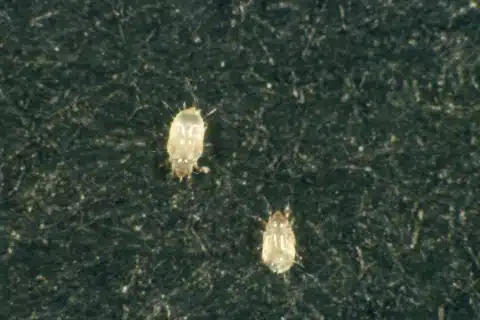
Getting the fly to the jar is the easy half. Landing on a liquid and drowning in it are separate events. An adult is about 3 mm (1/8 in) long, stout bodied, with a tan head and thorax and, in most species, the red eyes people notice first. At that weight a liquid surface behaves like a floor: the insect stands on it, drinks, and leaves.
That floor is what the soap takes away. Texas A&M AgriLife Extension gives the mechanism in one parenthesis in publication ENTO-050: an open bowl with a liquid attractant and a small amount of soap catches flies because soap breaks the surface tension, causing landing flies to drown.
The flip side, that a soap-free bowl lets a fly feed and go, is the plain reading of that sentence, not a separate finding, so take it as reasoning. No extension sheet compares these variations side by side either, so nothing here ranks them or puts a number on any. The page on how sources are chosen here sets out that rule.
Build one: the version to make
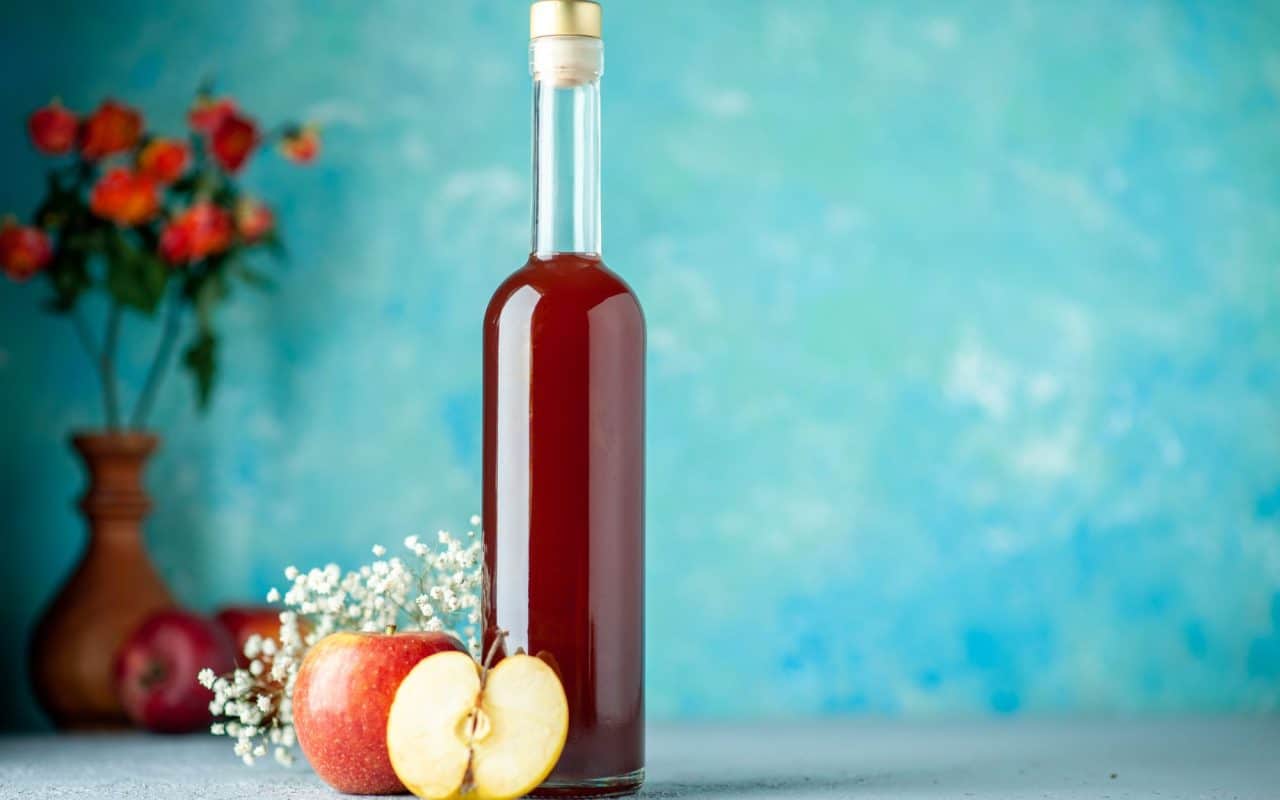
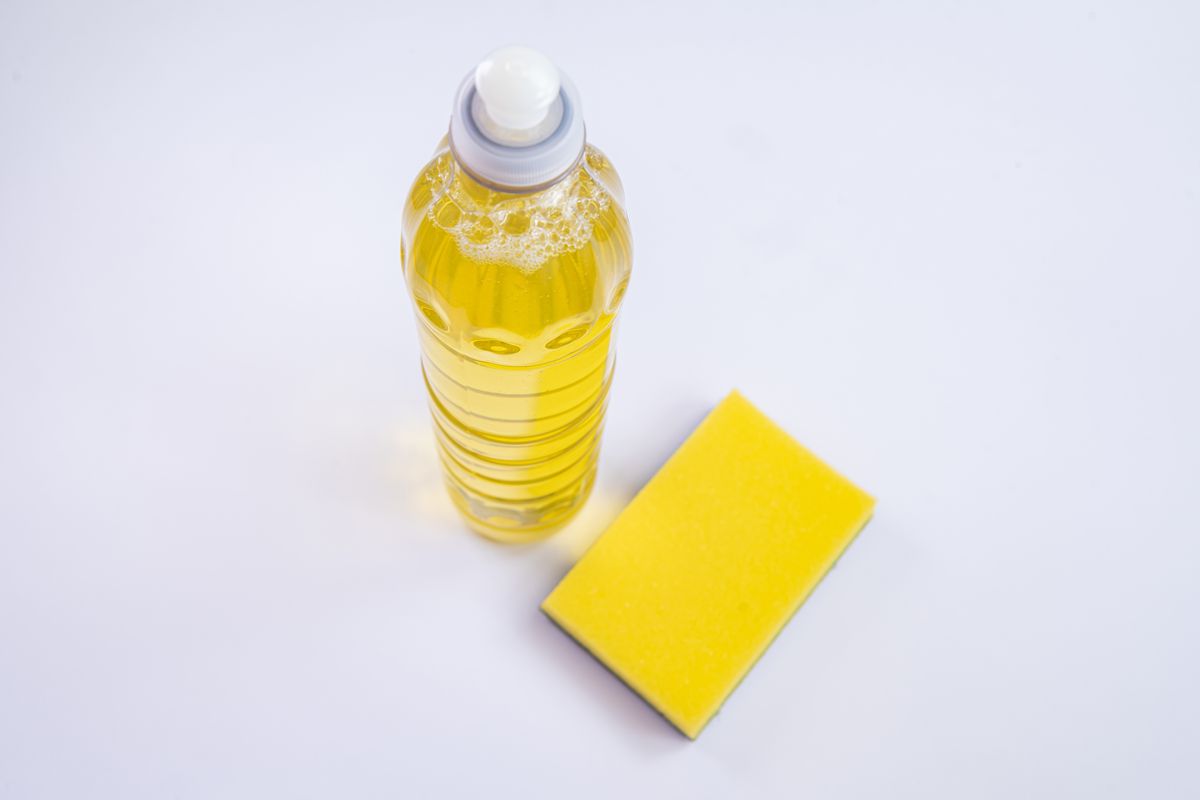
Take a small jar, a juice glass, or a shallow bowl: wide mouth, low sides. Pour in cider vinegar about half an inch (1 cm) deep. Add one drop of plain dish soap and stir it through with the corner of a spoon. You want it dispersed, not whipped into foam, which puts a lid of bubbles over the bait.
Put the jar where the flies already are: a couple of feet from the fruit bowl, the trash can, or the sink. Leave it uncovered day and night, out of any draft or fan airflow. Refresh the bait every few days, roughly the interval Texas A&M gives.
Clear the counter first: the jar competes with every open bag of fruit in the room, and real fruit usually wins. Refrigerate the bananas and tie off the trash first.
Texas A&M is direct that bait traps alone rarely provide adequate fly control; they pinpoint where a problem comes from and knock down adults while you deal with the source. Colorado State and Purdue Extension say it differently: an indoor infestation starts from a breeding site that must be found and removed. The trap buys quiet; finding and clearing the source the trap is pointing at is what ends it. The step-by-step protocol for small flies indoors and the general removal guide for house bugs cover the rest.
What each variation actually changes
Every version circulating online changes one of two things: how strongly the bait smells, or what happens once a fly arrives.
| Variation | What it changes mechanically | What it does not do |
|---|---|---|
| Cider vinegar alone | Puts a fermentation smell in the room. Colorado State lists vinegar among the baits highly attractive to these flies. | Nothing holds the insect at the surface. |
| Cider vinegar plus a drop of dish soap | Drops the surface tension so a landing fly sinks (Texas A&M, ENTO-050). | Does not make the bait smell stronger. |
| Plastic wrap with holes in it | Makes the jar easy to enter, awkward to leave. Published designs use a funnel: a paper cone or an inverted soda bottle top. | Kills nothing by itself. A fly that finds a hole leaves. |
| Red wine or beer instead of vinegar | Another fermenting bait; Texas A&M lists red wine and beer alongside cider vinegar. | Changes nothing at the surface. Wine with no soap has the same flaw. |
| Sugar water and yeast | Starts fermentation in the jar. Texas A&M notes a little yeast makes a bait more attractive. | Leaves the surface problem untouched; the same sheet warns the odor can be unpleasant indoors. |
Four of the five adjust the bait. One changes whether the insect can walk away.
Why your bowl caught nothing
Start with the soap, because that is the piece that goes missing. A jar of straight vinegar is a well-attended bar where every customer goes home. If it has sat two days and looks as you poured it, that is why.
Then look at what the jar is up against. A bowl of peaches going soft eighteen inches away is the real thing; the trap is an imitation. Same for a disposal with sugary residue or a bin of unrinsed cans, both on Purdue Extension’s list of sites to inspect.
White vinegar turns up in a lot of recipes. The extension sheets that name a bait name cider vinegar, wine, beer, or mashed fruit; none names distilled white. As reasoning rather than a published finding: distilled white is acetic acid and water, without the fruit odors a fly reads as somewhere worth laying eggs.
Sometimes the trap is fine and the insect is wrong. If what you are watching is not a red-eyed fly landing on fruit, the pages on small black flying bugs that are not fruit flies and tiny brown flying bugs indoors get there faster than another jar.
Home remedies for gnats that aren’t traps
The most effective home remedy for fungus gnats is a watering habit. UC IPM’s Pest Note says to let the surface of container soil dry between waterings and to clear standing water out of saucers. Purdue Extension adds a layer of sand over the dried surface. That reaches the stage that matters; a jar of vinegar does not.
Yellow sticky cards are the other thing UC IPM recommends for fungus gnat adults, cut small and staked in the pot. A card that keeps filling means the pot is still producing.
Bleach or boiling water down a drain is worth naming because it is common. UC IPM’s Pest Note on moth flies calls it a misconception: those treatments do not remove the organic film inside the drain, where the larvae live. A stiff brush on the pipe wall does. That pass is set out in the step-by-step drain fly protocol.
The rest of the usual list is housekeeping with better branding: take the trash out before it ferments, rinse containers before they go in the trash. The guide to reducing indoor humidity, the seasonal prevention checklist and the house-wide prevention guide cover those habits. Insecticide is not the answer, and the page on when a bug spray is worth using says why.
If the trap catches nothing, it’s probably not fruit flies
Fungus gnats, family Sciaridae, mostly Bradysia and Orfelia, run 1.5 to 3 mm (1/16 to 1/8 in) and look like miniature mosquitoes: long thin legs, antennae longer than the head. UC IPM notes adults are drawn to light. Females lay in damp potting mix, and UC IPM is explicit that effective control targets those immature stages rather than the mobile, short-lived adults. A vinegar jar reaches only adults, the wrong end of a cycle running about 17 days at 75 °F (24 °C).
Drain flies, family Psychodidae, usually Psychoda or Clogmia, are about 3 mm (1/8 in), hairy wings held roof-like at rest, weak fliers that hop rather than fly and settle on walls near water. They develop in the slimy organic matter coating sink and shower drains; UC IPM puts egg hatch at roughly 48 hours. Nothing on a counter reaches that. The fix is mechanical: how to get rid of drain flies by scrubbing the film out of the pipe.
The identification page for fungus gnats and drain flies separates those two; the fruit fly identification page confirms the red-eyed one. The side-by-side rundown of gnat vs fruit fly, which has three answers rather than two sorts all three at once. If it fits none of them, the pages on very tiny bugs indoors and tiny black bugs that appear all at once pick up the rest, and the kitchen bug guide starts from the room.
FAQ
Is apple cider vinegar better than white vinegar?
No comparison has been published, so no number belongs here. What can be said is which baits the extension sheets name: Colorado State lists vinegar, beer, and mashed fruit; Texas A&M lists cider vinegar, red wine, beer, and sugar water with yeast. Distilled white is on neither list.
How much dish soap, and does more work better?
One drop, stirred in gently. The soap has one job, breaking the surface tension, and it does that at a low concentration. More mostly produces foam, and bubbles block the smell that brings flies in.
Do I need plastic wrap over the top?
Not if the soap is in there. Perforated wrap is a homemade version of the funnel entrance Colorado State and Texas A&M illustrate; its job is making the jar awkward to leave, not killing anything.
Will the trap end the infestation on its own?
Texas A&M states plainly that bait traps alone rarely provide adequate fly control. Colorado State describes what happens once the breeding site is cleared: numbers fall within days, and the infestation ends as remaining adults die off over about two weeks.
Flies went in for a few days, then stopped. What changed?
Either the bait aged past its useful window, which Texas A&M puts at every few days, or the source got cleared and no new adults are emerging. Pour a fresh jar and watch two days: fresh bait with no takers is a good sign.
Sources
- Texas A&M AgriLife Extension Service, Indoor Flies and Their Control, publication ENTO-050.
- Colorado State University, Colorado Insect of Interest: Small Fruit Flies (Vinegar Flies).
- University of California Statewide Integrated Pest Management Program, Pest Notes: Fungus Gnats, UC ANR Publication 7448.
- University of California Statewide Integrated Pest Management Program, Pest Notes: Moth or Drain Flies, UC ANR Publication 74167.
- Purdue Extension, Department of Entomology, Stored Product Pests: Small Flies, publication E-233-W.