 Nuisance only
 Short answer
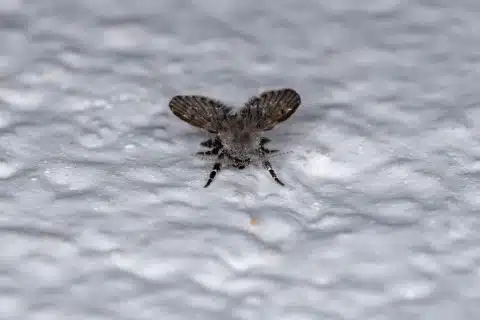
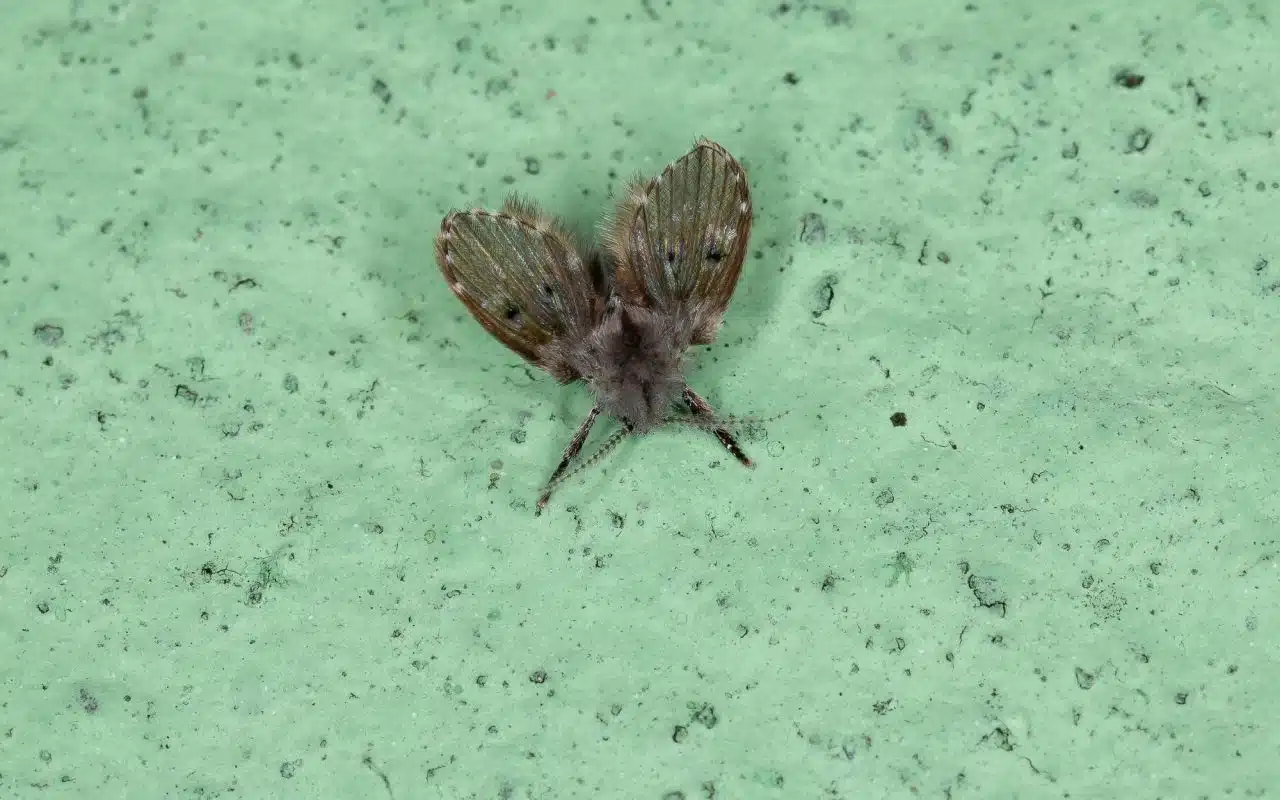
If you’re finding gnats in house near a potted plant or drifting around a windowsill, you’re probably looking at fungus gnats. If instead you’re seeing small fuzzy specks resting on the tile near a sink, tub, or floor drain, that’s more likely a drain fly. Both are common indoors, neither bites, and both have completely different breeding sites, so the fix only works once you know which one you actually have. Here’s the fast version.
- Look at where you’re seeing them: near houseplant soil or a windowsill points to fungus gnats, resting on a wall or tile near a sink or drain points to drain flies.
- Treat the actual breeding site. Let potting soil dry out between waterings, consider bottom-watering, and top-dress it with sand for fungus gnats. Scrub inside the drain pipe below the waterline with a bottle brush for drain flies.
- Set out a few yellow sticky traps and check them over one to two weeks. A real drop in catches means you found and cleared the right breeding site.
Identifying gnats in house
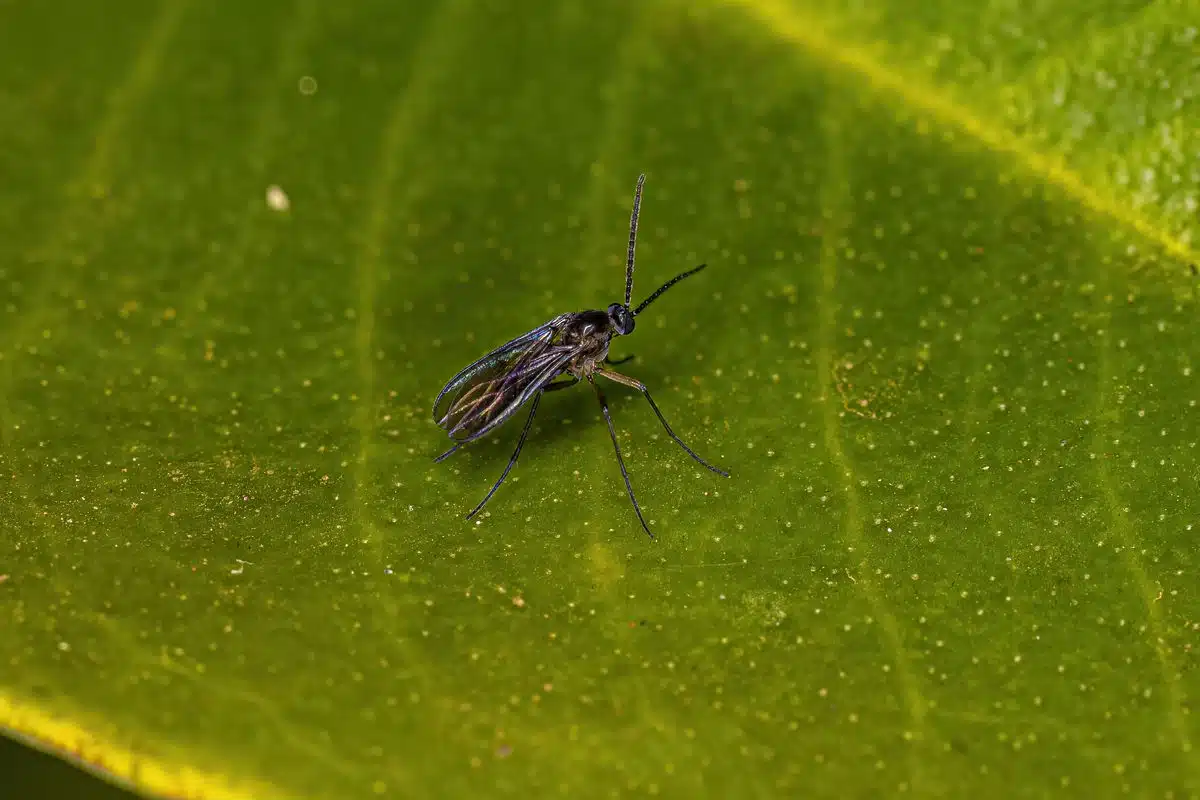
Most gnats in house environments turn out to be one of two unrelated flies, and the difference shows in body shape before you’d ever need a magnifying glass. Fungus gnats belong to the family Sciaridae, mostly the genera Bradysia and Orfelia, and measure about 1.5 to 3 mm (1/16 to 1/8 inch) long. They’re slender and dark gray to black, with long thin legs and a mosquito-like body, and they’re weak fliers that hover close to houseplant soil or gather on nearby windowsills rather than covering much distance. Drain flies, also called moth flies, are members of the family Psychodidae, usually Psychoda or Clogmia, and run to roughly 3 mm (1/8 inch). They’re shorter and fuzzy, almost moth-like at a glance, and hold their hairy wings tented roof-like over the body at rest instead of flat. They’re also weak fliers, but they tend to sit still on a wall or tile near a sink, tub, or floor drain and move in short hops rather than sustained flight.
Look-alikes
Fungus gnats get mistaken for fruit flies, but fruit flies are tan to amber with a rounder, more oval body, and they cluster over ripening produce or a trash can rather than potting soil. Drain flies get mistaken for phorid flies, which also breed in decaying organic film around drains and garbage. The tell there is movement: phorid flies dart and run erratically across a surface, while drain flies sit low and still, then hop rather than sprint, and lack the phorid’s smooth humpbacked profile.
The shortcut: a liquid drain product usually just runs down the pipe without touching the gel-like film coating the inner walls where drain fly larvae actually live. A bottle brush worked below the waterline clears that film directly. If you’re not sure which drain is the source, tape a piece of clear tape over the opening overnight, sticky side down with a small gap for air, and check in the morning for flies caught underneath.
FAQ
Do fungus gnats or drain flies bite?
No. Neither fungus gnats nor drain flies bite people or pets, and neither is a documented vector of disease in homes. UC IPM does note that drain flies could carry pathogens up from the drain they breed in, and that fragments of dead adults can become airborne allergens.
I cut back on watering and I’m still seeing gnats in house near my plants. Why?
Two common reasons. First, the soil may still be staying damp longer than it looks, especially if a saucer underneath is holding standing water. Empty it after each watering. Second, double-check you’re actually dealing with fungus gnats and not drain flies coming from a nearby sink, since the two get confused and the fix for one won’t touch the other.
Will fungus gnat larvae hurt my houseplant?
Larvae mainly feed on fungus and organic matter in the soil, but at high density they can also nibble on fine roots, which may stress a seedling or a young cutting. An established, healthy plant usually shrugs this off. Letting the topsoil dry out between waterings removes the moist conditions the larvae need either way.
Sources
- University extension entomology and integrated pest management (IPM) fact sheets