Short answer
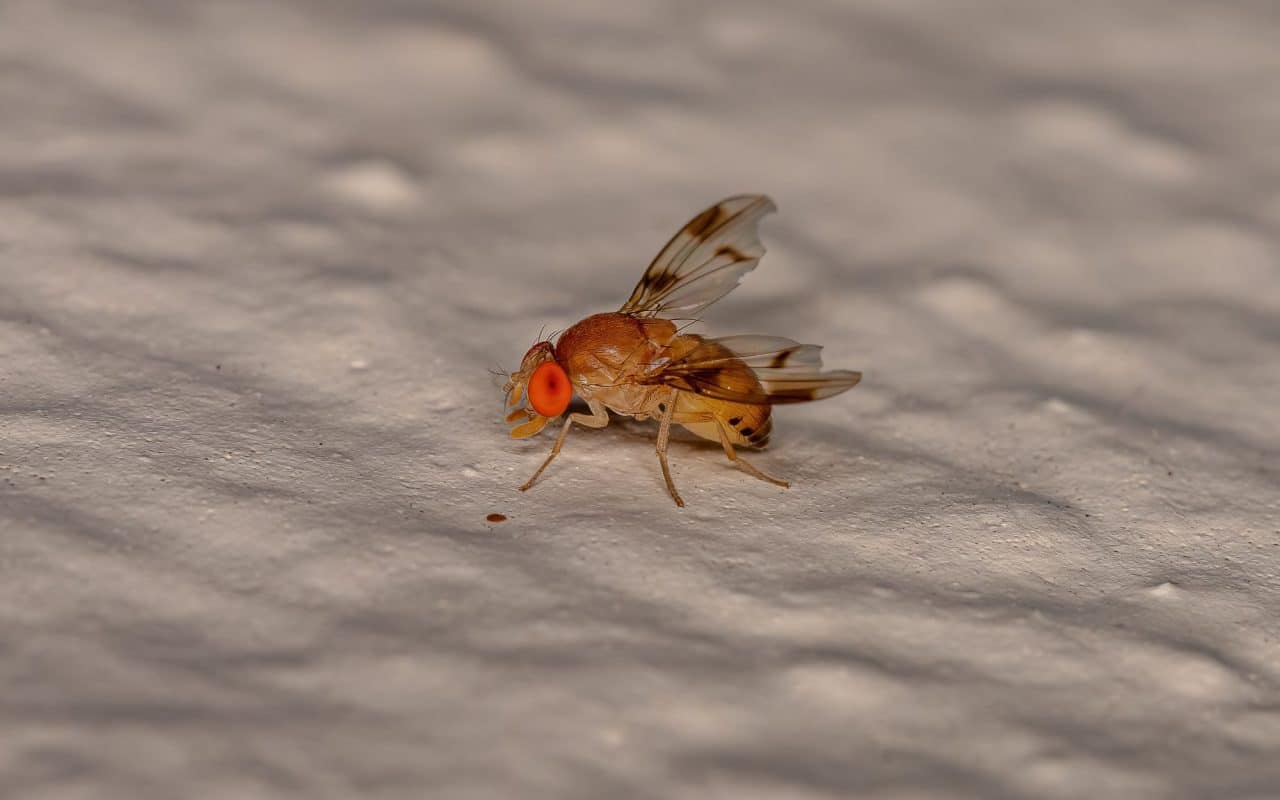
If what you’re seeing is tan to light brown, has bright red eyes, and keeps landing directly on the fruit bowl, the trash can, or the recycling bin instead of just flying past them, it’s a fruit fly. In a kitchen, that combination points to one insect.
- Check for the red eyes and the tan body, about 3 mm (1/8 in), roughly the size of a sesame seed. Landing right on the fruit itself, not just hovering near it, confirms the ID.
- Trace it past the fruit bowl. The actual breeding source is often a garbage disposal, an empty recycling bin, or a trash can with juice residue in the bottom.
- Once it’s confirmed, the source hunt walks through how to clear the breeding site out for good, and the fruit fly identification guide covers the look-alikes.
Which bug is it?
Fruit flies are the most common reason a kitchen suddenly has small flies in it, and the identification usually goes fast. Look for a tan or light brown body about 3 mm (1/8 in) long, with eyes that are bright red and easy to spot once you know to check for them. They fly in loose, looping circles rather than straight lines, and instead of drifting around the room, they tend to land directly on whatever fruit, juice, or fermenting scrap drew them in. If that matches what’s on your counter, the fruit fly page covers the full identification along with the protocol for tracking down the fermenting source, which is the part most people get stuck on. While you narrow that down, a bowl of cider vinegar with a drop of dish soap in it will pull the adults out of the air and confirm what you’re dealing with.
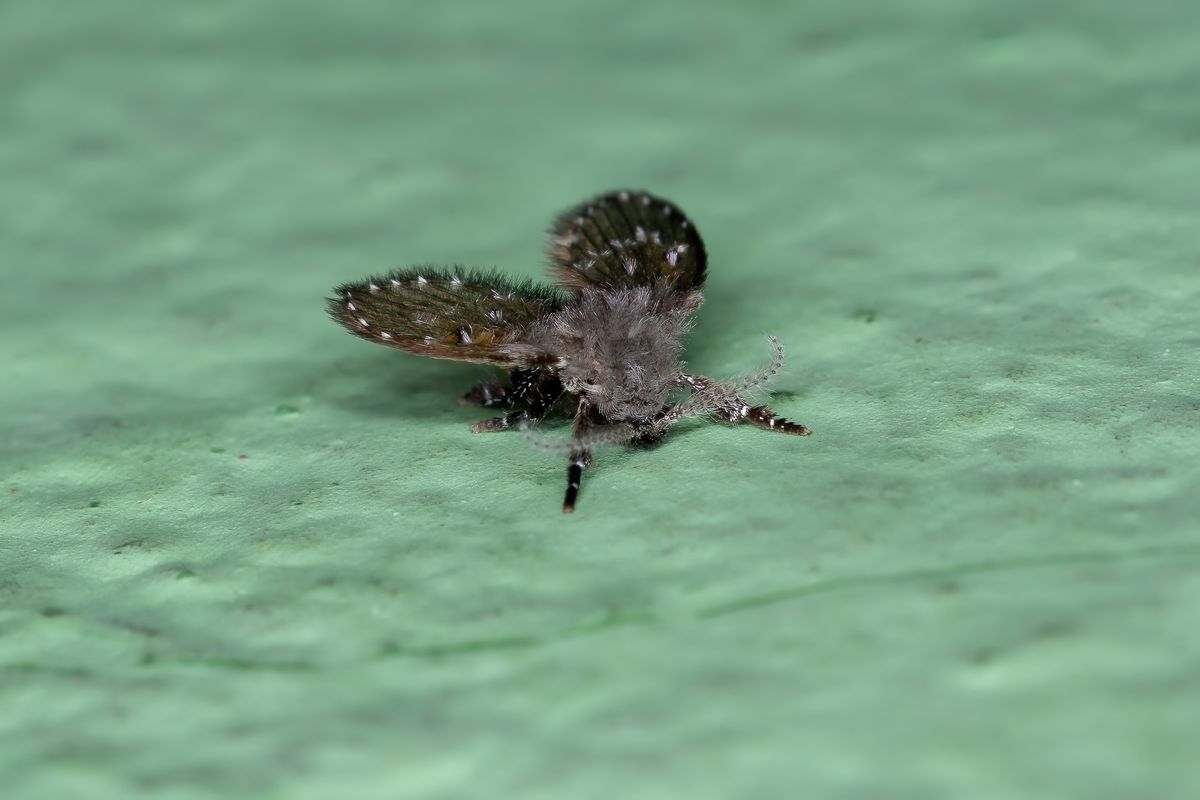
Most fruit flies have bright red eyes, but not all of them do: D. repleta has dark eyes, so dark eyes on their own do not rule a fruit fly out. If it also isn’t landing on fruit at all, a fungus gnat or a drain fly is more likely, and both breed somewhere else entirely. Telling a gnat, a fruit fly, and a drain fly apart runs all three side by side, and the gnats and drain flies guide has the fix for the last two. If none of it matches, the identification hub sorts sightings by color, size, and room.
FAQ
Why do fruit flies show up in the kitchen specifically?
The kitchen has what they need to breed: ripening fruit, sugary residue inside a disposal or drain, and food waste sitting in a trash can or recycling bin. Once one of those turns fermenting, it becomes both a food source and a nursery, which is why numbers can climb fast within a few days.
What if it’s not landing on fruit at all?
Check where it is landing instead. A fly that keeps returning to a garbage disposal, an empty bottle, or a sink drain is probably still a fruit fly working a less obvious source, and the fruit fly guide lists the spots people usually miss. But if it’s hovering near a houseplant or sitting still near a drain rather than flying, that points to a gnat instead, and the gnats and drain flies guide is the better match.