Short answer
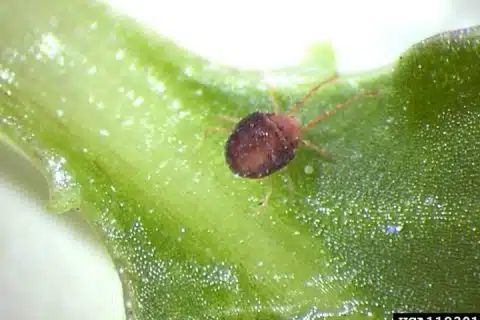
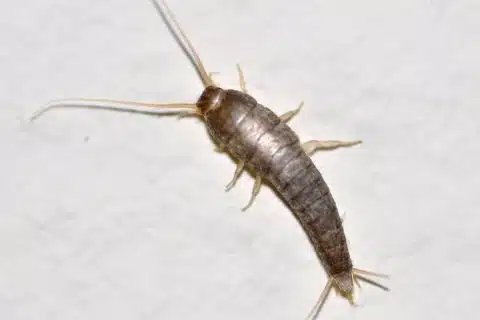
Four bugs on this site fit “tiny, gray and tan”: booklice, springtails, the adult pantry moth, and, if it’s a bit bigger than you’d call tiny, the silverfish. Color alone won’t sort them out. Movement and location will.
- Does it walk at a steady pace, hop when you get close, or fly?
- Are you seeing it in the kitchen at dusk, on a damp windowsill, or in the bathroom?
- Still stuck? Work through the full identification guide by size and behavior.
Which bug is it?
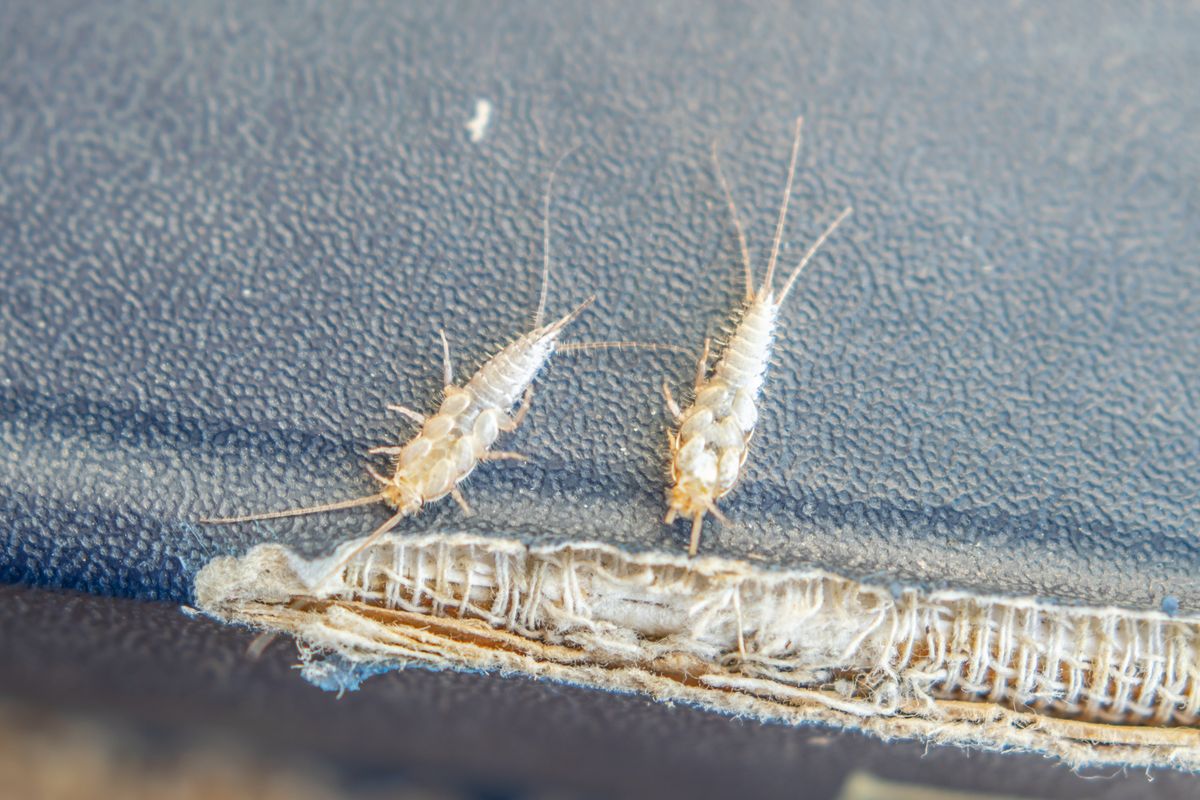
If the insect is barely more than a moving speck and it’s crawling near a damp book, a leaking windowsill, or a box that got wet in storage, it’s probably booklice. They’re pale gray, only a millimeter or two long, and they walk at a steady pace rather than jumping. Springtails look similar at a glance, gray to whitish-gray and in the same size range, but they don’t walk so much as flick themselves into the air when disturbed. They also stick close to standing moisture: a potted plant, a bathroom drain, a damp corner of the basement.
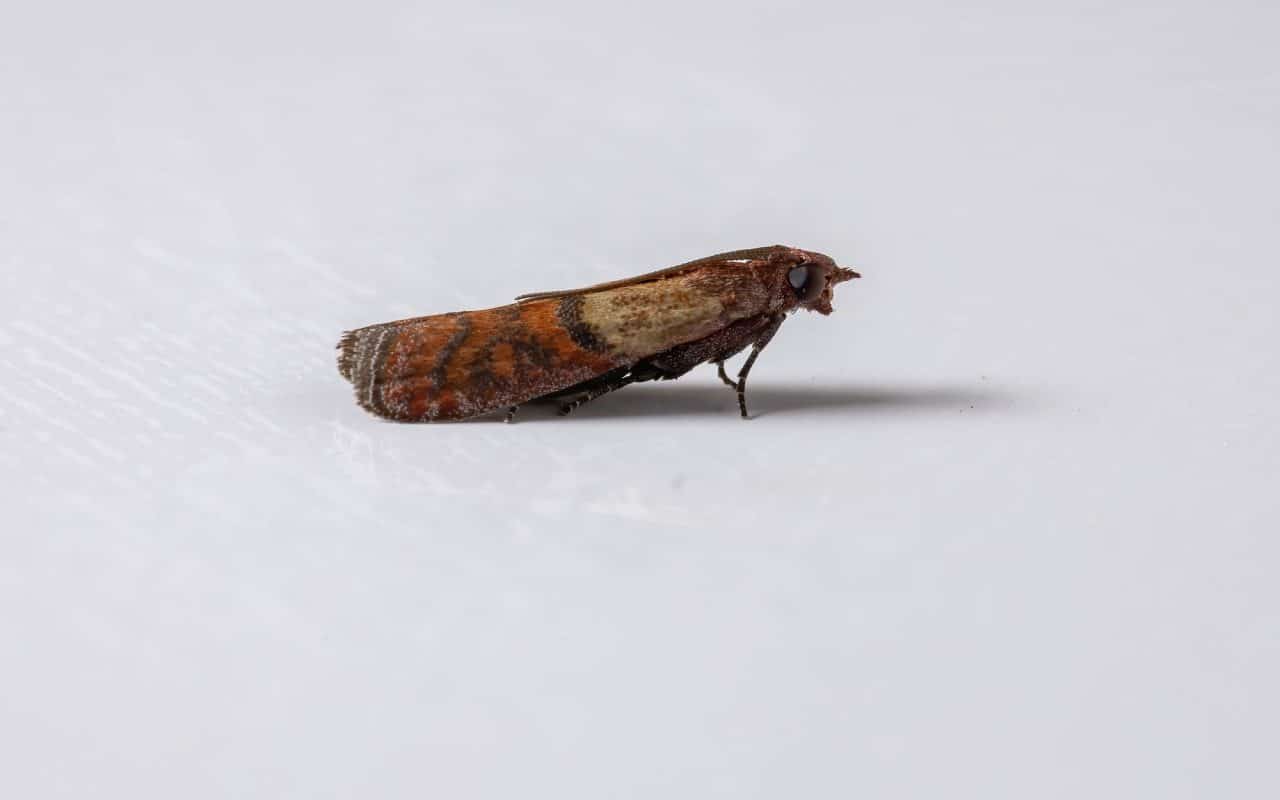
The one species on this site actually described as both gray and tan is the adult pantry moth. It’s bigger than booklice or springtails: the body runs about 8 to 10 mm, with a wingspan of roughly 16 to 20 mm (about 3/4 inch), and it flies rather than crawls, which is usually the giveaway. The wings show a two-tone pattern: tan or copper toward the tips, grayer near the body. People tend to notice them fluttering around the kitchen in the evening, often near wherever dry goods are stored. If that matches what you saw, the full profile has the rest of the details.
If what you found was bigger than any of these, moved fast enough to startle you, and turned up in the bathroom, look at silverfish instead. They’re silver-gray, wingless, and noticeably longer than the other three, even though people still call them “tiny” because of how quickly they disappear into a crack. There’s a page dedicated to that exact scenario: silverfish in the bathroom.
FAQ
Are tiny gray and tan bugs in the house harmful?
None of the species covered here are known to bite people or damage a home’s structure. Booklice and springtails feed on mold and organic debris in damp spots, pantry moths feed on stored dry goods, and silverfish feed on paper and starchy materials. They’re a nuisance and usually a sign of moisture or an open food source, not a health risk.
Why do I keep finding them near the kitchen or bathroom?
Those two rooms hold the most consistent moisture and food debris in most homes, which is exactly what booklice, springtails, and pantry moths are drawn to. Fix a slow leak, clear out damp cardboard, or seal an open box of dry food, and the numbers usually drop within a week or two.