Short answer
Tiny black bugs that look like specks of dirt usually turn out to be one of five things: a carpet beetle larva, a springtail, booklice, a fungus gnat, or a clover mite that only looks black because it’s small and the light is bad. All five can pass for a dark fleck at first glance, and none of them give themselves away until you catch one moving, so behavior is what actually sorts this out.
- Watch it for a few seconds before touching anything: does it sit still, walk steadily, jump suddenly, or fly? That alone rules out most of the candidates.
- If you can get close with a flashlight or a zoomed-in phone camera, check for real color and any bristles on the body. What reads as black from three feet away is often brown, gray, or even red up close.
- Still not sure, or seeing more than one kind at once? The full identification hub sorts household bugs by color, size, room, and wings.
Which bug is it?
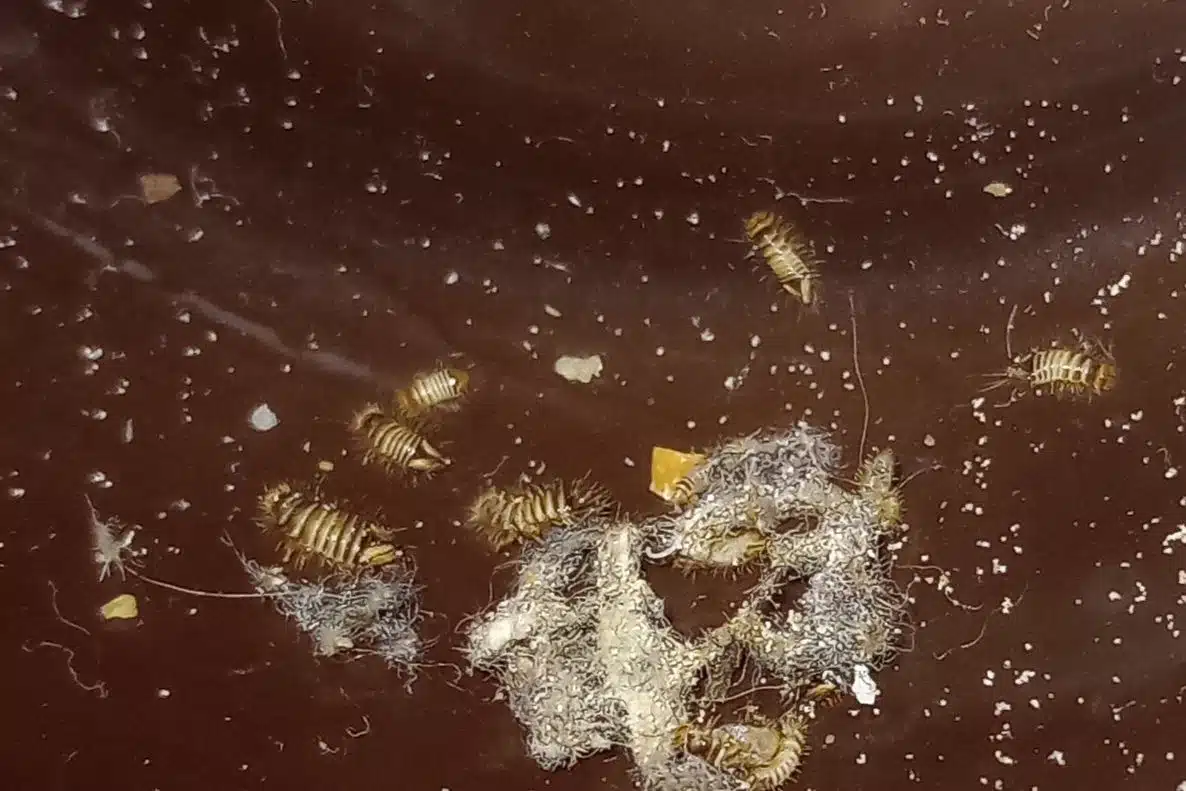
If the speck isn’t moving at all, or only inches along the carpet fibers over several minutes, look closer before writing it off as lint. A carpet beetle larva is small, oval, and covered in short bristles that give it a slightly fuzzy outline even though the body itself reads brown to black from a distance. It doesn’t jump and it doesn’t fly, and you’ll usually find it along a carpet edge, in a closet, or inside a wool sweater that’s been sitting untouched for a while. The full carpet beetle guide covers both the larva and the adult stage.
A speck that seems to vanish the instant you lean in, then turns up again a few inches away, is more likely a springtail. They’re 1 to 3mm, gray to a dark, almost sooty brown, and they launch themselves into the air with a spring-loaded appendage tucked under the body whenever something disturbs them. You’ll usually find them near a damp windowsill, a sink cabinet, or an overwatered houseplant. More on spotting and stopping them in the springtail guide.
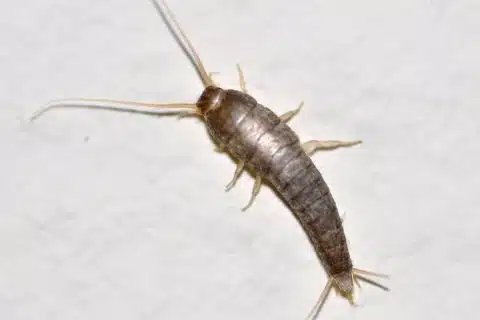
If it’s walking rather than jumping, and doing it on damp paper, cardboard, or a book left in a humid room, you’re probably looking at booklice. In good light they’re pale tan to almost see-through, but on dark paper or under weak light they can read as small dark dots, especially before you’ve had a chance to focus on one directly. The booklice guide has the full rundown, including why the name is misleading.
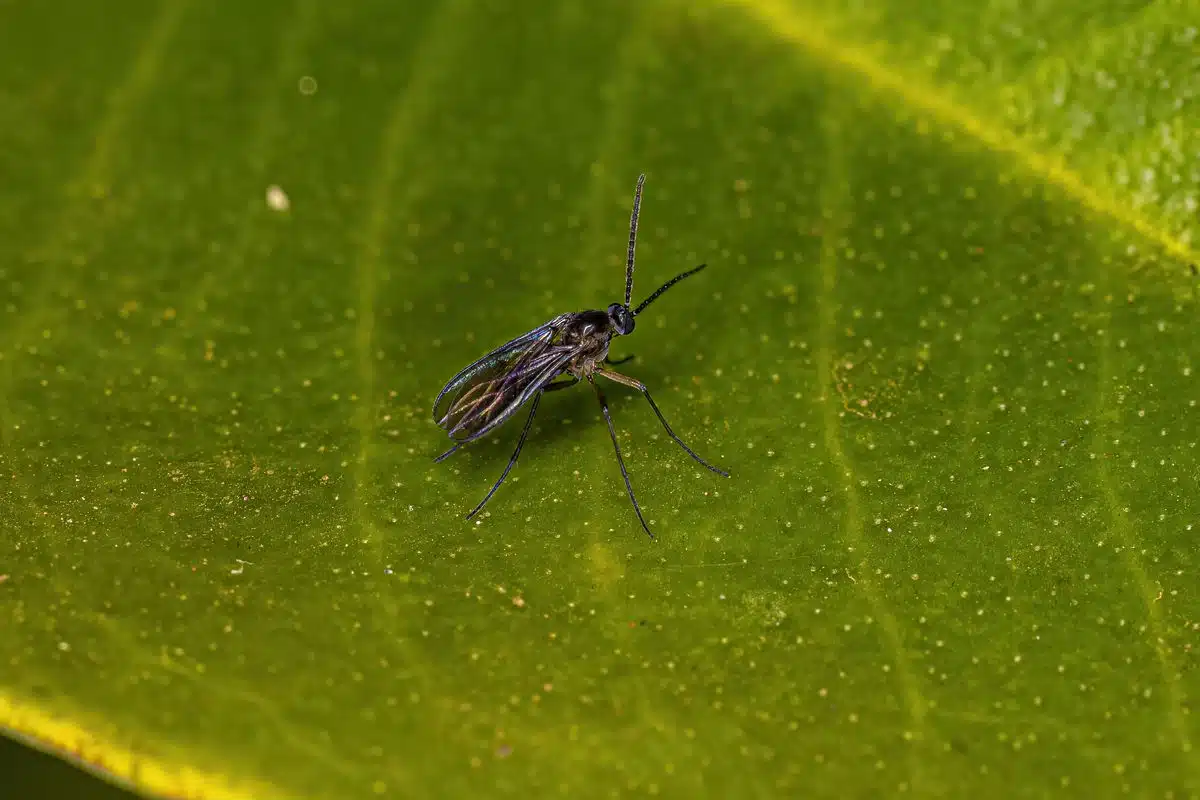
A speck that actually flies, even weakly, and keeps drifting back toward a houseplant or hovering near a nearby window, is more likely a fungus gnat. They’re slender, dark gray to black, and built something like a tiny mosquito, though they’re weak fliers that rarely travel far from the pot they hatched in. That behavior and the rest of the identification details are in the gnats and drain flies guide.
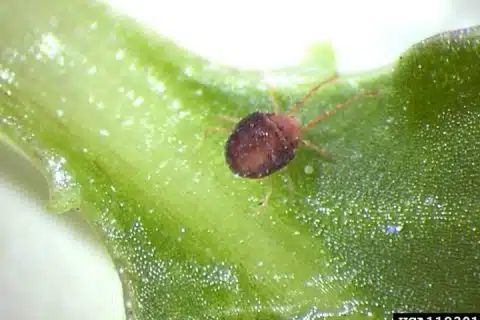
One more possibility, mostly limited to a sunny window frame or sill: if the speck barely moves and you can only make it out clearly with a magnifier or a zoomed-in photo, check its actual color before deciding it’s black. Clover mites are red to rust-colored, not black, but at under 1mm they’re small enough that the color washes out to a dark dot to the naked eye. They cluster in numbers on sun-warmed glass in spring and fall. Details, and a note on why you shouldn’t wipe them with a cloth, are in the clover mite guide.
FAQ
Could a speck that never seems to move at all still be one of these bugs?
Possibly, if it’s dead or you’re looking at debris rather than an insect. But a carpet beetle larva can look almost stationary at a glance since it moves so slowly. Give it a minute, or nudge the carpet fibers gently nearby, before ruling out an insect entirely.
Why would something that looks solid black turn out to be red or pale once I look closer?
At the size of these bugs, most of what your eye picks up from a few feet away is just a dark silhouette, not true color. A clover mite’s actual red tone or booklice’s pale, near-translucent body only shows up under decent light and some magnification, which is why a quick glance so often reads as plain black.
I’m finding tiny dark specks in more than one room. Does that mean it’s more than one bug?
It can. Carpet beetle larvae, springtails, and booklice all favor slightly damp, undisturbed spots, so a closet, a bathroom, and a basement box can each host a different one of these at the same time without being related. Checking each location separately, rather than assuming one bug explains every sighting, gets you to the right answer faster.
Does where I found it narrow things down?
Yes, almost as much as behavior does. Carpet fibers and closets point toward a carpet beetle larva, a damp sink or plant pot points toward springtails, a book or stack of cardboard points toward booklice, a windowsill with weak flight points toward a fungus gnat, and a sunny window with almost no movement points toward a clover mite.