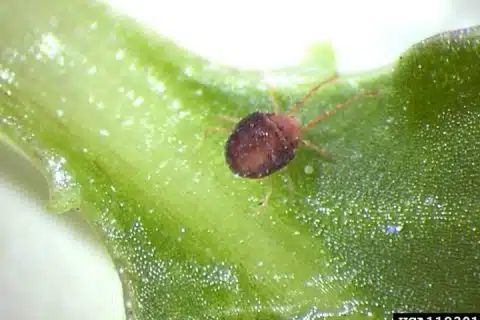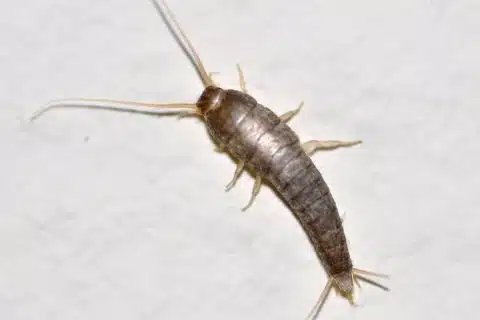
Short answer
Where you found the speck matters more than what it looks like, since several small dark bugs are roughly poppy-seed size. On a carpet, rug, or stored wool item, it’s almost always a carpet beetle larva. Inside or right next to a bag of flour, cereal, dry pet food, or a spice jar, you’re more likely dealing with a drugstore beetle, a cigarette beetle, or a weevil.
- Note exactly where the speck is sitting: on carpet fibers or fabric, or inside/near a container of dry food.
- Watch it for a minute to see if it moves at all, and how.
- Follow the matching link below to confirm against photos and a full profile.
Which bug is it?
If the specks are scattered along a carpet edge, tucked into a closet near wool sweaters, or showing up on a rug you rarely move, look closely at the shape before anything else. A carpet beetle larva is oval and slightly tapered, brown to nearly black, and covered in short bristly hairs that give it a faint fuzzy edge once you’re close enough to focus on it. At 2 to 5 mm it is two to five times the length of an actual poppy seed, which is about 1 mm, so “poppy seed” here is about the look of a small dark speck rather than a true size match. It tends to sit still for long stretches or inch along so slowly that it barely reads as moving. These larvae feed on wool, fur, feathers, and other natural fibers, so baseboards, closets, and under-rug spots near old carpet or stored textiles are where they turn up most.
Found the speck in a kitchen cabinet, a cereal box, a bag of rice, or a jar of dried herbs instead? That points toward a different set of bugs entirely. Drugstore beetles and cigarette beetles are reddish-brown, oval, and 2 to 3.5 mm long, so two to three times the length of a real poppy seed, but small and dark enough to read as one at a glance, and they show up in dry pantry goods rather than on flooring. They can fly as adults, which is one reason people spot one on a counter or windowsill nowhere near where it hatched.
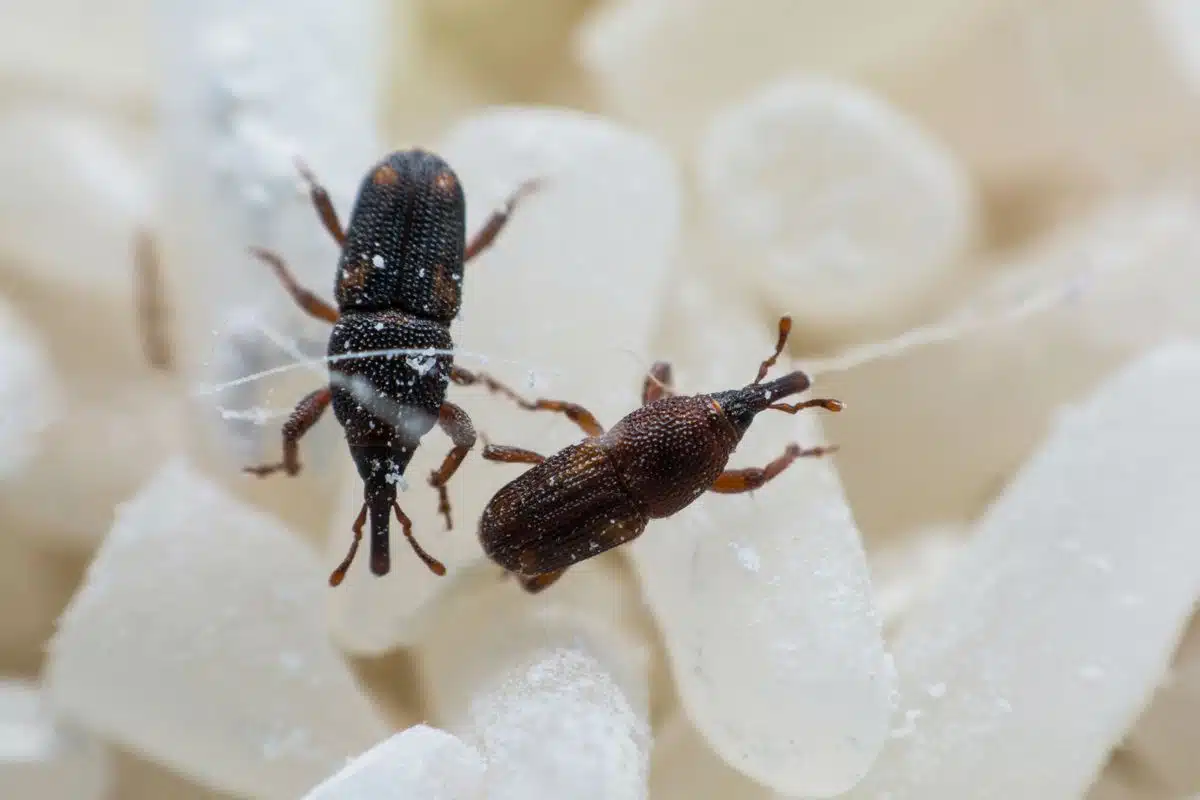
A third possibility in the same pantry context is a true weevil. Pantry bugs sorts all six that turn up in a cabinet. The flour and rice weevil page walks through the one detail that separates weevils from the two beetles above: a narrow snout on the head that the beetles don’t have. If you can get a clear enough look at the speck with a magnifier or phone camera zoomed in, that snout is the fastest way to tell them apart.
FAQ
Can these tiny specks fly?
Carpet beetle larvae can’t fly at all. Only the adult carpet beetle does, and it looks nothing like the larva: small, round, and patterned rather than bristly and dark. What you’re seeing crawl on a carpet is the wingless larval stage. Pantry beetles are different: both drugstore and cigarette beetles have working wings as adults, though they mostly stay put near a food source until something disturbs them.
Why do I only find them in one spot?
Carpet beetle larvae stay close to whatever they’re feeding on, so a wool rug edge, a stored blanket, or a spot near a dead insect trapped by a window tends to hold a small cluster rather than a spread-out infestation. Pantry species behave the same way around food: checking the specific bag, box, or jar where you first saw one usually turns up the rest. For a broader look at other small household bugs before narrowing further, the identification hub covers more shapes and sizes side by side.