Short answer
Very tiny black bugs in the house usually come down to four possibilities, and movement is the fastest way to sort them out. If it flies, it’s almost certainly a gnat or drain fly. If it crawls slowly and barely moves, it’s likely a carpet beetle larva. If it jumps suddenly, it’s a springtail. If it’s walking across paper or cardboard, it’s probably booklice.
- Watch the bug for a few seconds and note whether it flies, crawls, jumps, or walks.
- Pay attention to where you spotted it — near a sink or drain, in a closet, near a damp windowsill, or on stored paper.
- For a full side-by-side comparison of every tiny bug on the site, check the identification hub.
Which bug is it?
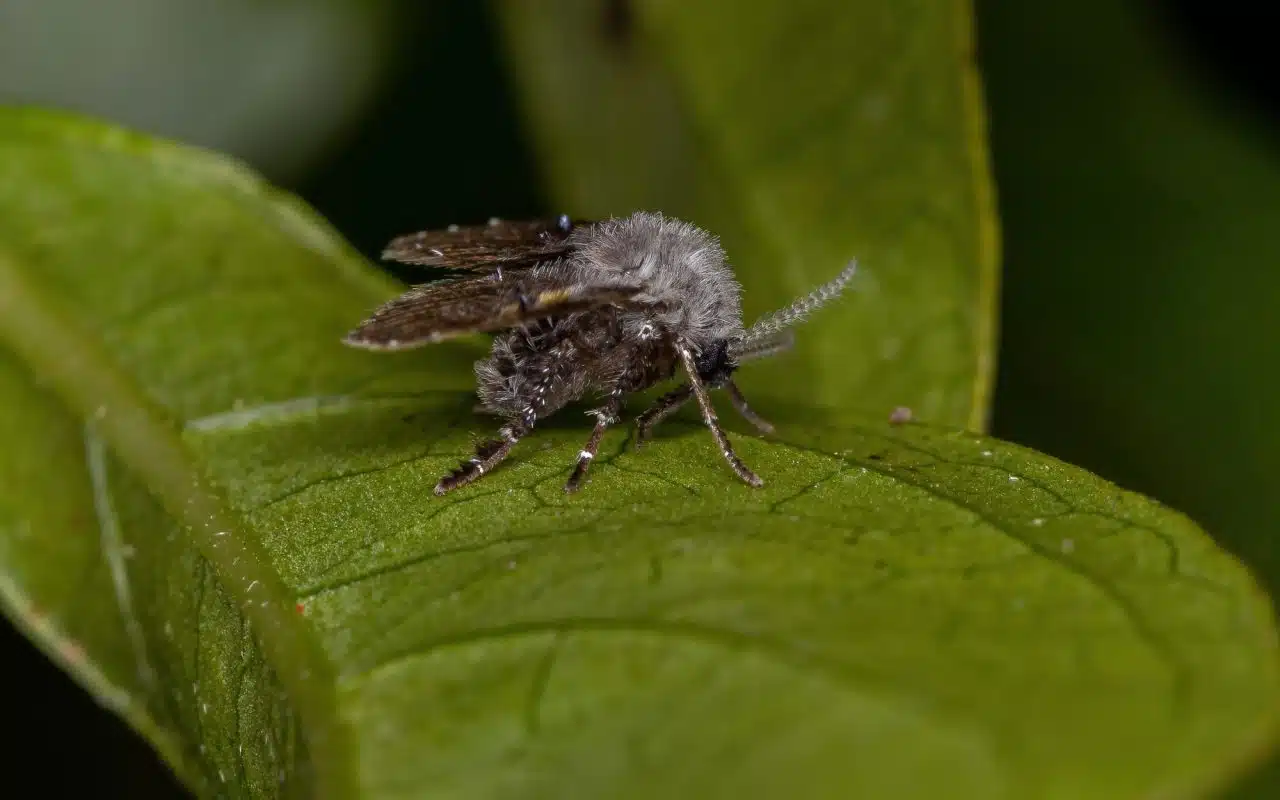
If the bug is airborne, even briefly, even just hovering near a sink or a struggling houseplant, you’re almost certainly looking at a gnat or a drain fly. Both show up as small black specks that drift around bathrooms, kitchens, and anywhere with a bit of standing moisture, and they’re by far the most common answer when someone says they’re finding tiny black bugs all over the house. See the full gnats and drain flies profile for how to tell the two apart and where they tend to breed.
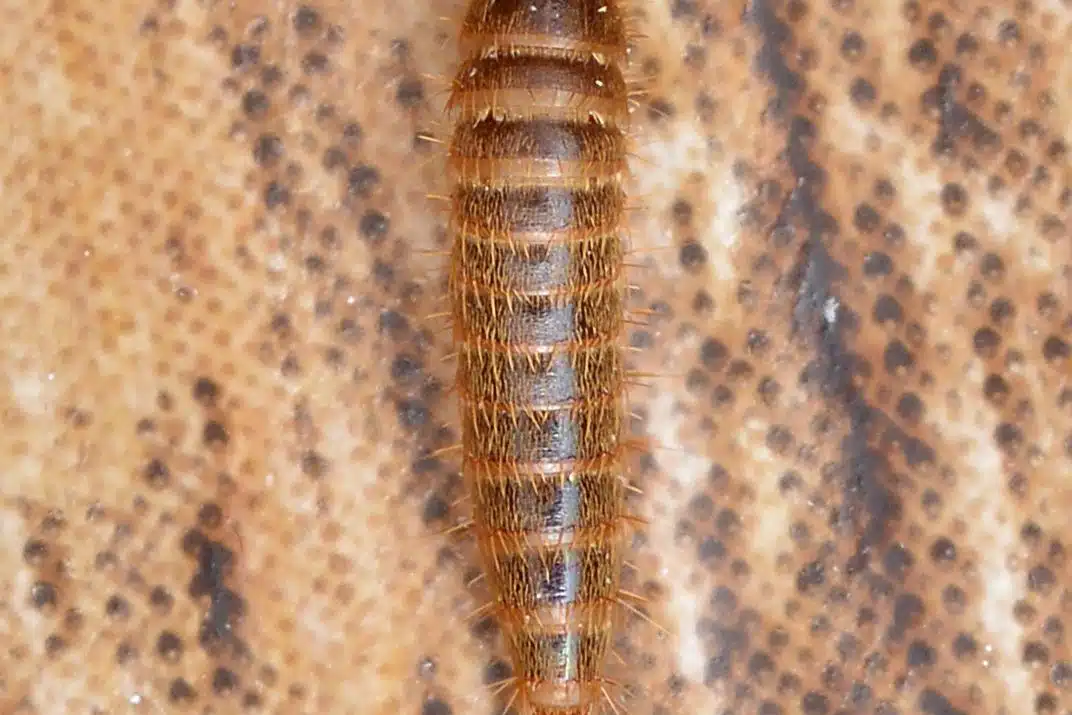
A bug that barely moves, and when it does, drags itself along in a slow, deliberate crawl, points somewhere else entirely. Carpet beetle larvae are small, dark, and covered in short bristly hairs, and they turn up in closets, along baseboards, inside wool rugs, or near stored clothing rather than near water. If what you’re seeing doesn’t fly and doesn’t jump, read the carpet beetle page next.
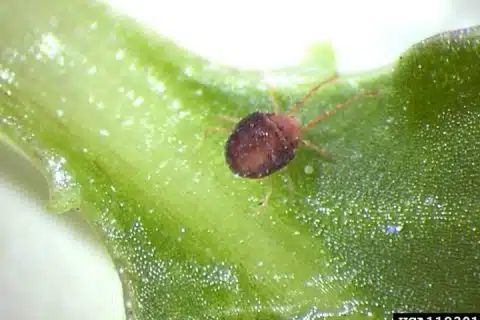
A sudden, springy hop, especially near a damp windowsill, a leaky pipe, or a plant pot, is the signature of a springtail. They’re dark gray to nearly black, small enough to be mistaken for gnats at first glance, but the jump gives them away immediately since neither carpet beetle larvae nor booklice can do that. Details on where they cluster are on the springtail page.
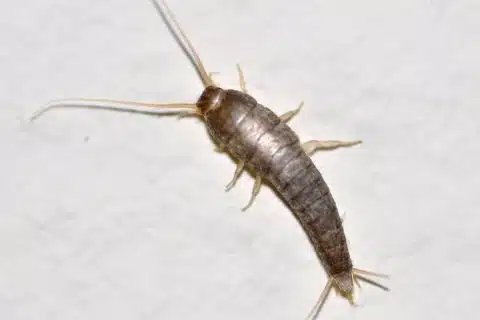
One more possibility, easy to miss because it can look pale rather than black depending on the light, is booklice walking across old books, cardboard boxes, or wallpaper that’s picked up a little humidity. They don’t fly or jump, just wander slowly across paper surfaces in slightly damp storage areas. The booklice page covers what draws them in and what that usually says about the space.
FAQ
Are tiny black bugs in the house harmful?
Most of the bugs covered here, including gnats, drain flies, springtails, and booklice, are a nuisance rather than anything to worry about. Carpet beetle larvae are the one worth watching more closely, since they can damage wool, fur, and some stored fabrics over time.
Why do I keep finding them near the sink or bathroom?
Moisture is the common thread. Gnats and drain flies breed in the organic film inside drains, and springtails gather wherever there’s a damp surface nearby, like a leaking pipe or an overwatered plant. If the sightings cluster around water, start with those two.
Could it just be dust or lint that’s moving?
No. If it’s genuinely moving on its own, even a small twitch or a hop, it’s an insect rather than debris. The direction and pattern of that movement is exactly what separates these four candidates.
What if I see more than one type at once?
That happens, since different bugs are often reacting to the same underlying moisture problem in different parts of a room. Identify each one separately by watching how it moves, then check the matching species page for each.