Short answer
There isn’t a clean match for “tiny reddish-brown bugs in bathroom” in our identification catalog, and it’s worth saying that plainly instead of forcing an answer. The bug most people mean when they say “small bathroom bug” is the silverfish, and silverfish are gray, not reddish-brown. The bugs that really are reddish-brown in our library live in kitchens and pantries, not bathrooms. So this is a case of narrowing down, not a single obvious ID. Run through these checks before you decide:
- Look at where the bugs actually are. If they’re clustered on a windowsill or frame that gets direct sun, especially in a bathroom with an exterior wall, that points away from a typical indoor pest and toward something coming in from outside.
- Catch one in a clear cup and look at it under daylight or a phone flashlight rather than the bathroom’s own lighting. Warm, yellow-toned bulbs are common over bathroom mirrors, and they can shift a gray or tan bug toward brown in a way that’s easy to mistake for its real color.
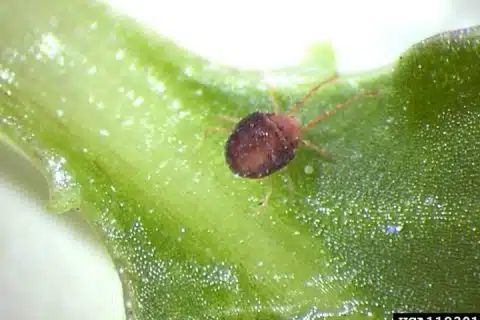
- If the bugs are barely visible, almost motionless, and showing up on a sunny sill, start with the clover mite profile — it’s the only genuinely red-toned candidate in our catalog.
Which bug is it?
Small bugs in a damp bathroom are usually one of two things: booklice or springtails. Both love the humidity around a shower or a slow drain. Neither one is reddish-brown, though — booklice run pale and almost see-through, and springtails are gray to brown but jump rather than crawl when you get close. If you’re confident about the reddish-brown color and the bug just walks or barely moves, those two are worth ruling out first, then look further down this list.
The clover mite is the only bug in our catalog that’s actually red to reddish-brown at a glance. It’s under a millimeter long, barely moves, and has noticeably long front legs that can look like antennae. The catch is that clover mites are a window-and-siding pest, usually found massing on a sunny sill in spring or fall rather than wandering a bathroom floor. If your bathroom has a window that gets good sun and you’re seeing tiny still dots along the frame, this is the strongest match we have.
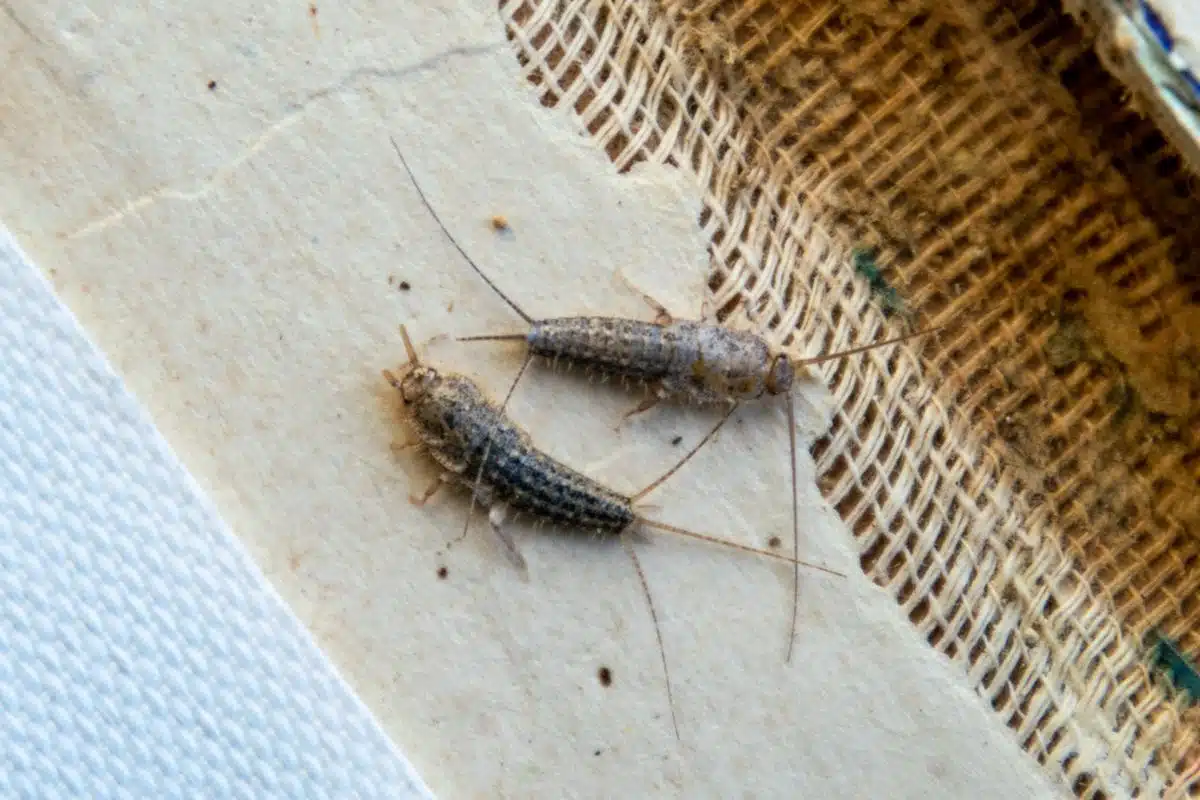
The silverfish is the bug most associated with bathrooms, full stop — it needs the humidity a bathroom or basement provides, and it’s fast, wingless, and carrot-shaped. Its actual color is silvery gray, not brown. But a silverfish seen only under a warm bathroom light, or coated in a bit of dust, can read as tan or brownish to the eye, and that’s a common reason people describe it with the wrong color. If the bug you saw moved quickly and darted for cover, silverfish is worth a second look even though the color doesn’t line up on paper.
The last possibility is a stray from the kitchen. The drugstore beetle and cigarette beetle are both genuinely reddish-brown and roughly the size described, but they’re pantry pests, not bathroom ones. They only turn up in a bathroom if it shares a wall with a kitchen or pantry, or if a beetle from stored food wandered further than usual. If you’ve also noticed similar bugs near cereal, spices, or pet food, that’s a stronger lead than the bathroom sighting alone. For the full list of what we’ve identified so far, the identification hub is the place to compare photos side by side.
FAQ
Are silverfish ever really reddish-brown?
Not naturally. Silverfish are silvery gray with a metallic sheen. Reddish-brown descriptions usually come from lighting, a coating of dust, or seeing the bug briefly and not catching the actual color.
Why would a pantry beetle end up in the bathroom?
It’s not typical, but small beetles can travel through gaps around plumbing or shared walls, especially if the bathroom is close to the kitchen. It’s a less likely explanation than clover mites or a misjudged silverfish, so treat it as a last check rather than a first guess.
What if none of these matches what I’m seeing?
That’s possible, and it’s better to say so than to guess. Try photographing the bug in natural light and browsing the full identification hub to compare size, movement, and habitat against everything we’ve documented.