Short answer
To prevent fruit flies, remove what they breed in before any of them arrive: overripe fruit, sugary film in drains and disposals, and unrinsed bottles and cans. They do not need a dirty house, only one spot where something sweet has started to ferment. Fruit flies are most common in late summer and early fall, so September is the month to do this.
- Check produce before it goes in the bowl, because split or bruised fruit is how flies usually get indoors.
- Put ripe fruit in the refrigerator, and rinse every bottle and can before it goes in the recycling.
- Scrub drains and disposals on a schedule. If flies show up anyway, the removal guide covers finding the source.
Why fruit flies find a clean kitchen anyway
Prevention only works if you aim at the right target, and the target is not the fly. Colorado State University Extension notes that small fruit flies breed where yeast develops, mainly in overripe fruit and in the leftovers of fermenting drinks such as stale beer or wine. UC IPM says the same about the larvae of Drosophila: they feed in damaged or fermenting, overripe fruit. Take away the fermenting material and there is nothing for a female to lay eggs in.
That is why a spotless counter does not protect you. The film inside a disposal or the last inch of juice in a bottle qualifies as much as a forgotten peach. It is also why the flies seem to come out of nowhere. Most of the time they came in with the groceries. Colorado State says populations peak in late summer and early fall because fruit is infested during harvest and then carried indoors without anyone noticing.
Check produce before it gets a place on the counter
The Northwest Center for Alternatives to Pesticides says fruit flies likely arrive on food that is already infested, and gives overripe fruit and tomatoes with split skins as examples. So the cheapest prevention step happens at the door. Look at each piece for soft spots, split skin and weeping wet patches, and eat or cook the worst ones first instead of parking them in a bowl to finish ripening.
Farmers market flats, garden tomatoes and fruit from a friend’s tree deserve the closest look, since that is fruit that sat out in the field during the season when flies are most active. If a bag has a damaged piece in it, take that piece out of the batch today. One bruised plum sweating in a bowl can spoil the rest of the bowl and start the cycle the same week.
Keep ripe fruit cold, and finish it
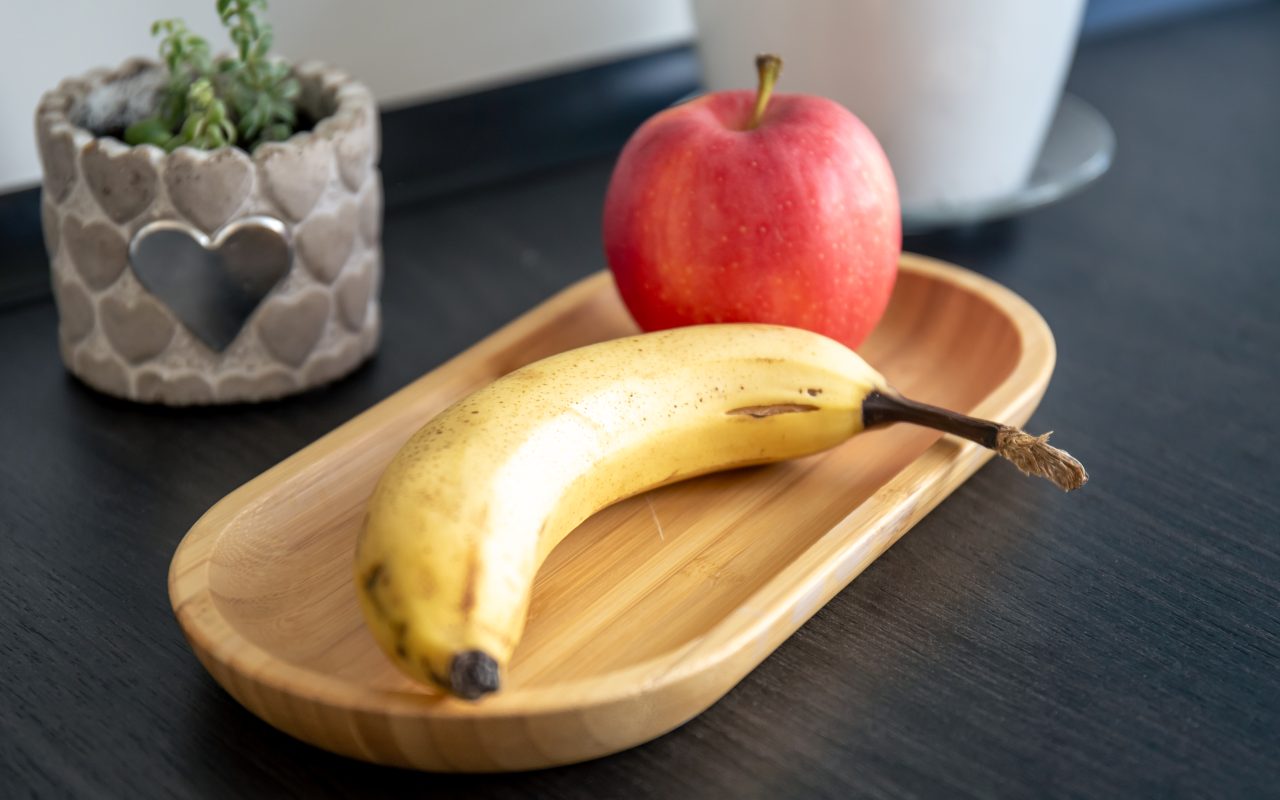
Once fruit is ripe, the counter stops being a storage spot and becomes a countdown. Colorado State’s advice for a fruit fly problem is to consume, cover or refrigerate all susceptible fruit, and the same habit works before there is a problem. Ripe bananas, melons, tomatoes and stone fruit are the usual candidates. The NCAP page lists bananas, melons, tomatoes, squash and apples, along with rotting potatoes and onions, as items that draw flies.
Two small rules do most of the work. Do not keep more fruit out than you will eat in a couple of days. And when a banana has gone past eating, freeze it for baking or throw it out that day, outdoors, instead of leaving it on the counter to see whether it makes it.
Rinse bottles and cans before they go in the recycling
This is the step people skip, and it is the one both extension sources name. Colorado State says used drink containers should be washed thoroughly before disposal, and NCAP’s advice is to rinse out wine, beer, juice and soda bottles before they go in the recycle bin. A bottle with a sweet film in the bottom is a small fermentation vessel with a narrow neck.
A quick swish with tap water is enough. What matters is that nothing sugary sits in a warm kitchen for a week. If your recycling bin lives indoors, move it to the garage or outside during the season, or empty it more often than you feel you need to.
Trash and compost: leave the kitchen quickly
NCAP recommends putting decayed food in airtight containers for outdoor disposal, and Colorado State says discarded produce should be moved outdoors promptly. In practice that means bagging fruit scraps and taking them out the same evening, not letting them ride in the kitchen can until it is full. If you keep a countertop compost pail, empty it often and wash it with hot soapy water, including the rim and the underside of the lid, where residue collects.
Keep drains and disposals from building a film
Drains do not usually start a fruit fly problem on their own, but sugary residue in a disposal or sink drain can. NCAP suggests scrubbing drain scum with a brush and following with boiling water. It also gives a simple detection trick for a drain you suspect: tape a piece of clear plastic over the opening, leave it overnight, and look in the morning for flies waiting to get out.
If the flies you find are hairy, moth-shaped and sit still on the wall near the drain, that is a different insect. See the drain fly guide, or the gnat versus fruit fly comparison if you cannot tell which one you have.
Why the schedule matters. NCAP puts the fruit fly life cycle at 8 to 15 days depending on temperature. A source you miss this week is a new generation of adults next week, so a small habit done every few days beats a big cleanup done once.
A five-minute weekly check
Habits fade, so put the checks on a schedule. This is the whole routine, and it takes about as long as unloading the dishwasher. Each row is a place where sugar can sit and ferment out of sight.
| Where | What to do | How often |
|---|---|---|
| Fruit bowl and counter | Toss or chill anything soft, split or leaking. Wipe sticky spots. | Every few days |
| Recycling | Rinse bottles and cans, or empty the bin outdoors. | Every time, and weekly |
| Trash and compost pail | Take out fruit scraps the same evening, then wash the pail and lid. | Daily for scraps, weekly for washing |
| Sink drain and disposal | Scrub the scum with a brush, then flush with boiling water. | Weekly in fruit season |
| Mop head and dish towels | Hang them to dry instead of leaving them folded and damp. | After each use |
When prevention did not work
Sometimes flies appear anyway, usually because something came in with the groceries or a source stayed hidden. One or two adults do not mean an infestation yet, but do not shrug them off. Go through the list above, starting with the trash can lid and the disposal, and look for residue rather than for flies. If numbers keep growing, switch to the step-by-step source hunt in how to get rid of fruit flies. A vinegar trap can tell you whether adults are still emerging, and the cider vinegar trap guide covers how to set one up. For the wider set of habits that keep other pests out, see the prevention hub and the seasonal checklist. UC IPM also cautions that traps reduce numbers without providing complete control, so treat one as a gauge and not a fix.
FAQ
Where do fruit flies come from in a clean house?
Most likely they came in on produce. NCAP says they arrive on food that is already infested, such as overripe fruit or tomatoes with split skins, and Colorado State says fruit infested at harvest is carried indoors in late summer and early fall. Once inside, they stay where anything sugary is fermenting.
Does refrigerating fruit stop fruit flies?
It removes what they breed in, which is the point. Colorado State recommends consuming, covering or refrigerating all susceptible fruit. Cold does not kill anything already inside the fruit, so check each piece for soft spots before it goes in the fridge.
Do I need to rinse recycling for fruit flies?
Yes, and it takes seconds. Both Colorado State and NCAP name unrinsed drink containers as a source. A sweet film in a bottle or can can ferment and feed larvae.
Is there a smell or spray that keeps fruit flies away?
None of the extension sources consulted for this article recommend a repellent. Their advice is sanitation: remove fermenting material and dispose of it outdoors. Anything that claims to repel flies while the fermenting fruit stays put is treating the symptom.
How fast can a few fruit flies turn into a problem?
NCAP puts the full life cycle at 8 to 15 days depending on temperature, so one overlooked source can produce a new wave of adults in about a week or two. That is why quick, regular checks work better than a single deep clean.
Sources
- Colorado State University Extension, Flies in the Home, CSU Fact Sheet 5.502 (reviewed August 2025).
- Northwest Center for Alternatives to Pesticides, Tips to Prevent & Trap Fruit Flies.
- University of California Statewide IPM Program, Fruit Flies (Home and Landscape pest management guidelines).