Short answer
Diatomaceous earth for springtails works on paper the same way it works on any insect: the dust scratches and dries out the waxy layer on the exoskeleton until the animal loses water faster than it can replace it. The catch is specific to this pest. A springtail cannot go long without touching free water, and diatomaceous earth only keeps killing while it stays bone dry, so the one place worth dusting is also the place the powder clumps and quits fastest.
- Use food-grade diatomaceous earth only, and only as a thin, completely dry dusting. A damp grout line or cabinet floor turns it into paste before it does anything.
- No extension fact sheet we checked recommends diatomaceous earth specifically for springtails. The standard advice is drying the room out, which the full removal protocol works through in order.
- The one place the dust genuinely holds up is the dry top layer of houseplant soil, dusted after you let that layer dry on purpose.
How Diatomaceous Earth Actually Kills an Insect
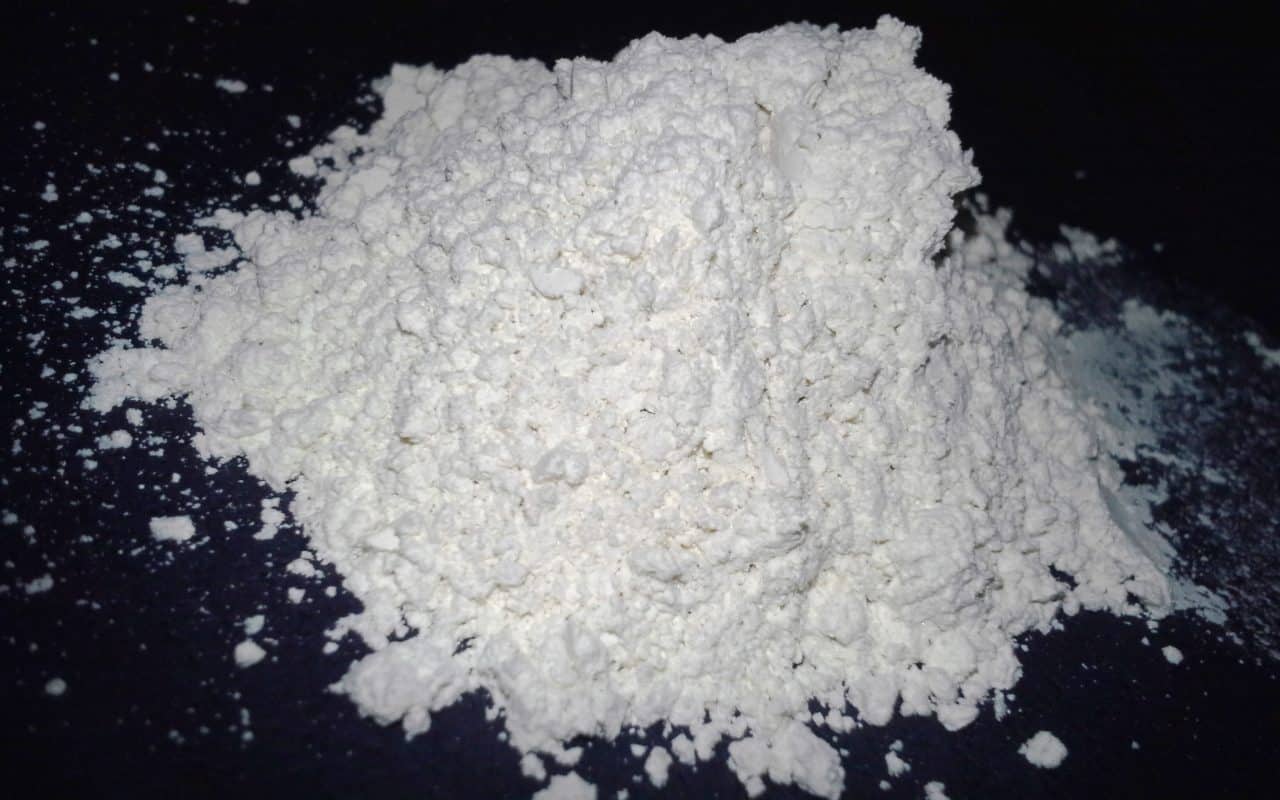
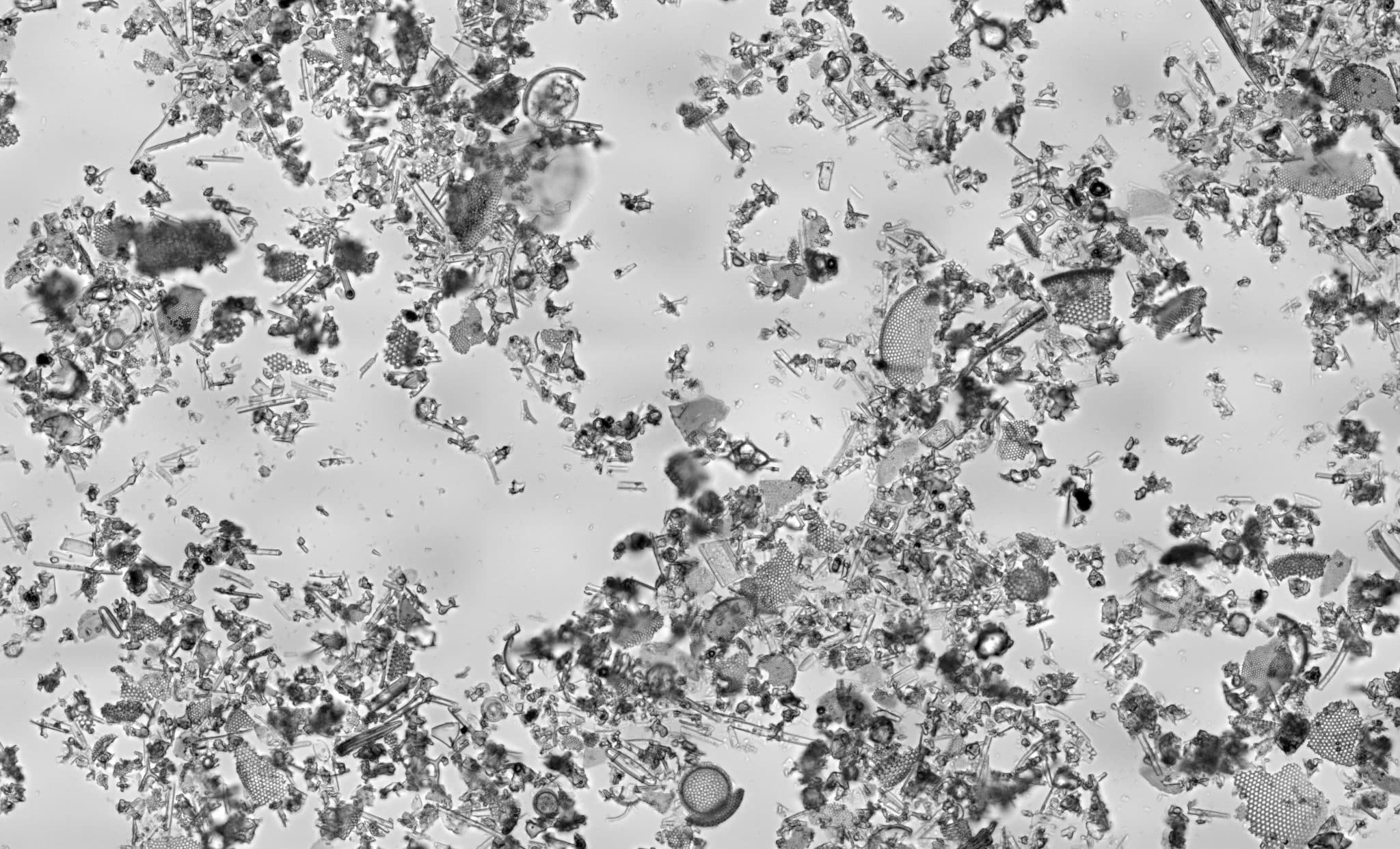
Diatomaceous earth is milled from the fossilized shells of diatoms, single-celled algae with skeletons made of silica. Under a microscope the particles look less like flour and more like broken glass: jagged, porous, full of sharp edges. That texture is the entire mechanism. Crawling through the dust scratches the thin, waxy layer that keeps an insect’s exoskeleton watertight, the epicuticle, while the powder absorbs the oils and fats that make it up. Once that layer fails, the insect loses water faster than it can replace it.
The National Pesticide Information Center is specific about what this is and isn’t: a physical action, not a poison, that works by drying insects out whether or not anything eats the dust. That distinction matters here. Diatomaceous earth doesn’t need a springtail to feed on anything or travel through a particular gap. It only needs contact, and it only keeps working while the surface holding it stays dry and undisturbed.
How Long It Takes, and Why That Matters Here
Diatomaceous earth is not a knockdown product. A contact spray delivers an active ingredient to an insect’s nervous system and can kill within minutes; diatomaceous earth relies on gradual, cumulative water loss instead, so nothing dies the moment it walks through the dust. Death follows over the following days, as the damaged cuticle keeps leaking moisture the insect can’t replace.
That slow timeline is exactly why dry, undisturbed placement matters more for springtails than for almost anything else on this site. The dust has to survive days of exposure without being splashed, wiped, or dampened by condensation, or it never accumulates enough contact time to do anything. A surface that’s wet again within hours, which describes most springtail habitat, never gets the days the mechanism needs.
Why a Springtail Can’t Just Retreat to the Dry Spot
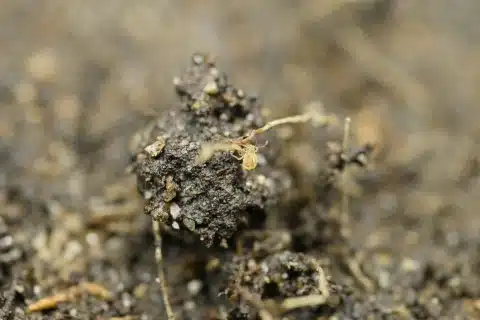
A springtail is 1 to 2 mm long, about a sixteenth of an inch, with a thin cuticle that loses water fast on its own. It has no way to draw on humidity from the air. Instead it carries a small tube on the underside of its abdomen, the collophore, that takes up water directly through contact with a wet surface. Peer-reviewed work on the structure backs up what extension guides only imply in passing: the collophore’s job includes absorbing water, not just balance or grooming. A springtail that can’t reach free water isn’t inconvenienced by that. According to UC IPM’s Pest Notes on the species, springtails that wander indoors “soon die…unless they find moisture.”
That’s the entire conflict in one sentence. Diatomaceous earth needs the surface it sits on to stay dry. A springtail needs the surface it sits on to stay wet, or it isn’t there at all. The species profile covers where that usually is: a saturated grout line, an overwatered houseplant saucer, the damp corner of a shower tray. Every one of those is also exactly the kind of surface that turns a thin dusting of diatomaceous earth into paste within hours.
Compare that with how the same dust performs against silverfish, a pest that likes humidity too. Silverfish aren’t confined to one wet surface the way a springtail is; they travel through dry cracks and wall voids on the way to food, which gives the dust somewhere dry to sit and wait for them. A springtail mostly doesn’t make that trip. It stays where the water is, which is precisely where the dust can’t survive either.
Where People Actually Try It, and What Happens
Search results for this pairing are full of confident how-tos. None of the extension fact sheets checked for this article back them up with anything specific to springtails, so treat the mechanism above as the honest limit of what’s documented, and judge each candidate spot in your own house against it.
| Where people try it | What actually happens |
|---|---|
| Grout line or shower tray edge | Wet again within hours; the dust cakes and stops abrading anything |
| Bathroom floor or baseboard | The same humidity that drew springtails there ruins the dust just as fast |
| Damp basement corner | Ordinary condensation is usually enough to clump a thin layer overnight |
| Top inch of houseplant soil | Works only after you let that layer dry on purpose; stays wet otherwise |
| Foundation perimeter in dry weather | Holds up until the next rain or sprinkler cycle, then starts over |
Food-Grade Only, and Not While You’re Breathing the Cloud
Food-grade diatomaceous earth is air-dried or lightly processed, keeping its silica mostly amorphous, and the FDA lists it as Generally Recognized as Safe. Pool-grade or filter-grade material is a different product: it’s heated (calcined) at high temperature for water filtration, and that heat converts a meaningful share of its silica into the crystalline form, which is linked to silicosis and other serious lung disease with repeated inhalation. Neither the mechanism nor the safety profile carries over between the two.
Never use pool-filter diatomaceous earth indoors. It’s made for swimming pool filtration, not pest control, and its crystalline silica content is a respiratory hazard if the dust becomes airborne. If a bag doesn’t say “food grade” and isn’t labeled for pest control, it doesn’t belong in your home.
Food-grade doesn’t mean risk-free to breathe. Even the amorphous form is a fine mineral dust that can irritate the nose, throat, and eyes in a visible cloud. Apply a layer thin enough that you can still see the surface underneath it, keep pets and children out until the dust settles, and skip the mask-worthy puffing entirely: a bulb duster or a narrow-tipped squeeze bottle gives you enough control that you shouldn’t need one.
The One Application That Can Actually Hold Up: Dry Potting Soil
Houseplant soil is the one springtail habitat you can dry out on command instead of hunting for a leak somewhere in a wall. Springtails in a pot are usually there because the plant gets watered on a fixed schedule rather than by feel, which keeps the top layer of soil continuously damp. Let that top inch dry out completely before you do anything else. Once it’s genuinely dry, not just dry-looking, dust a light, even layer across the surface with a bulb duster.
Done this way, the dust intercepts springtails walking across that layer, and because you controlled the moisture yourself rather than fighting a leak, it has an actual chance to stay dry long enough to matter. The catch is real, though: water the plant again on the old schedule and the layer re-wets, the dust clumps, and the population comes back, because the dust never touched the root ball where the excess water and the springtails’ real food supply, decaying organic matter in the soil, actually sit. Switching to watering only when the top inch of soil is dry fixes the cause; the dust only ever treated the surface.
Where This Fits in a Bigger Fix
On its own, diatomaceous earth treats a symptom in the one spot you can keep dry, not the reason springtails showed up in the first place. The full removal protocol walks through finding and drying out the actual source, room by room, and the moisture control guide covers holding the whole house under the humidity range that keeps springtails from establishing at all. If a basement is the room in question, sizing a dehumidifier correctly does more for a springtail population over time than any dust ever will.
FAQ
Does diatomaceous earth kill springtails?
Mechanically, yes, the same way it kills most soft-bodied insects, by abrading and drying out the cuticle. But no extension fact sheet checked for this article recommends it specifically for springtails, and the surfaces springtails actually live on rarely stay dry long enough for the mechanism to matter.
Why did the diatomaceous earth I put down stop working?
It almost certainly got damp. Moisture makes the particles clump into a paste that can no longer abrade or absorb anything, and springtail habitat is damp by definition, so this happens faster here than with almost any other target pest.
Is diatomaceous earth safe to use around houseplants and pets?
Food-grade diatomaceous earth is Generally Recognized as Safe by the FDA, but it’s still a fine mineral dust. Apply a thin layer, avoid stirring up a visible cloud while you work, and keep pets from digging in treated soil until it settles.
Will diatomaceous earth get rid of a springtail infestation by itself?
No. It can reduce the springtails that happen to walk across a patch that stays dry, but it does nothing about the leak, the overwatering, or the humidity that’s actually feeding the colony.
Do springtails bite, so is a fast fix urgent?
No. Springtails don’t bite, sting, or damage a home. The urgency, if any, is fixing the moisture source before it causes a bigger problem than the insects grazing on it.
Sources
- National Pesticide Information Center (Oregon State University / U.S. EPA cooperative agreement), Diatomaceous Earth Fact Sheet.
- University of California Statewide Integrated Pest Management Program, Pest Notes: Springtails, UC ANR Publication 74136.
- Clemson Cooperative Extension, Home & Garden Information Center, Springtails, HGIC 2445.
- Structure and functions of the ventral tube of the clover springtail Sminthurus viridis (Collembola: Sminthuridae), Scientific Reports.